Wu Jiong, Ma Xiao-Lu, Tian Lu, Zhang Chun-Yan, Wang Bei-Li, Hu Yu-Yi, Gao Xing-Hui, Zhou Yan, Shen Min-Na, Peng Yin-Fei, Pan Bai-Shen, Zhou Jian, Fan Jia, Yang Xin-Rong, Guo Wei
Department of Laboratory Medicine, Zhongshan Hospital, Fudan University, Shanghai 200032, P. R. China.
Department of Liver Surgery, Liver Cancer Institute, Zhongshan hospital, Fudan University, Shanghai 200032, P. R. China.
J Cancer. 2017 May 12;8(8):1338-1346. doi: 10.7150/jca.18030. eCollection 2017.
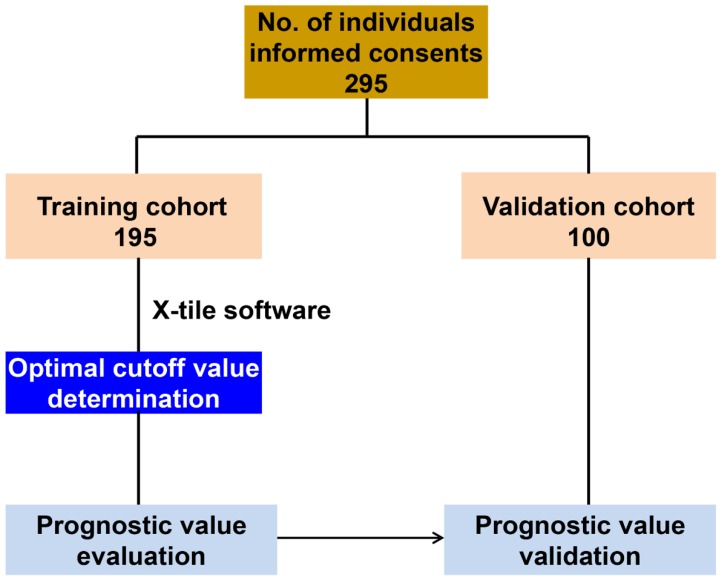
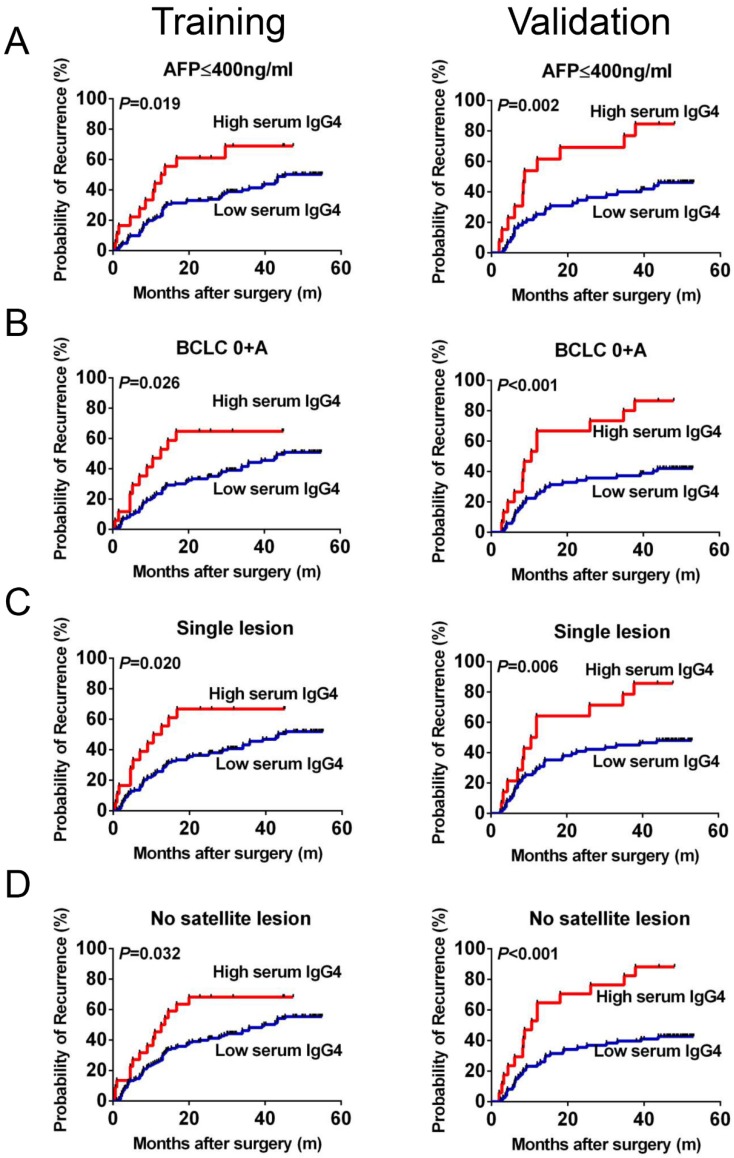
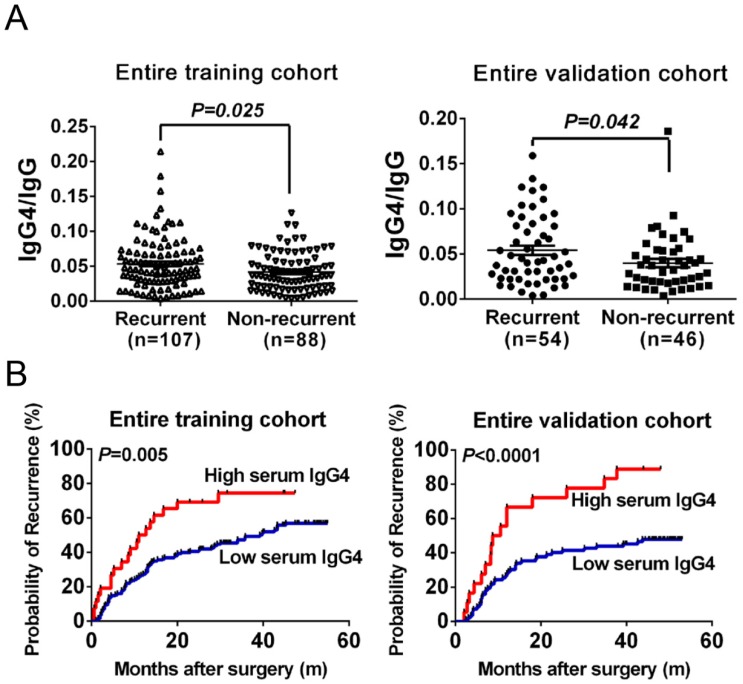
: IgG4 is associated with a Th1-to-Th2 switch, which plays a vital role in metastasis, in patients with malignances; thus, we aimed to investigate its clinical significance in predicting hepatocellular carcinoma (HCC) recurrence in the present study. : The correlation between serum IgG4:IgG ratio and recurrence was analyzed in a cohort of 195 patients undergoing curative resection in 2012. Another 100 patients were analyzed in a prospective independent cohort during 2012-2013 to validate the value of serum IgG4. Serum IgG4 and total IgG concentrations were measured with an automatic immune analyzer and the optimal cutoff value for serum IgG4 levels was determined by X-tile software. : Our data revealed that serum IgG4:IgG were significantly elevated in patients with tumor recurrence (<0.05). A cutoff IgG:IgG4 ratio of 0.08 was set to stratify HCC patients into high (>0.08) and low (≤0.08) groups. High serum IgG4:IgG ratio correlated with significantly shorter time-to-recurrence (median 11.85 months vs. 39.20, =0.005). Univariate and multivariate analyses demonstrated that serum IgG4:IgG ratio is an independent indicator of tumor recurrence and this retained its clinical significance even in conventional low-recurrence-risk subgroups, including patients with low α-fetoprotein and early-stage diseases. : Our results demonstrated that elevated serum IgG4:IgG ratio is associated with poor clinical outcomes in HCC patients and therefore, and can serve as a novel prognostic predictor for HCC patients undergoing resection. Analyzing serum IgG4 would be useful to tailor individualized therapies for patients.
在恶性肿瘤患者中,IgG4与Th1向Th2的转变相关,这在转移过程中起着至关重要的作用;因此,在本研究中我们旨在探讨其在预测肝细胞癌(HCC)复发方面的临床意义。分析了2012年接受根治性切除术的195例患者队列中血清IgG4:IgG比值与复发之间的相关性。在2012 - 2013年期间,对另一个100例患者的前瞻性独立队列进行分析,以验证血清IgG4的价值。使用自动免疫分析仪测量血清IgG4和总IgG浓度,并通过X-tile软件确定血清IgG4水平的最佳临界值。我们的数据显示,肿瘤复发患者的血清IgG4:IgG显著升高(<0.05)。设定IgG:IgG4比值的临界值为0.08,将HCC患者分为高(>0.08)和低(≤0.08)两组。高血清IgG4:IgG比值与显著缩短的复发时间相关(中位数11.85个月对39.20个月,P = 0.005)。单因素和多因素分析表明,血清IgG4:IgG比值是肿瘤复发的独立指标,即使在传统低复发风险亚组中,包括甲胎蛋白低和疾病早期的患者,该指标仍具有临床意义。我们的结果表明,血清IgG4:IgG比值升高与HCC患者不良临床结局相关,因此可作为接受切除术的HCC患者的一种新的预后预测指标。分析血清IgG4有助于为患者制定个体化治疗方案。