Wu GuoRong, Dai XiaoPing, Li XiangRong, Jiang HePing
Department of respiratory medicine, Changzhou Jintan District People's Hospital, Changzhou, Jiangsu 213200, China.
Afr J Tradit Complement Altern Med. 2017 Jun 5;14(4):201-212. doi: 10.21010/ajtcam.v14i4.23. eCollection 2017.
Acute Lung Injury (ALI) results into severe inflammation and oxidative stress to the pulmonary tissue. Rhamnazin is a natural flavonoid and known for its antioxidant and anti-inflammatory properties.
The antioxidative and anti-inflammatory properties rhamnazin were tested for protection against the acute lung injury. We investigated whether rhamnazin improves the lipopolysaccharide (LPS)-induced ALI in an animal model (rat). We also studied the probable molecular mechanism of action of rhamnazin. Rhamnazin was injected intraperitoneally (i.p.) (5, 10 and 20 mg/kg) two days before intratracheal LPS challenge (5mg/kg). The changes in lung wet-to-dry weight ratio, LDH activity, pulmonary histopathology, BALF protein concentration, MPO activity, oxidative stress, cytokine production were estimated.
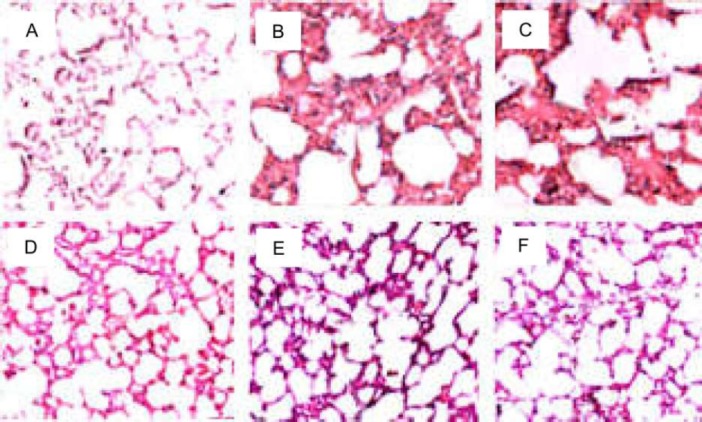
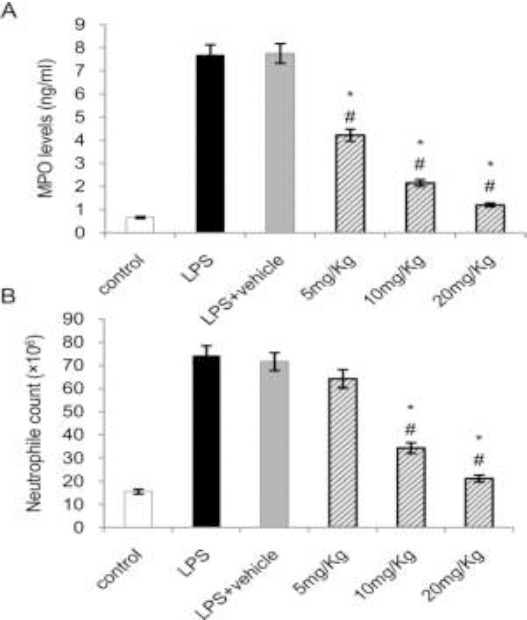
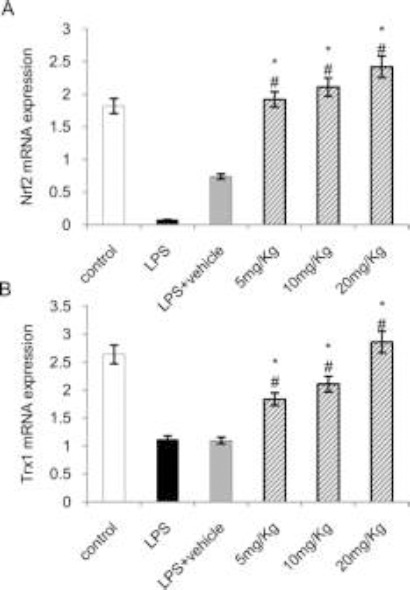
The results showed a significant attenuation of all the inflammatory parameters and a marked improvement in the pulmonary histopathology in the animal groups pretreated with rhamnazin. The rhamnazin pretreated group also showed activation of Nrf2 pathway and attenuation of ROS such as HO, MDA and hydroxyl ion. These results indicated that rhamnazin could attenuate the symptoms of ALI in rats due to its strong antioxidant and anti-inflammatory properties.
The results strongly demonstrated that rhamnazin provides protection against LPS-induced ALI. The underlying mechanisms of its anti-inflammatory action may include inhibition of Nrf2 mediated antioxidative pathway.
急性肺损伤(ALI)会导致肺部组织发生严重炎症和氧化应激。鼠李素是一种天然黄酮类化合物,以其抗氧化和抗炎特性而闻名。
测试了鼠李素的抗氧化和抗炎特性对急性肺损伤的保护作用。我们研究了鼠李素是否能改善动物模型(大鼠)中脂多糖(LPS)诱导的ALI。我们还研究了鼠李素可能的分子作用机制。在气管内给予LPS(5mg/kg)攻击前两天,腹腔注射(i.p.)鼠李素(5、10和20mg/kg)。评估肺湿重与干重比、乳酸脱氢酶(LDH)活性、肺组织病理学、支气管肺泡灌洗液(BALF)蛋白浓度、髓过氧化物酶(MPO)活性、氧化应激、细胞因子产生的变化。
结果显示,用鼠李素预处理的动物组中所有炎症参数均显著减轻,肺组织病理学有明显改善。鼠李素预处理组还显示核因子E2相关因子2(Nrf2)途径激活,以及过氧化氢(HO)、丙二醛(MDA)和氢氧根离子等活性氧(ROS)减少。这些结果表明,鼠李素因其强大的抗氧化和抗炎特性可减轻大鼠ALI的症状。
结果有力地证明,鼠李素可提供针对LPS诱导的ALI的保护作用。其抗炎作用的潜在机制可能包括抑制Nrf2介导的抗氧化途径。