Department of Analytical Chemistry, Medical University of Gdansk, Gen. J. Hallera 107, 80-416, Gdansk, Poland.
Department of Pharmacognosy and Botany, Danylo Halytsky Lviv National Medical University, Pekarska 69, Lviv, 79010, Ukraine.
Biol Trace Elem Res. 2018 Mar;182(1):169-177. doi: 10.1007/s12011-017-1078-z. Epub 2017 Jun 21.
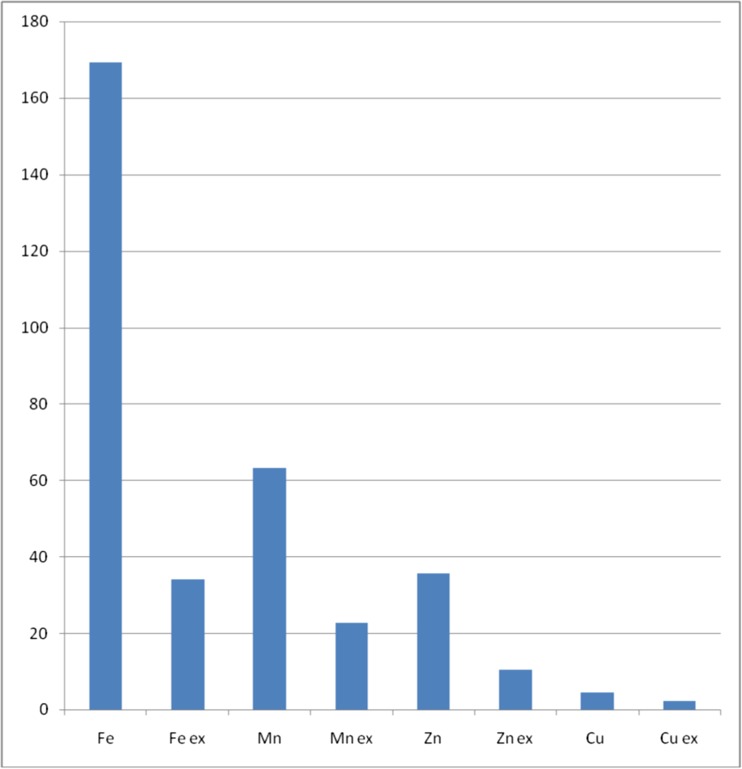
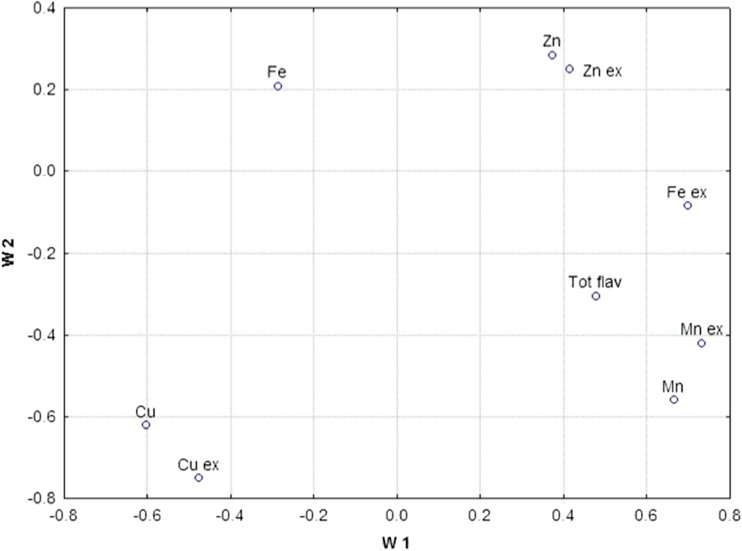
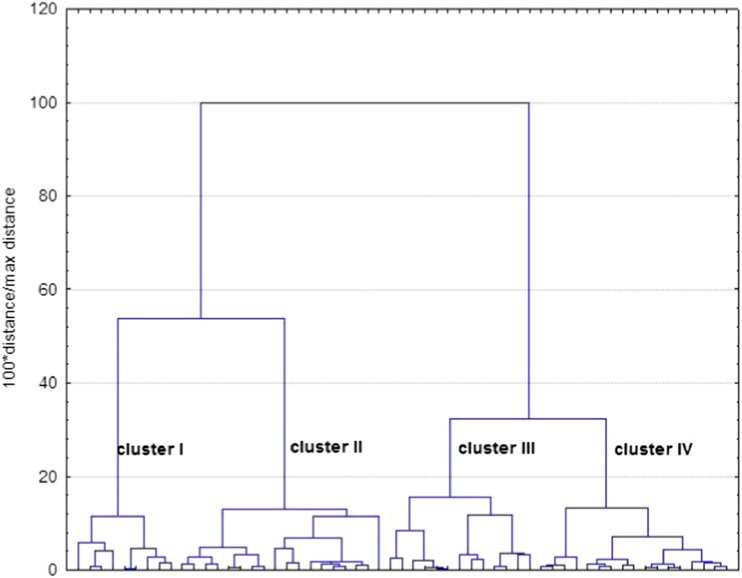
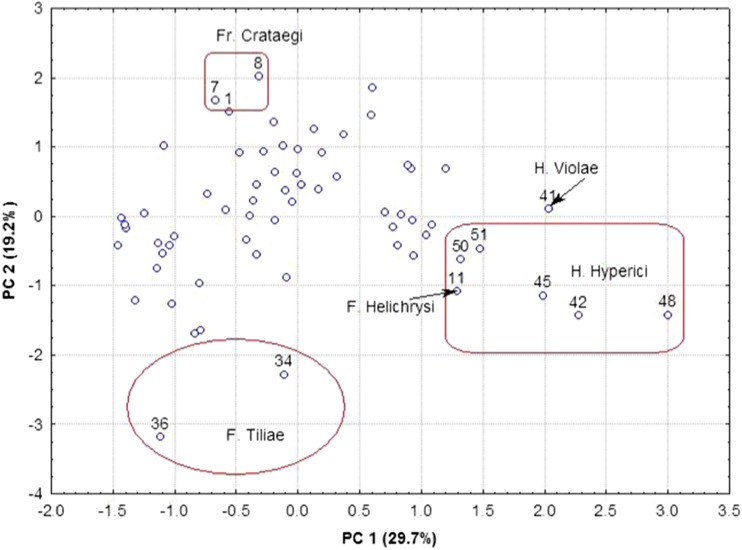
Infusions prepared from medicinal herbs that are rich in flavonoids are very popular herbal remedies in societies of Eastern Europe. Therefore, the content of essential elements together with total flavonoids was analyzed in 65 commercially available samples of herbal drugs originating from Ukraine, Romania, and Belarus. The results showed that metallic elements (in mg kg d.w.) have occurred in the following order: Fe > Mn > Zn > Cu, both for total and water-extractable species. Total flavonoids were determined in the range from 10.0 to 191.8 mg g d.w. Several significant correlations have been found between the analytes, especially among water-extractable Fe with other metals, and total flavonoids and Fe, Zn, and Mn. Analysis of variance has revealed significant differences among studied samples due to their origin from different countries, especially between Belarussian samples and others. Differences owing to belonging to various plant species were also found, as it was noticed in the case of Polygoni aviculare herba in comparison with other botanical plant species. Moreover, multivariate statistical techniques, such as cluster analysis (CA) and principal component analysis (PCA) were used to gather herbal drugs based on similarity of chemical composition. CA grouped the samples into clusters with similar level of elements and total flavonoid contents, and PCA has indicated Hyperici herba, Tiliae flores, and Crataegi fructus as herbal remedies with close concentration of studied elements and flavonoids.
草药制剂中富含类黄酮,在东欧社会中是非常受欢迎的草药疗法。因此,分析了来自乌克兰、罗马尼亚和白俄罗斯的 65 种商业上可获得的草药药物的必需元素和总类黄酮含量。结果表明,金属元素(以 mg kg d.w. 计)的含量顺序为:Fe > Mn > Zn > Cu,无论是总提取物还是水提取物都是如此。总类黄酮的含量范围为 10.0 至 191.8 mg g d.w.。研究人员发现了一些分析物之间的显著相关性,特别是水提取物中的 Fe 与其他金属之间,以及总类黄酮与 Fe、Zn 和 Mn 之间。方差分析显示,由于来自不同国家,研究样品之间存在显著差异,特别是白俄罗斯的样品与其他国家的样品之间。由于属于不同的植物物种,也发现了差异,就像在 Polygoni aviculare herba 与其他植物物种的比较中一样。此外,还使用了多元统计技术,如聚类分析(CA)和主成分分析(PCA),根据化学成分的相似性对草药进行分组。CA 根据元素和总类黄酮含量的相似性将样品分为聚类,PCA 则表明 Hyperici herba、Tiliae flores 和 Crataegi fructus 是具有相似浓度的研究元素和类黄酮的草药疗法。