Jensen Brian C, Parry Traci L, Huang Wei, Ilaiwy Amro, Bain James R, Muehlbauer Michael J, O'Neal Sara K, Patterson Cam, Johnson Gary L, Willis Monte S
Department of Medicine, Division of Cardiology, University of North Carolina, Chapel Hill, NC 27599, USA.
McAllister Heart Institute, University of North Carolina, Chapel Hill, NC 27599, USA.
Metabolites. 2017 Jun 22;7(3):31. doi: 10.3390/metabo7030031.
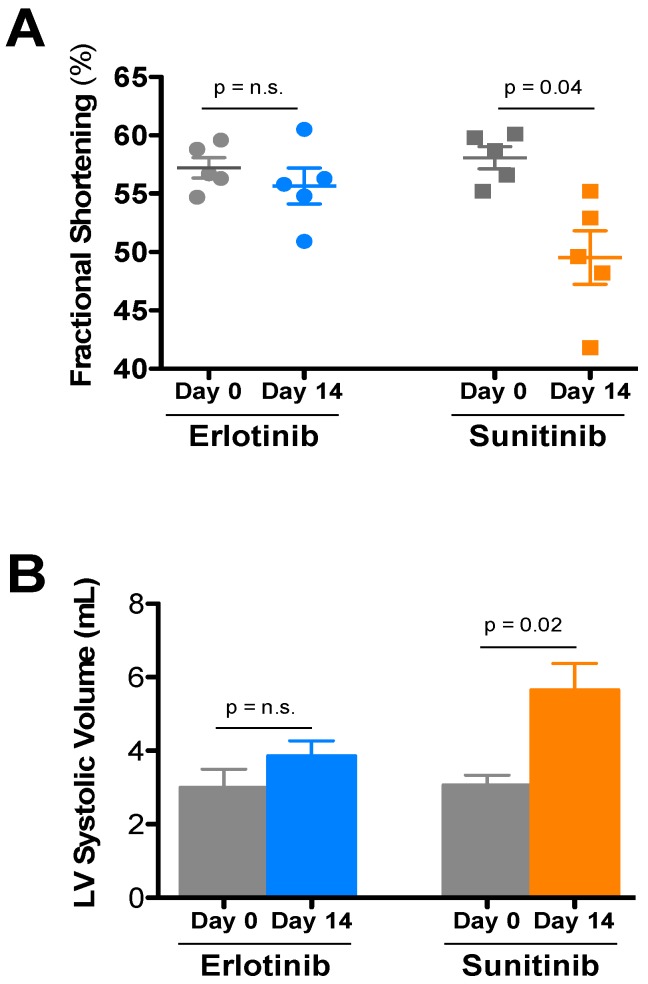
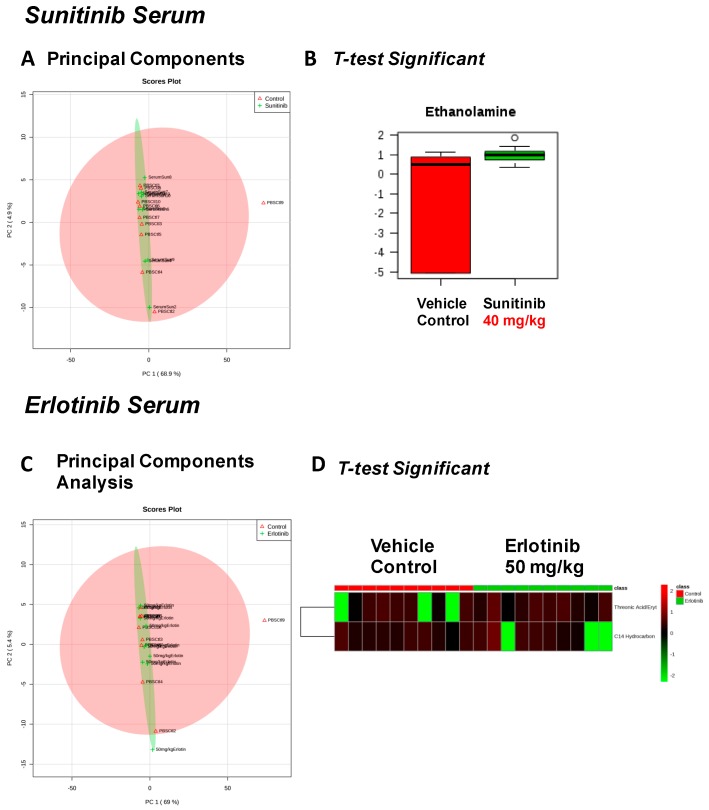
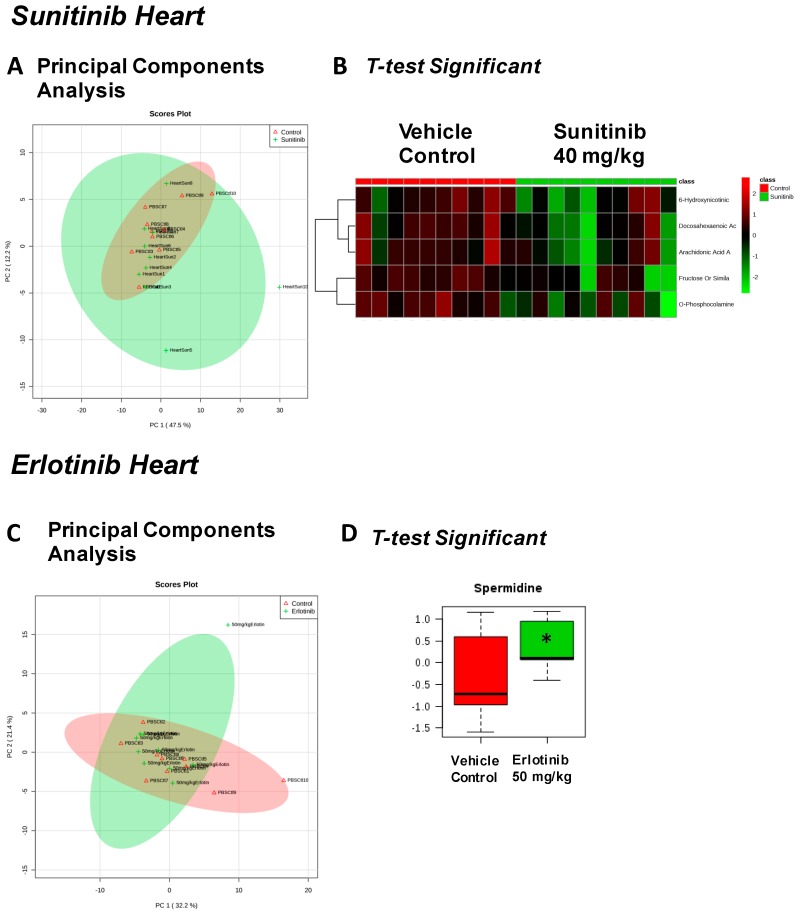
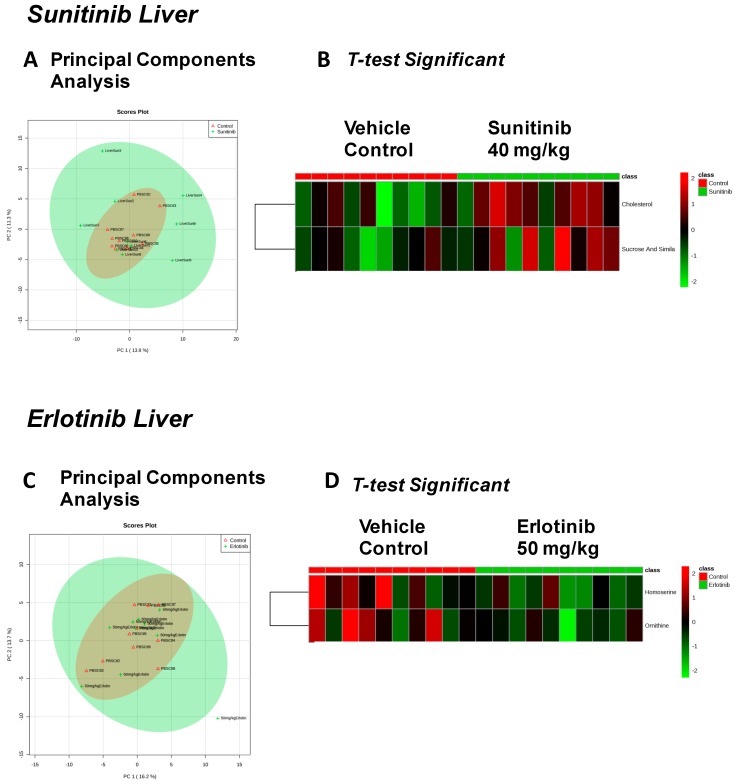
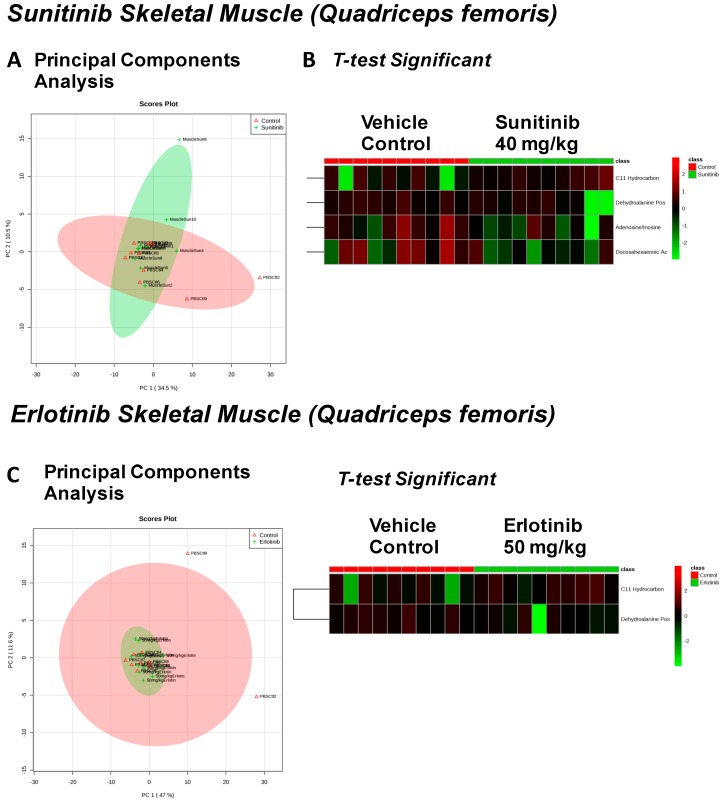
More than 90 tyrosine kinases have been implicated in the pathogenesis of malignant transformation and tumor angiogenesis. Tyrosine kinase inhibitors (TKIs) have emerged as effective therapies in treating cancer by exploiting this kinase dependency. The TKI erlotinib targets the epidermal growth factor receptor (EGFR), whereas sunitinib targets primarily vascular endothelial growth factor receptor (VEGFR) and platelet-derived growth factor receptor (PDGFR).TKIs that impact the function of non-malignant cells and have on- and off-target toxicities, including cardiotoxicities. Cardiotoxicity is very rare in patients treated with erlotinib, but considerably more common after sunitinib treatment. We hypothesized that the deleterious effects of TKIs on the heart were related to their impact on cardiac metabolism. Female FVB/N mice (10/group) were treated with therapeutic doses of sunitinib (40 mg/kg), erlotinib (50 mg/kg), or vehicle daily for two weeks. Echocardiographic assessment of the heart in vivo was performed at baseline and on Day 14. Heart, skeletal muscle, liver and serum were flash frozen and prepped for non-targeted GC-MS metabolomics analysis. Compared to vehicle-treated controls, sunitinib-treated mice had significant decreases in systolic function, whereas erlotinib-treated mice did not. Non-targeted metabolomics analysis of heart identified significant decreases in docosahexaenoic acid (DHA), arachidonic acid (AA)/ eicosapentaenoic acid (EPA), O-phosphocolamine, and 6-hydroxynicotinic acid after sunitinib treatment. DHA was significantly decreased in skeletal muscle (quadriceps femoris), while elevated cholesterol was identified in liver and elevated ethanolamine identified in serum. In contrast, erlotinib affected only one metabolite (spermidine significantly increased). Mice treated with sunitinib exhibited systolic dysfunction within two weeks, with significantly lower heart and skeletal muscle levels of long chain omega-3 fatty acids docosahexaenoic acid (DHA), arachidonic acid (AA)/eicosapentaenoic acid (EPA) and increased serum O-phosphocholine phospholipid. This is the first link between sunitinib-induced cardiotoxicity and depletion of the polyunsaturated fatty acids (PUFAs) and inflammatory mediators DHA and AA/EPA in the heart. These compounds have important roles in maintaining mitochondrial function, and their loss may contribute to cardiac dysfunction.
90多种酪氨酸激酶与恶性转化和肿瘤血管生成的发病机制有关。酪氨酸激酶抑制剂(TKIs)通过利用这种激酶依赖性已成为治疗癌症的有效疗法。TKI厄洛替尼靶向表皮生长因子受体(EGFR),而舒尼替尼主要靶向血管内皮生长因子受体(VEGFR)和血小板衍生生长因子受体(PDGFR)。影响非恶性细胞功能并具有靶上和靶外毒性的TKIs,包括心脏毒性。在用厄洛替尼治疗的患者中,心脏毒性非常罕见,但在舒尼替尼治疗后更为常见。我们假设TKIs对心脏的有害影响与其对心脏代谢的影响有关。将雌性FVB/N小鼠(每组10只)每天用治疗剂量的舒尼替尼(40mg/kg)、厄洛替尼(50mg/kg)或赋形剂治疗两周。在基线和第14天对心脏进行体内超声心动图评估。将心脏、骨骼肌、肝脏和血清速冻并准备进行非靶向气相色谱-质谱代谢组学分析。与赋形剂处理的对照组相比,舒尼替尼处理的小鼠收缩功能显著降低,而厄洛替尼处理的小鼠则没有。对心脏进行的非靶向代谢组学分析发现,舒尼替尼治疗后二十二碳六烯酸(DHA)、花生四烯酸(AA)/二十碳五烯酸(EPA)、O-磷酸胆碱和6-羟基烟酸显著减少。骨骼肌(股四头肌)中的DHA显著降低,而肝脏中胆固醇升高,血清中乙醇胺升高。相比之下,厄洛替尼仅影响一种代谢物(亚精胺显著增加)。用舒尼替尼治疗的小鼠在两周内出现收缩功能障碍,心脏和骨骼肌中长链ω-3脂肪酸二十二碳六烯酸(DHA)、花生四烯酸(AA)/二十碳五烯酸(EPA)水平显著降低,血清O-磷酸胆碱磷脂增加。这是舒尼替尼诱导的心脏毒性与心脏中多不饱和脂肪酸(PUFAs)以及炎症介质DHA和AA/EPA耗竭之间的首次联系。这些化合物在维持线粒体功能方面具有重要作用,它们的缺失可能导致心脏功能障碍。