Li Yuanyuan, Chen Quanzhen, Nan Haiyang, Li Xiaoming, Lu Sijia, Zhao Xiaohui, Liu Baohui, Guo Changhong, Kong Fanjiang, Cao Dong
Key Laboratory of Molecular Cytogenetics and Genetic Breeding of Heilongjiang Province, College of Life Science and Technology, Harbin Normal University, Harbin, China.
The Key Laboratory of Soybean Molecular Design Breeding, Northeast Institute of Geography and Agroecology, Chinese Academy of Sciences, Harbin, China.
PLoS One. 2017 Jun 22;12(6):e0179554. doi: 10.1371/journal.pone.0179554. eCollection 2017.
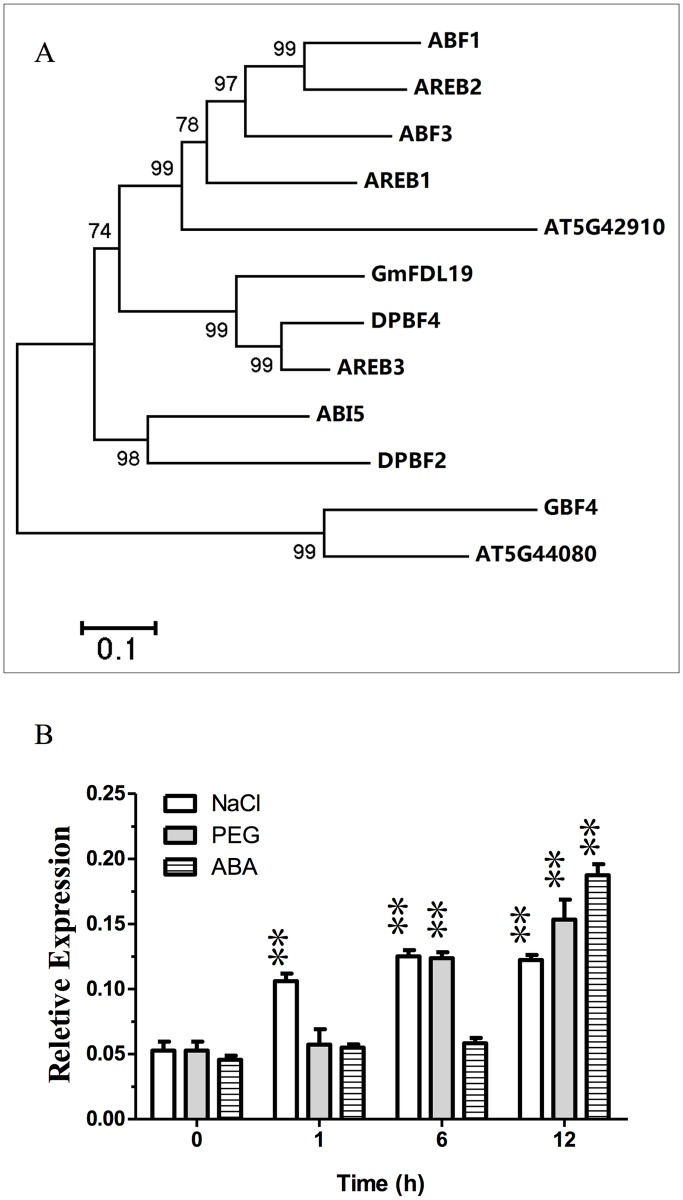
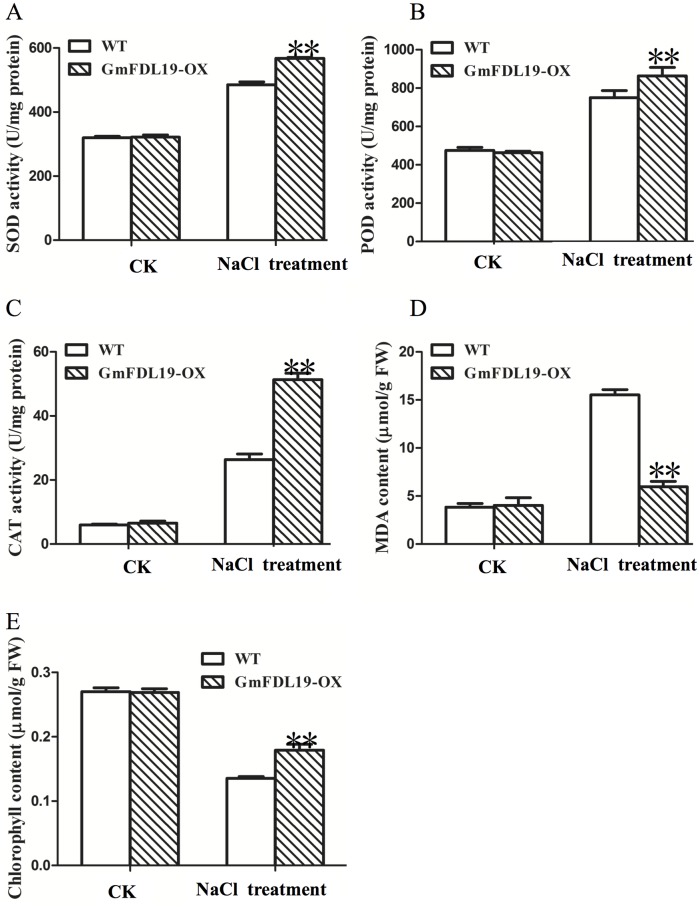
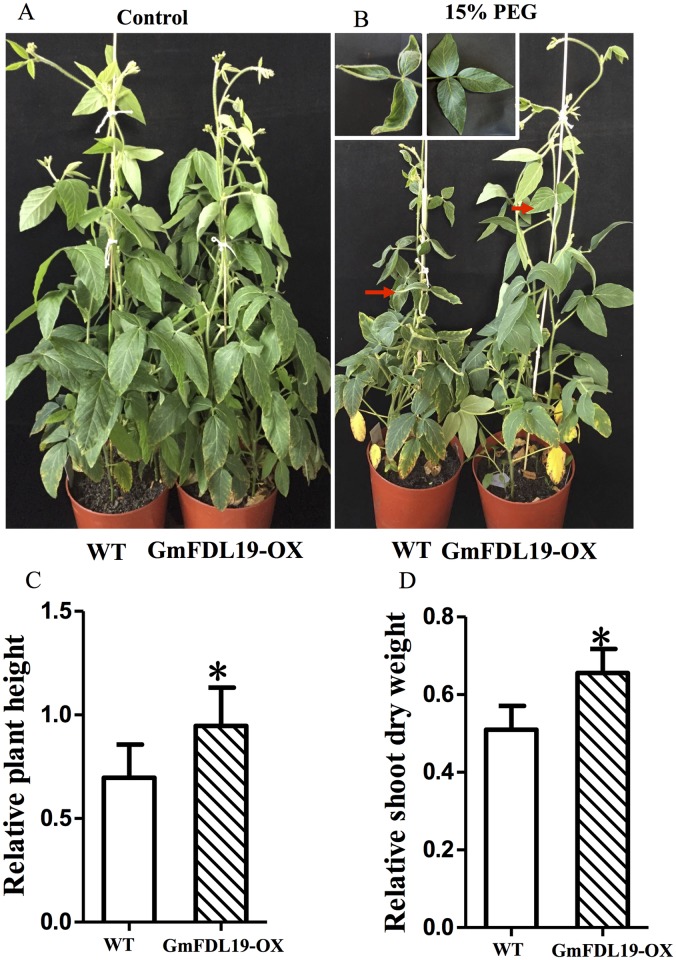
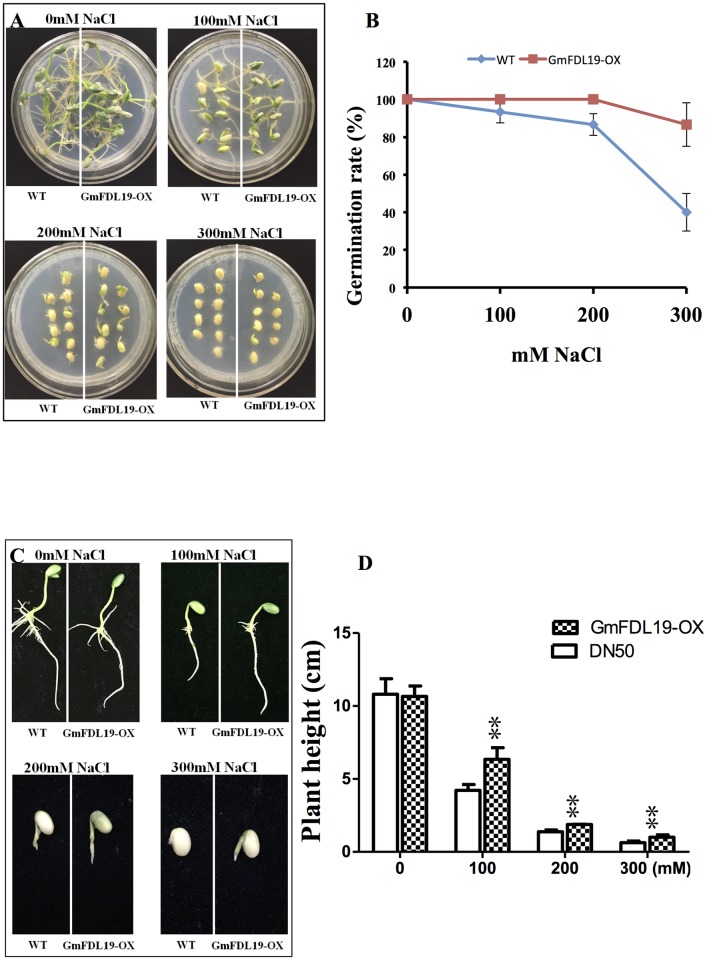
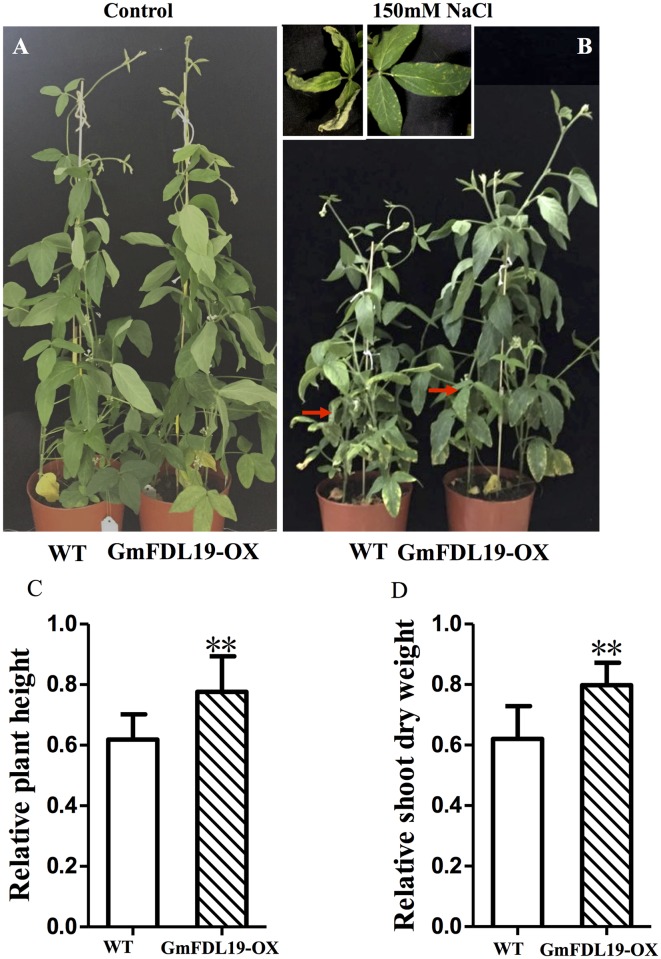
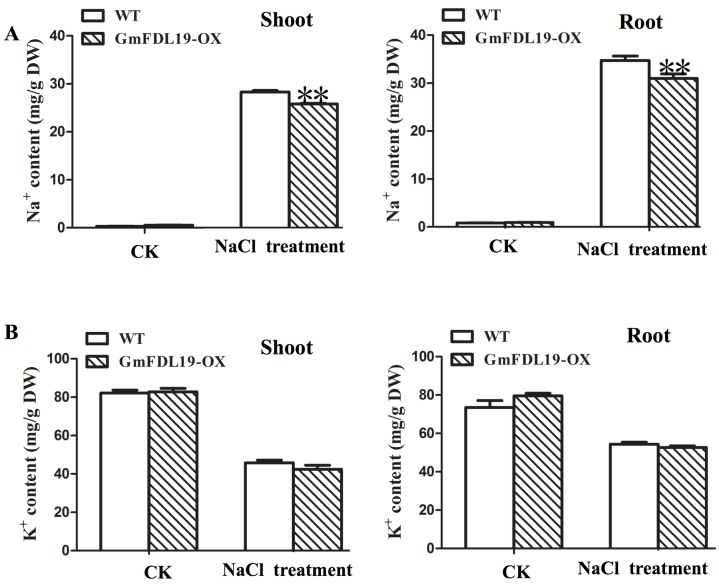
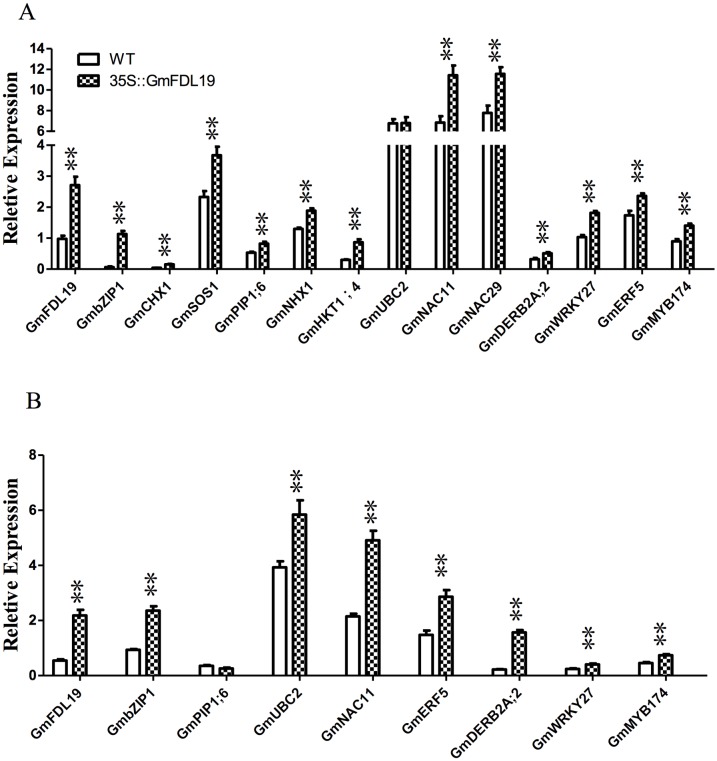
The basic leucine zipper (bZIP) family of transcription factors plays an important role in the growth and developmental process as well as responds to various abiotic stresses, such as drought and high salinity. Our previous work identified GmFDL19, a bZIP transcription factor, as a flowering promoter in soybean, and the overexpression of GmFDL19 caused early flowering in transgenic soybean plants. Here, we report that GmFDL19 also enhances tolerance to drought and salt stress in soybean. GmFDL19 was determined to be a group A member, and its transcription expression was highly induced by abscisic acid (ABA), polyethylene glycol (PEG 6000) and high salt stresses. Overexpression of GmFDL19 in soybean enhanced drought and salt tolerance at the seedling stage. The relative plant height (RPH) and relative shoot dry weight (RSDW) of transgenic plants were significantly higher than those of the WT after PEG and salt treatments. In addition, the germination rate and plant height of the transgenic soybean were also significantly higher than that of WT plants after various salt treatments. Furthermore, we also found that GmFDL19 could reduce the accumulation of Na+ ion content and up-regulate the expression of several ABA/stress-responsive genes in transgenic soybean. We also found that GmFDL19 overexpression increased the activities of several antioxidative enzyme and chlorophyll content but reduced malondialdehyde content. These results suggested that GmFDL19 is involved in soybean abiotic stress responses and has potential utilization to improve multiple stress tolerance in transgenic soybean.
转录因子的碱性亮氨酸拉链(bZIP)家族在生长发育过程中发挥着重要作用,并且能够响应各种非生物胁迫,如干旱和高盐胁迫。我们之前的研究鉴定出一个bZIP转录因子GmFDL19是大豆中的开花促进因子,GmFDL19的过表达导致转基因大豆植株提前开花。在此,我们报道GmFDL19还能增强大豆对干旱和盐胁迫的耐受性。GmFDL19被确定为A组成员,其转录表达受到脱落酸(ABA)、聚乙二醇(PEG 6000)和高盐胁迫的高度诱导。GmFDL19在大豆中的过表达增强了幼苗期的干旱和盐耐受性。PEG和盐处理后,转基因植株的相对株高(RPH)和相对地上部干重(RSDW)显著高于野生型。此外,经过各种盐处理后,转基因大豆的发芽率和株高也显著高于野生型植株。此外,我们还发现GmFDL19可以减少转基因大豆中Na+离子含量的积累,并上调几个ABA/胁迫响应基因的表达。我们还发现GmFDL19的过表达增加了几种抗氧化酶活性和叶绿素含量,但降低了丙二醛含量。这些结果表明,GmFDL19参与了大豆非生物胁迫反应,在提高转基因大豆的多重胁迫耐受性方面具有潜在的应用价值。