College of Agronomy, Northeast Agricultural University, Harbin, 150030, China.
Institute of Crop Science, Chinese Academy of Agricultural Sciences (CAAS)/National Key Facility for Crop Gene Resources and Genetic Improvement, Key Laboratory of Biology and Genetic Improvement of Triticeae Crops, Ministry of Agriculture, Beijing, 100081, China.
BMC Plant Biol. 2020 Mar 20;20(1):123. doi: 10.1186/s12870-020-02337-z.
Crop productivity is challenged by abiotic stresses, among which drought stress is the most common. NF-Y genes, especially NF-YA genes, regulate tolerance to abiotic stress.
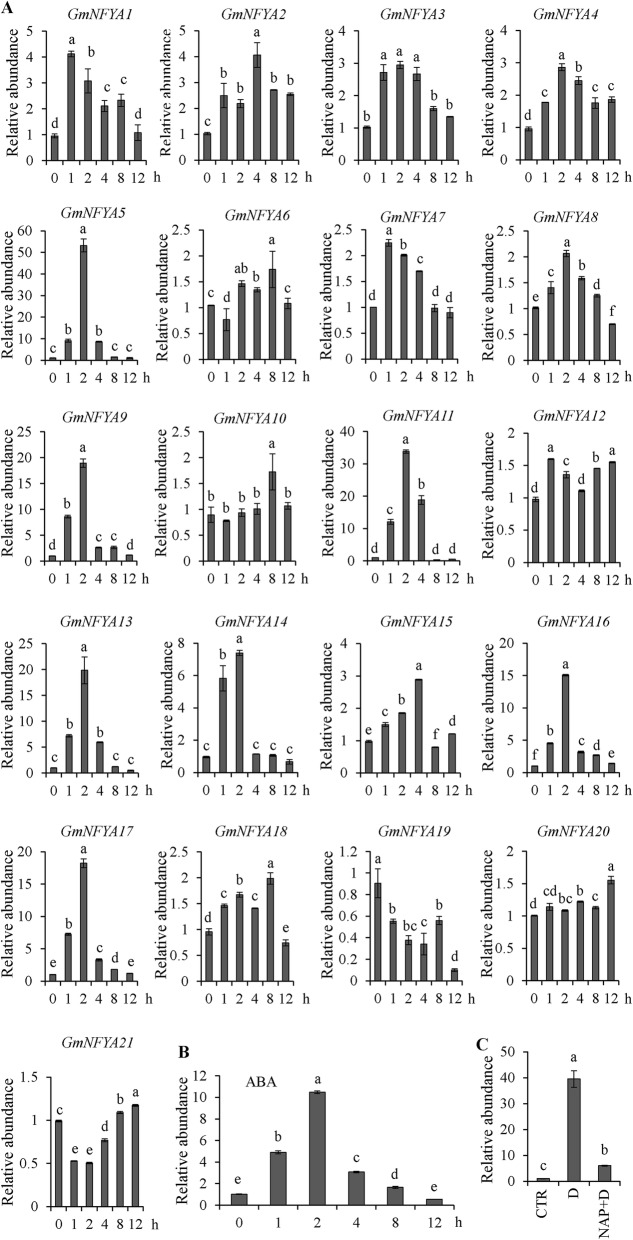
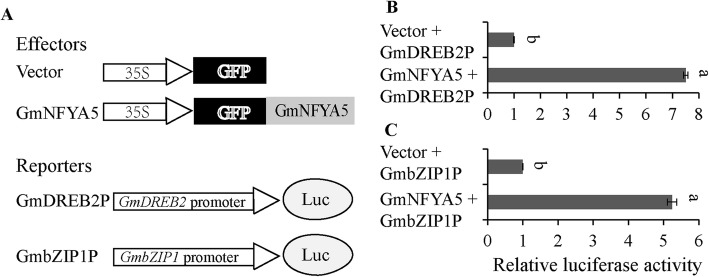
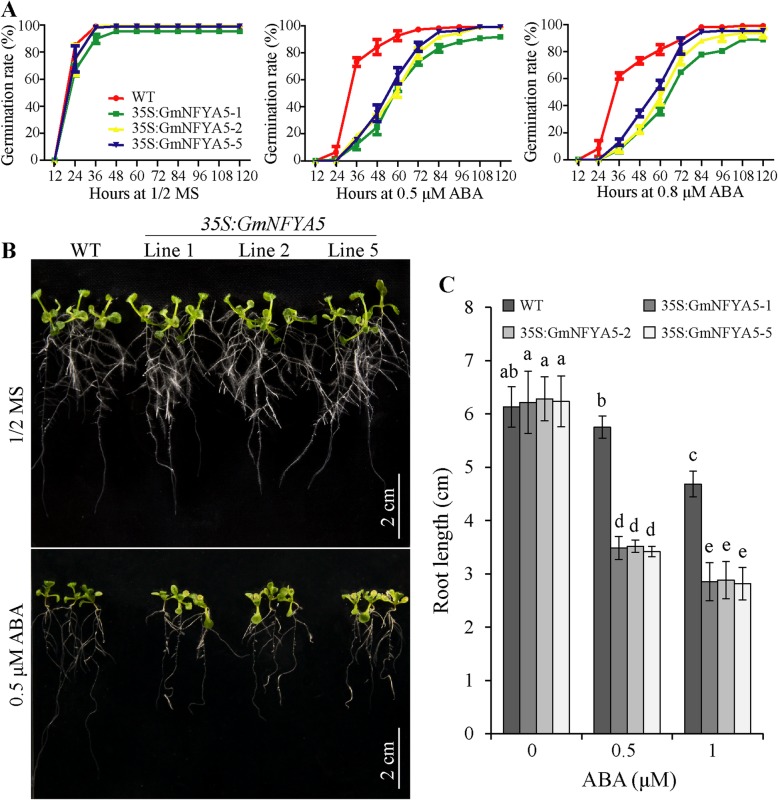
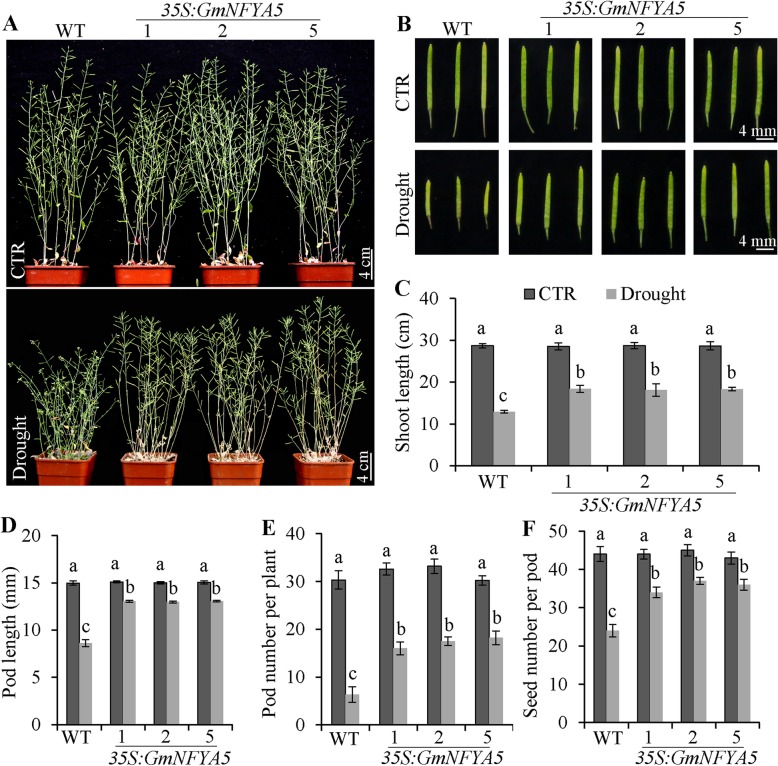
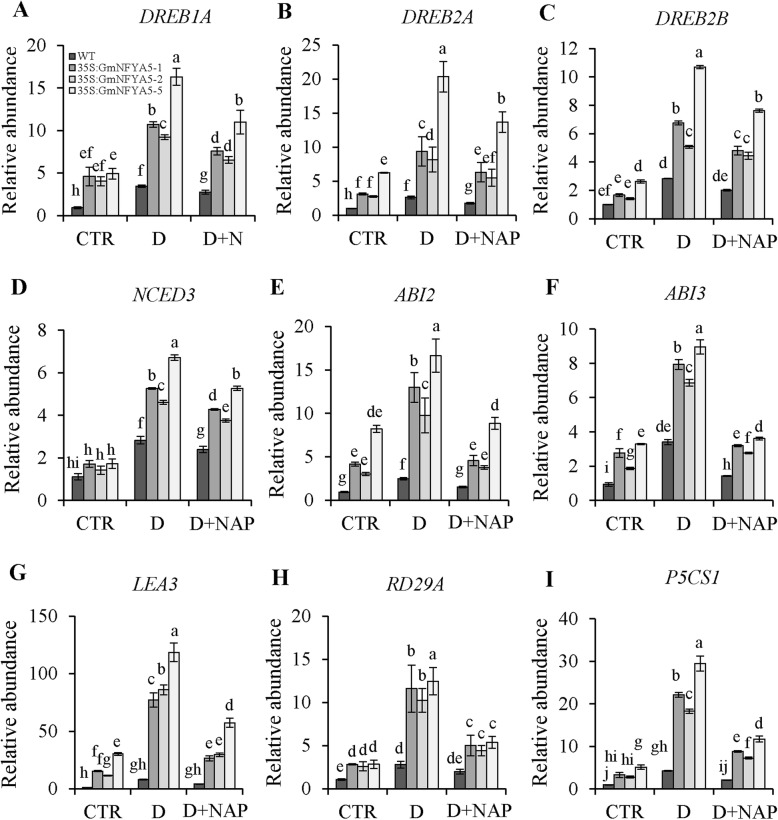
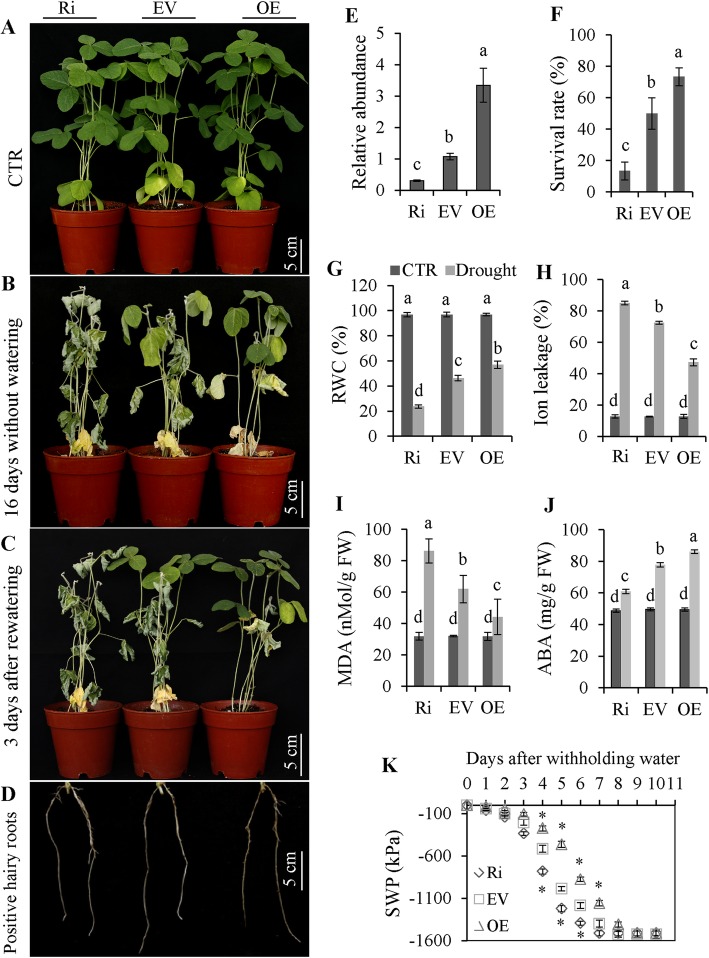
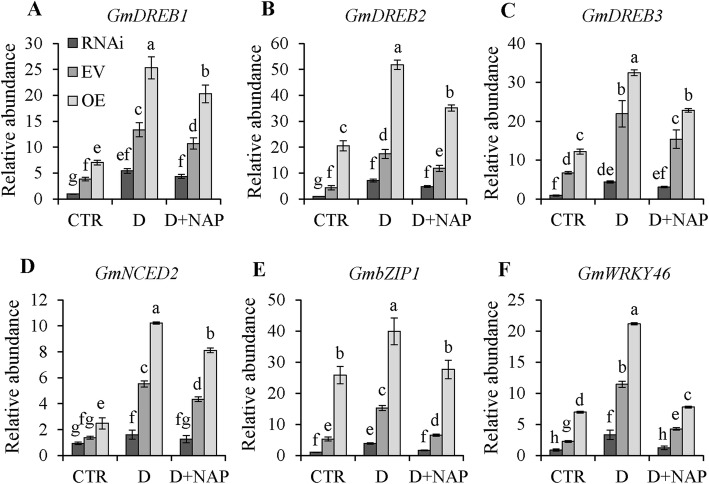
Soybean NF-Y gene GmNFYA5 was identified to have the highest transcript level among all 21 NF-YA genes in soybean (Glycine max L.) under drought stress. Drought-induced transcript of GmNFYA5 was suppressed by the ABA synthesis inhibitor naproxen (NAP). GmNFYA5 transcript was detected in various tissues at vegetative and reproductive growth stages with higher levels in roots and leaves than in other tissues, which was consist with the GmNFYA5 promoter: GUS fusion assay. Overexpression of GmNFYA5 in transgenic Arabidopsis plants caused enhanced drought tolerance in seedlings by decreasing stomatal aperture and water loss from leaves. Overexpression and suppression of GmNFYA5 in soybean resulted in increased and decreased drought tolerance, respectively, relative to plants with an empty vector (EV). Transcript levels of ABA-dependent genes (ABI2, ABI3, NCED3, LEA3, RD29A, P5CS1, GmWRKY46, GmNCED2 and GmbZIP1) and ABA-independent genes (DREB1A, DREB2A, DREB2B, GmDREB1, GmDREB2 and GmDREB3) in transgenic plants overexpressing GmNFYA5 were higher than those of wild-type plants under drought stress; suppression of GmNFYA5 transcript produced opposite results. GmNFYA5 probably regulated the transcript abundance of GmDREB2 and GmbZIP1 by binding to the promoters in vivo.
Our results suggested that overexpression of GmNFYA5 improved drought tolerance in soybean via both ABA-dependent and ABA-independent pathways.
作物生产力受到非生物胁迫的挑战,其中干旱胁迫最为常见。NF-Y 基因,特别是 NF-YA 基因,调节对非生物胁迫的耐受性。
在大豆(Glycine max L.)中,21 个 NF-YA 基因中,NF-Y 基因 GmNFYA5 在干旱胁迫下的转录水平最高。ABA 合成抑制剂萘普生(NAP)抑制 GmNFYA5 的干旱诱导转录。在营养和生殖生长阶段的各种组织中检测到 GmNFYA5 转录物,根和叶中的转录物水平高于其他组织,这与 GmNFYA5 启动子:GUS 融合分析一致。在拟南芥转基因植物中过表达 GmNFYA5 可通过减少气孔开度和叶片水分损失来增强幼苗的耐旱性。与空载体(EV)相比,大豆中 GmNFYA5 的过表达和抑制分别导致耐旱性增加和降低。过表达和抑制 GmNFYA5 的转基因植物中 ABA 依赖性基因(ABI2、ABI3、NCED3、LEA3、RD29A、P5CS1、GmWRKY46、GmNCED2 和 GmbZIP1)和 ABA 非依赖性基因(DREB1A、DREB2A、DREB2B、GmDREB1、GmDREB2 和 GmDREB3)的转录水平在干旱胁迫下均高于野生型植物;抑制 GmNFYA5 转录则产生相反的结果。GmNFYA5 可能通过与体内启动子结合来调节 GmDREB2 和 GmbZIP1 的转录物丰度。
我们的结果表明,过表达 GmNFYA5 通过 ABA 依赖和非依赖途径提高了大豆的耐旱性。