Latorre-Margalef Neus, Brown Justin D, Fojtik Alinde, Poulson Rebecca L, Carter Deborah, Franca Monique, Stallknecht David E
Southeastern Cooperative Wildlife Disease Study, College of Veterinary Medicine, Department of Population Health, The University of Georgia, Athens, Georgia, United States of America.
Department of Biology, Lund University, Lund, Sweden.
PLoS Pathog. 2017 Jun 22;13(6):e1006419. doi: 10.1371/journal.ppat.1006419. eCollection 2017 Jun.
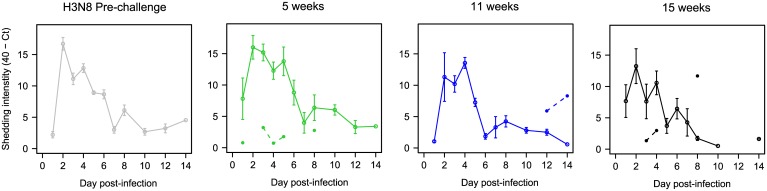
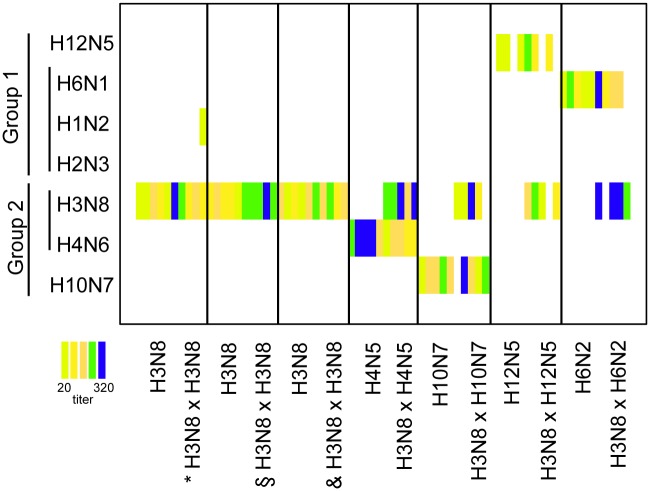
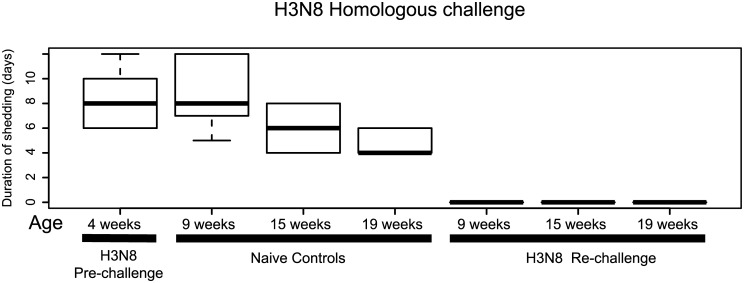
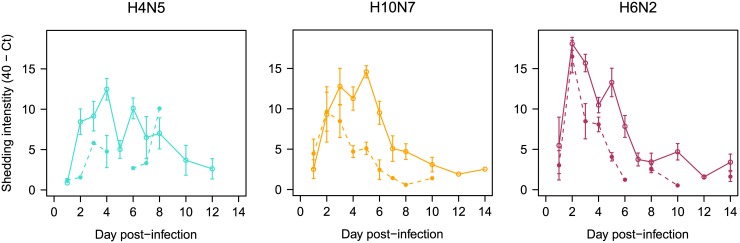
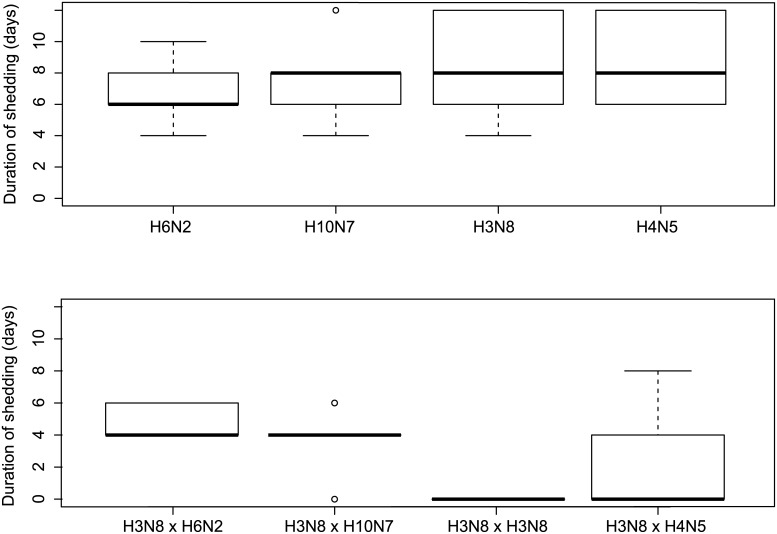
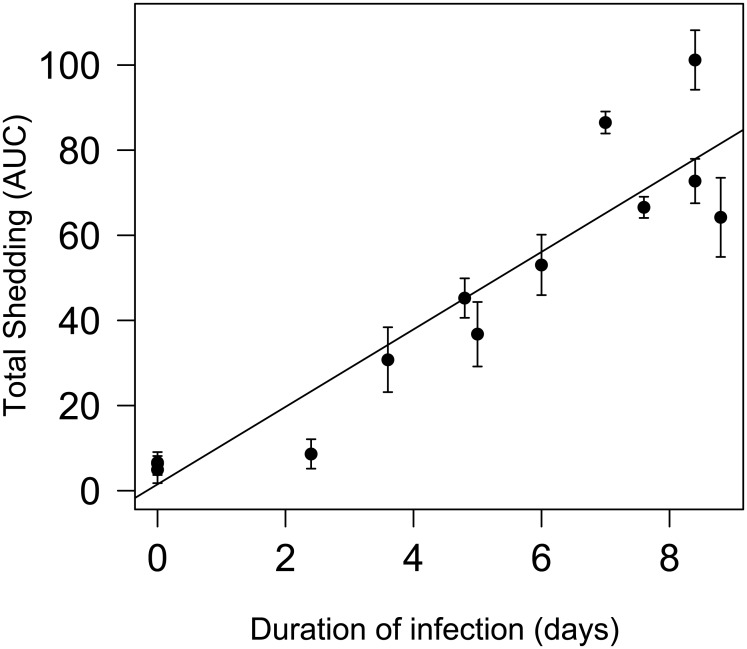
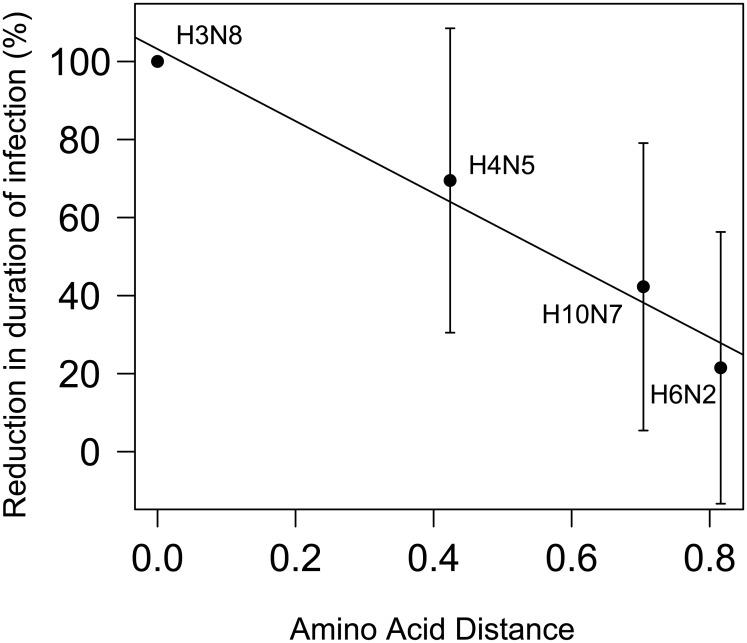
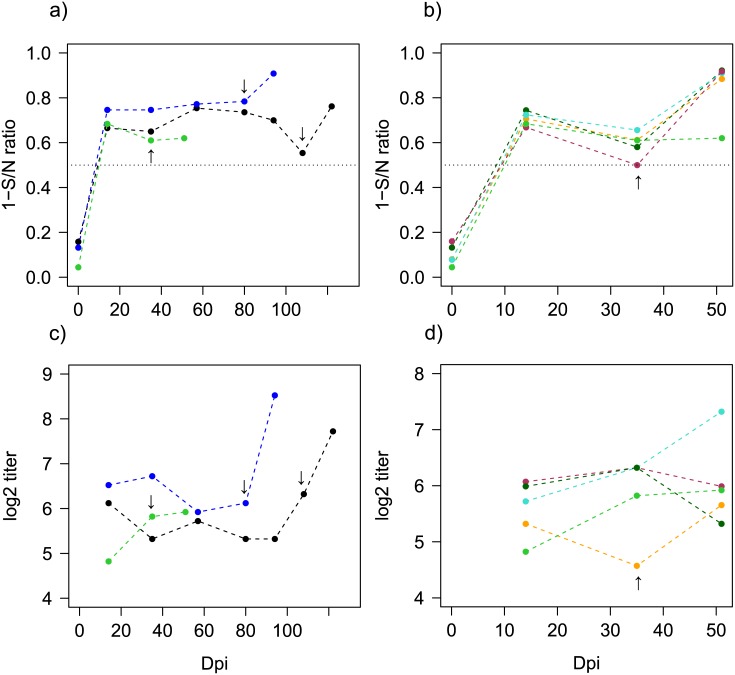
Our overall hypothesis is that host population immunity directed at multiple antigens will influence the prevalence, diversity and evolution of influenza A virus (IAV) in avian populations where the vast subtype diversity is maintained. To investigate how initial infection influences the outcome of later infections with homologous or heterologous IAV subtypes and how viruses interact through host immune responses, we carried out experimental infections in mallard ducks (Anas platyrhynchos). Mallards were pre-challenged with an H3N8 low-pathogenic IAV and were divided into six groups. At five weeks post H3N8 inoculation, each group was challenged with a different IAV subtype (H4N5, H10N7, H6N2, H12N5) or the same H3N8. Two additional pre-challenged groups were inoculated with the homologous H3N8 virus at weeks 11 and 15 after pre-challenge to evaluate the duration of protection. The results showed that mallards were still resistant to re-infection after 15 weeks. There was a significant reduction in shedding for all pre-challenged groups compared to controls and the outcome of the heterologous challenges varied according to hemagglutinin (HA) phylogenetic relatedness between the viruses used. There was a boost in the H3 antibody titer after re-infection with H4N5, which is consistent with original antigenic sin or antigenic seniority and suggest a putative strategy of virus evasion. These results imply competition between related subtypes that could regulate IAV subtype population dynamics in nature. Collectively, we provide new insights into within-host IAV complex interactions as drivers of IAV antigenic diversity that could allow the circulation of multiple subtypes in wild ducks.
我们的总体假设是,针对多种抗原的宿主群体免疫力将影响甲型流感病毒(IAV)在维持大量亚型多样性的禽类群体中的流行率、多样性和进化。为了研究初次感染如何影响随后同源或异源IAV亚型感染的结果,以及病毒如何通过宿主免疫反应相互作用,我们在绿头鸭(Anas platyrhynchos)中进行了实验性感染。绿头鸭先用H3N8低致病性IAV进行预激发,并分为六组。在接种H3N8后五周,每组用不同的IAV亚型(H4N5、H10N7、H6N2、H12N5)或相同的H3N8进行激发。另外两个预激发组在预激发后第11周和第15周接种同源H3N8病毒,以评估保护持续时间。结果表明,绿头鸭在15周后仍对再次感染具有抵抗力。与对照组相比,所有预激发组的病毒脱落量均显著减少,异源激发的结果根据所用病毒之间的血凝素(HA)系统发育相关性而有所不同。用H4N5再次感染后,H3抗体滴度有所提高,这与原始抗原原罪或抗原优势一致,并提示了一种假定的病毒逃避策略。这些结果意味着相关亚型之间的竞争可能调节自然界中IAV亚型群体动态。总体而言,我们为宿主内IAV复杂相互作用提供了新的见解,这些相互作用作为IAV抗原多样性的驱动因素,可能允许多种亚型在野鸭中循环。