Fernandez-Tendero Eva, Day Arnaud, Legros Sandrine, Habrant Anouck, Hawkins Simon, Chabbert Brigitte
FARE Laboratory, INRA, Université de Reims Champagne-Ardenne, Reims, France.
Université de Lille, CNRS, UMR 8576 - UGSF - Unité de Glycobiologie Structurale et Fonctionnelle, Lille, France.
PLoS One. 2017 Jun 22;12(6):e0179794. doi: 10.1371/journal.pone.0179794. eCollection 2017.
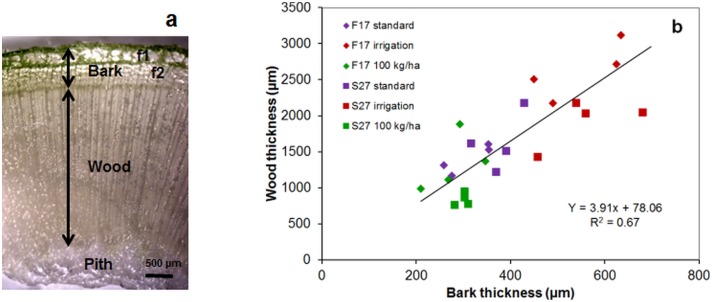
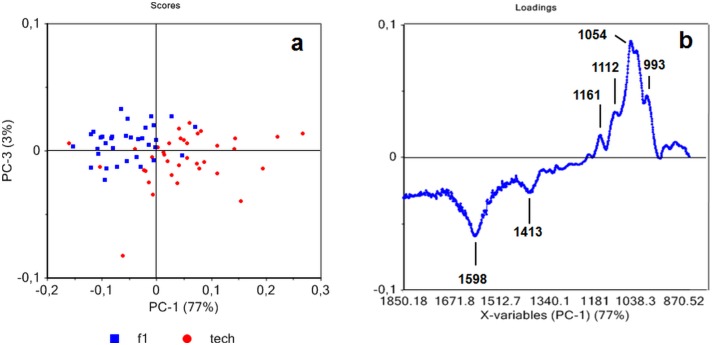
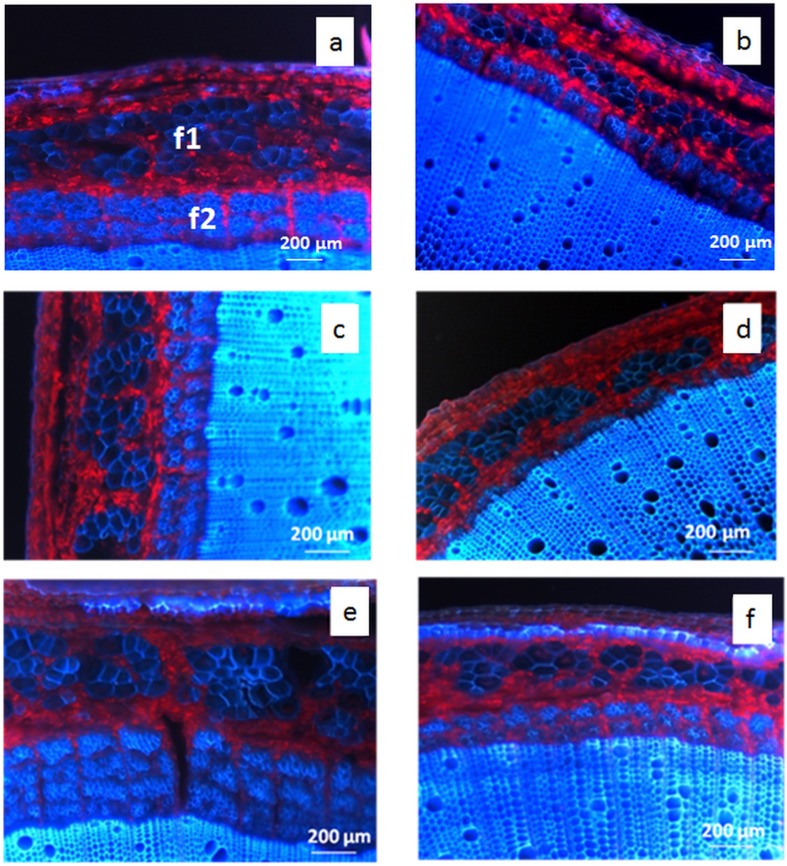
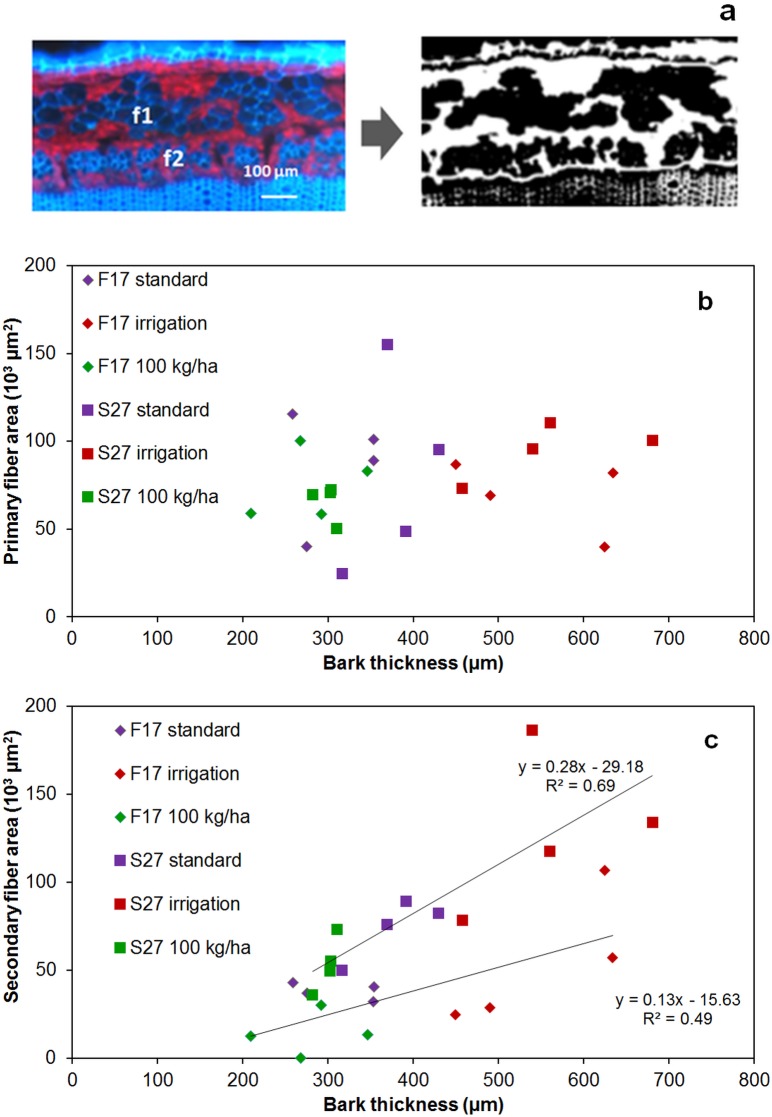
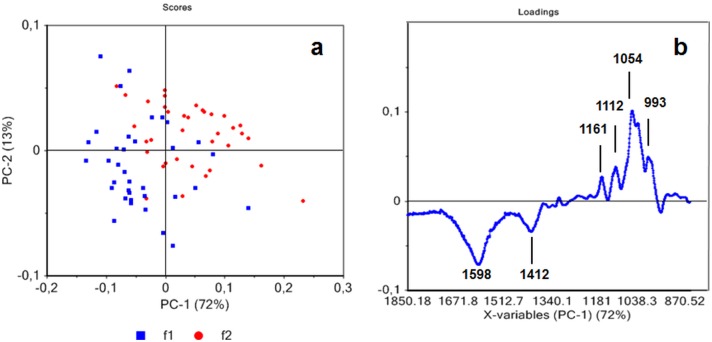
Interest in hemp (Cannabis sativa L.) is increasing due to the development of a new range of industrial applications based on bast fibers. However the variability of bast fiber yield and quality represents an important barrier to further exploitation. Primary and secondary fiber content was examined in two commercial hemp varieties (Fedora 17, Santhica 27) grown under contrasted sowing density and irrigation conditions. Both growing conditions and hemp varieties impact stem tissue architecture with a large effect on the proportion of secondary fibers but not primary fibers. Attenuated total reflectance infrared spectroscopy allowed the discrimination of manually-isolated native primary fibers and secondary fibers but did not reveal any clustering according to growing conditions and variety. Infrared data were confirmed by wet chemistry analyses that revealed slight but significant differences between primary and secondary fiber cell wall composition. Infrared spectroscopy of technical fibers obtained after mechanical defibering revealed differences with native primary, but not secondary fibers and also discriminated samples obtained from plants grown under different conditions. Altogether the results suggested that the observed variability of hemp technical fibers could be partially explained by i) differences in secondary fiber production and ii) differential behavior during mechanical defibering resulting in unequal separation of primary and secondary fibers.
由于基于韧皮纤维开发了一系列新的工业应用,人们对大麻(Cannabis sativa L.)的兴趣与日俱增。然而,韧皮纤维产量和质量的变异性是进一步开发利用的重要障碍。研究了在不同播种密度和灌溉条件下种植的两个商用大麻品种(Fedora 17、Santhica 27)的初生纤维和次生纤维含量。生长条件和大麻品种均会影响茎组织结构,对次生纤维比例有很大影响,但对初生纤维比例影响不大。衰减全反射红外光谱法能够区分人工分离的天然初生纤维和次生纤维,但未发现根据生长条件和品种的聚类情况。红外数据经湿化学分析证实,初生纤维和次生纤维细胞壁组成存在细微但显著的差异。对机械去纤后得到的工业用纤维进行红外光谱分析,发现其与天然初生纤维存在差异,但与次生纤维无差异,且能区分不同生长条件下种植的植物所得到的样品。总体而言,结果表明,观察到的大麻工业用纤维变异性可能部分由以下原因解释:i)次生纤维产量的差异;ii)机械去纤过程中的不同行为导致初生纤维和次生纤维分离不均。