Han Sheng, Wang Chao, Qin Xiaofei, Xia Junzhe, Wu Anhua
Department of Neurosurgery, The First Hospital of China Medical University, Nanjing Street 155, Heping District, Shenyang, 110001, China.
J Exp Clin Cancer Res. 2017 Jun 22;36(1):83. doi: 10.1186/s13046-017-0552-y.
This study examined the ability of lipopolysaccharide (LPS) to affect glioma and glioma stem-like cells (GSCs) in vitro and to induce antitumor immunity in vivo and the role of TLR4 in these processes.
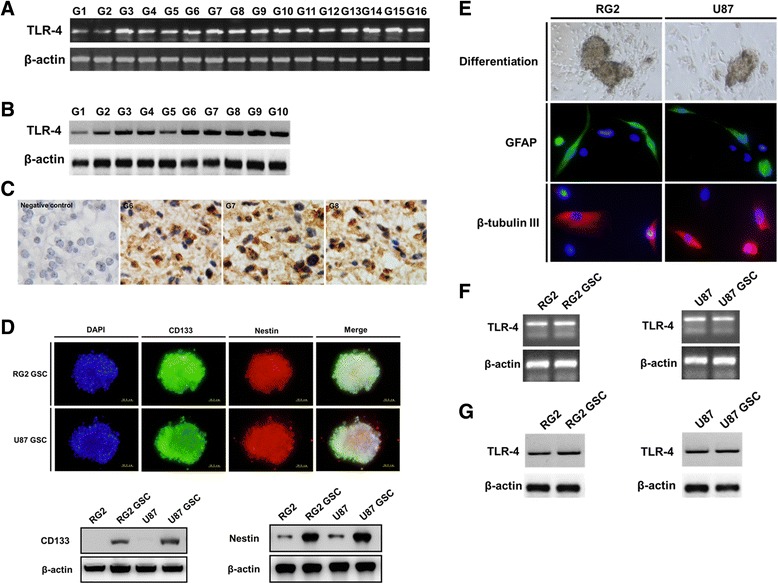
Using RT-PCR and immunohistochemistry, we examined the expression of TLR4 in 34 glioblastoma clinical samples. Using real time-PCR, western blot and ELISA analyses, the effect of LPS stimulation on the expression of immune related molecules was evaluated in RG2 and U87 GSCs. Control or LPS-pretreated RG2 GSCs were intracranially or subcutaneously implanted into wild-type or nude Fisher 344 rats. Histopathological examinations were used to assess tumor progression and immune infiltration and Kaplan-Meier analyses to compare survival times of the animal models.
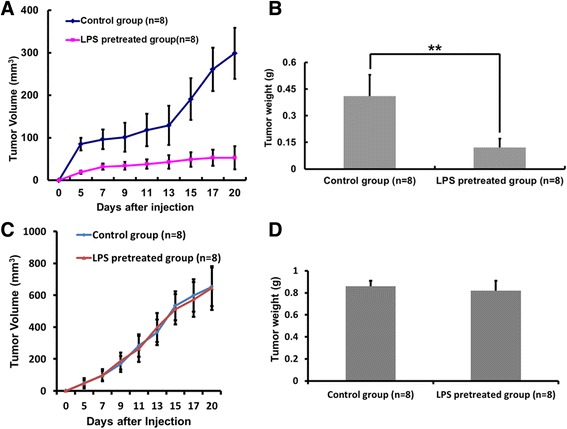
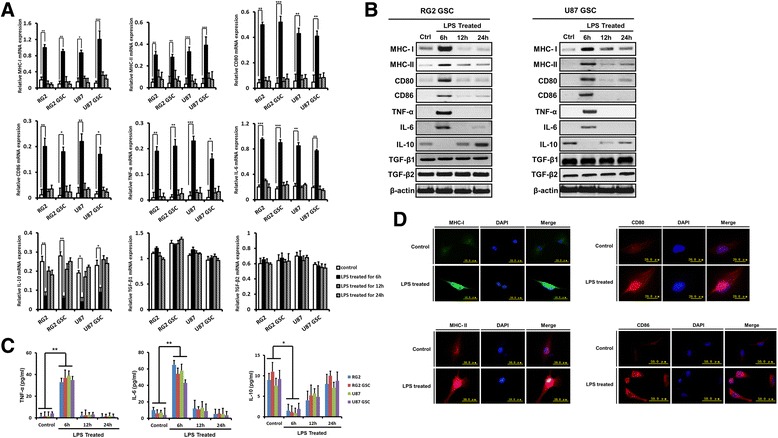
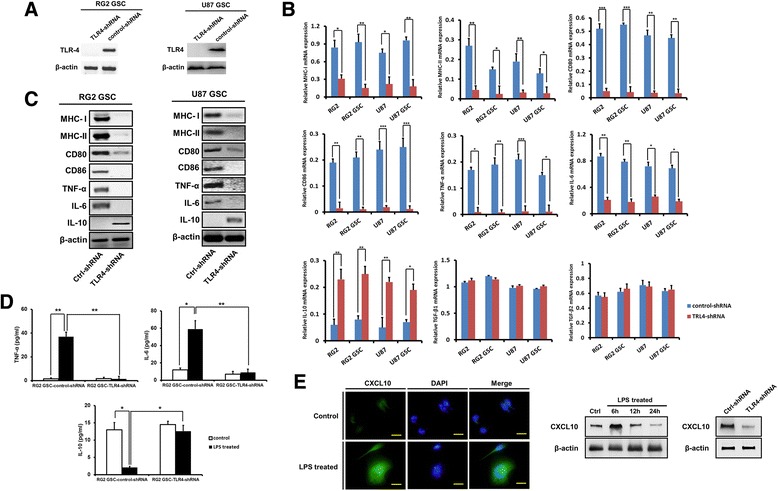
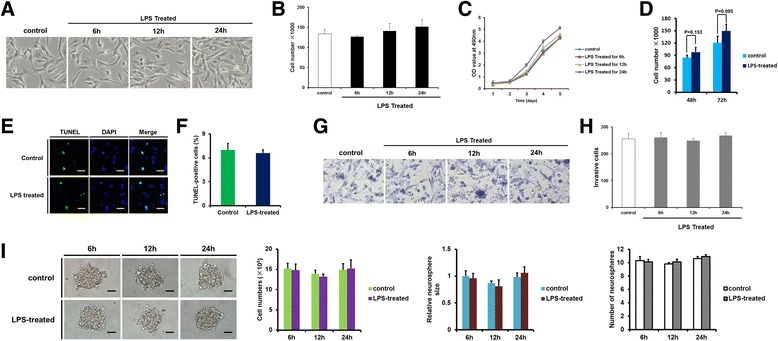
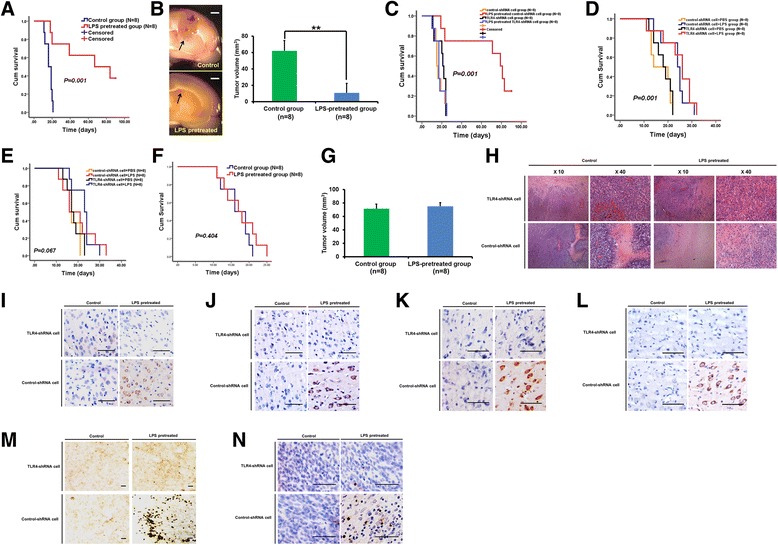
TLR4 was highly expressed in glioblastoma clinical samples. In vitro LPS stimulation for 6 h significantly altered expression of immune related molecules in RG2 and U87 GSCs. However, prolonged LPS stimulation diminished this effect. Rats inoculated intracranially with LPS-pretreated RG2 GSCs survived significantly longer than rats inoculated with control RG2 GSCs. In vivo, LPS-pretreated RG2 GSCs expressed higher levels of MHC molecules, CXCL10 and TNF-α and recruited more CD8 lymphocytes. However, intratumoral LPS treatment was not equally beneficial. Furthermore, the in vitro and in vivo effects of LPS stimulation appeared to be largely TLR4-dependent.
LPS pretreatment promotes the recognition and eradication of tumor GSCs in vivo when the immune function of the tumor-bearing host is intact. In addition, our data indicate a complex relationship between bacterial infection and glioma prognosis.
本研究检测了脂多糖(LPS)在体外对胶质瘤和胶质瘤干细胞(GSCs)的影响以及在体内诱导抗肿瘤免疫的能力,同时研究了Toll样受体4(TLR4)在这些过程中的作用。
利用逆转录聚合酶链反应(RT-PCR)和免疫组织化学方法,检测34例胶质母细胞瘤临床样本中TLR4的表达。采用实时定量PCR、蛋白质免疫印迹法(western blot)和酶联免疫吸附测定(ELISA)分析,评估LPS刺激对RG2和U87 GSCs中免疫相关分子表达的影响。将对照或经LPS预处理的RG2 GSCs颅内或皮下植入野生型或裸Fisher 344大鼠体内。采用组织病理学检查评估肿瘤进展和免疫浸润情况,并通过Kaplan-Meier分析比较动物模型的生存时间。
TLR4在胶质母细胞瘤临床样本中高表达。体外LPS刺激6小时可显著改变RG2和U87 GSCs中免疫相关分子的表达,但延长LPS刺激时间会减弱这种作用。颅内接种经LPS预处理的RG2 GSCs的大鼠比接种对照RG2 GSCs的大鼠存活时间显著延长。在体内,经LPS预处理的RG2 GSCs表达更高水平的主要组织相容性复合体(MHC)分子、CXC趋化因子配体10(CXCL10)和肿瘤坏死因子-α(TNF-α),并募集更多的CD8淋巴细胞。然而,肿瘤内LPS治疗并非同样有益。此外,LPS刺激的体外和体内效应似乎很大程度上依赖于TLR4。
当荷瘤宿主免疫功能完整时,LPS预处理可促进体内肿瘤GSCs的识别和清除。此外,我们的数据表明细菌感染与胶质瘤预后之间存在复杂关系。