Kavaliauskaitė Dovilė, Stakišaitis Donatas, Martinkutė Justė, Šlekienė Lina, Kazlauskas Arūnas, Balnytė Ingrida, Lesauskaitė Vaiva, Valančiūtė Angelija
Department of Histology and Embryology, Lithuanian University of Health Sciences, Mickeviciaus Str., LT-44307 Kaunas, Lithuania.
Laboratory of Cancer Epidemiology, National Cancer Institute, Santariškių Str. 1, LT-08660 Vilnius, Lithuania.
Biomed Res Int. 2017;2017:6326053. doi: 10.1155/2017/6326053. Epub 2017 May 31.
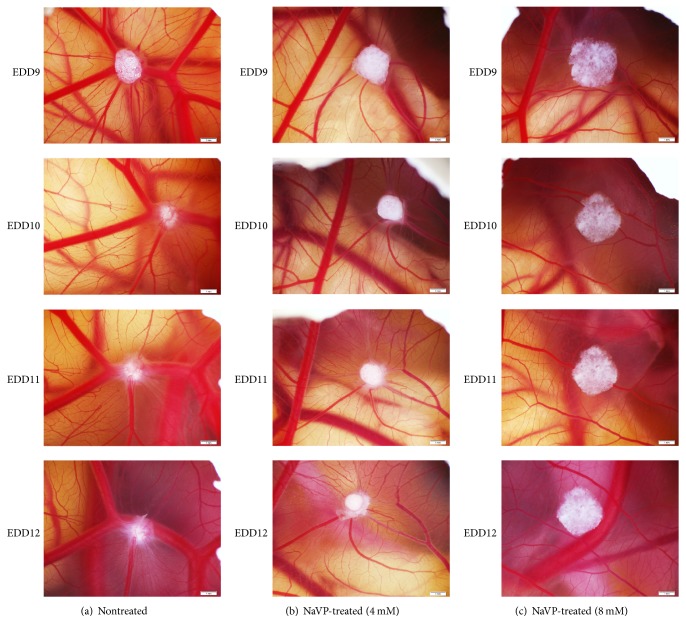
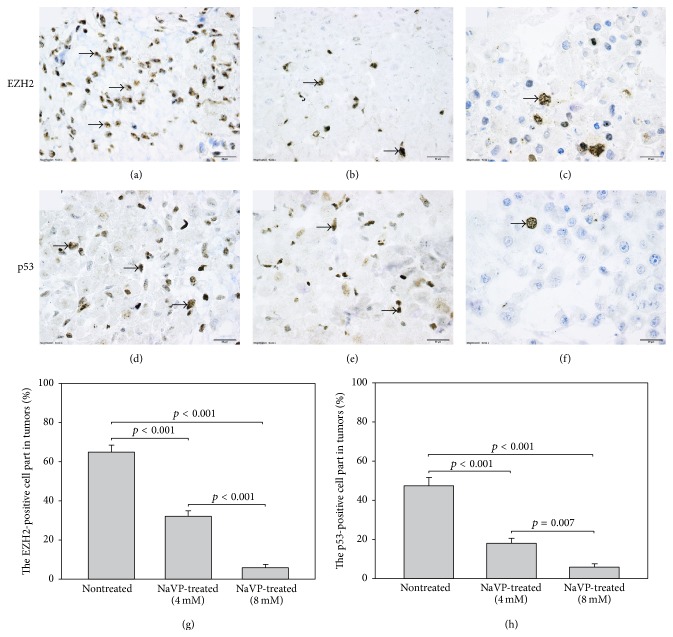
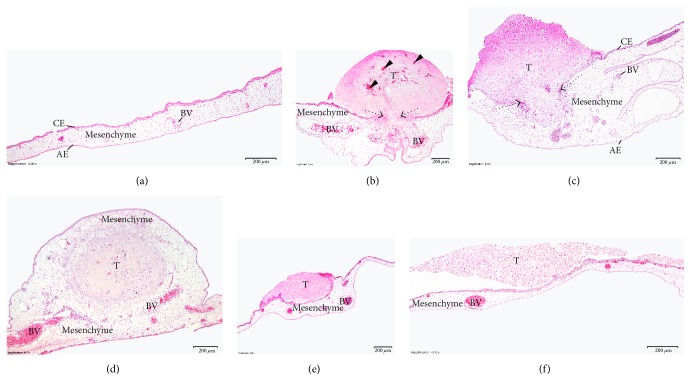
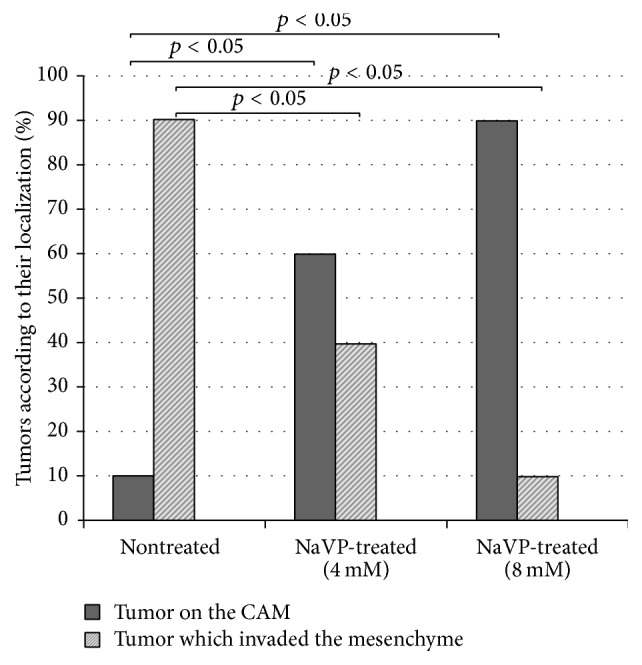
Literature data support evidences that glioblastoma (GBM) patients experience prolonged survival due to sodium valproate (NaVP) treatment. The study assessed the human GBM cell U87 xenograft studied in the chicken embryo chorioallantoic membrane (CAM) model evaluating NaVP effect on tumor. Three groups of tumors (each = 10) were studied: nontreated, treated with 4 mM, and treated with 8 mM of NaVP. The majority of tumors without NaVP treatment during tumor growth destroyed the chorionic epithelium, invaded the mesenchyme, and induced angiogenesis. Incidence of tumor formation on CAM without invasion into the mesenchyme was higher when U87 cells were treated with NaVP; the effect significantly increased with NaVP concentration. Treatment with 8 mM of NaVP did not show clear dynamics of tumor growth during 5 days; at the same time, the angiogenesis failed. With a strong staining of EZH2, p53 in tumors without NaVP treatment was found, and NaVP significantly decreased the expression of EZH2- and p53-positive cells; the effect was significantly higher at its 8 mM concentration. NaVP has a function in blocking the growth, invasion, and angiogenesis of tumor in the CAM model; tumor growth interferes with EZH2 and p53 molecular pathways, supporting the NaVP potential in GBM therapy.
文献数据支持胶质母细胞瘤(GBM)患者因丙戊酸钠(NaVP)治疗而延长生存期的证据。该研究评估了在鸡胚绒毛尿囊膜(CAM)模型中研究的人GBM细胞U87异种移植瘤,评估了NaVP对肿瘤的影响。研究了三组肿瘤(每组 = 10个):未治疗组、用4 mM NaVP治疗组和用8 mM NaVP治疗组。在肿瘤生长期间未接受NaVP治疗的大多数肿瘤破坏了绒毛膜上皮,侵入间充质并诱导血管生成。当U87细胞用NaVP处理时,在CAM上形成的未侵入间充质的肿瘤发生率更高;该效应随NaVP浓度显著增加。用8 mM NaVP治疗在5天内未显示出明显的肿瘤生长动态;同时,血管生成失败。在未接受NaVP治疗的肿瘤中发现EZH2、p53有强染色,而NaVP显著降低了EZH2和p53阳性细胞的表达;在8 mM浓度时该效应显著更高。NaVP在CAM模型中具有阻断肿瘤生长、侵袭和血管生成的作用;肿瘤生长干扰EZH2和p53分子途径,支持NaVP在GBM治疗中的潜力。