INSERM, U1065, Université de Nice-Sophia Antipolis, Centre Méditerranéen de Médecine Moléculaire (C3M), Department of microbial toxins in host-pathogen interactions, 151 Route St Antoine de Ginestière, BP 2 3194, 06204 Nice, France.
Immunology Program, Benaroya Research Institute at Virginia Mason, 1201 Ninth Avenue, Seattle, Washington 98101, USA.
Nat Commun. 2017 Jun 23;8:15839. doi: 10.1038/ncomms15839.
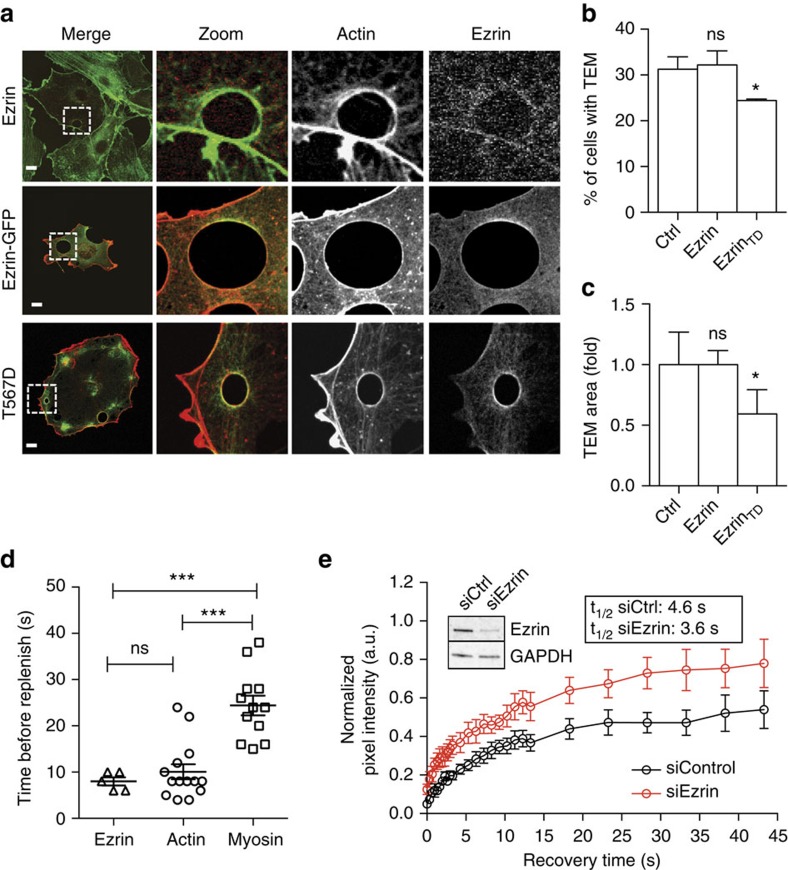
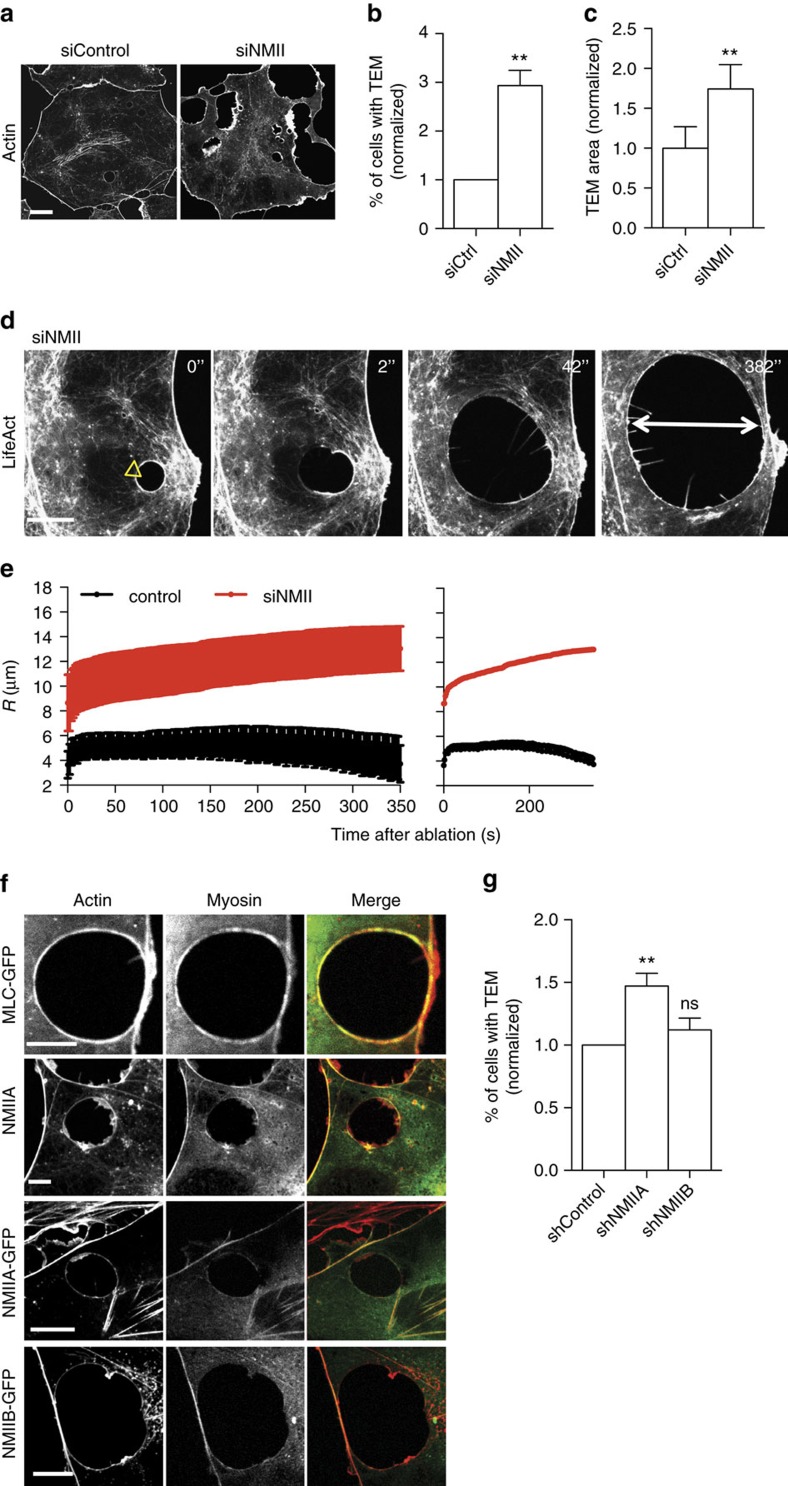
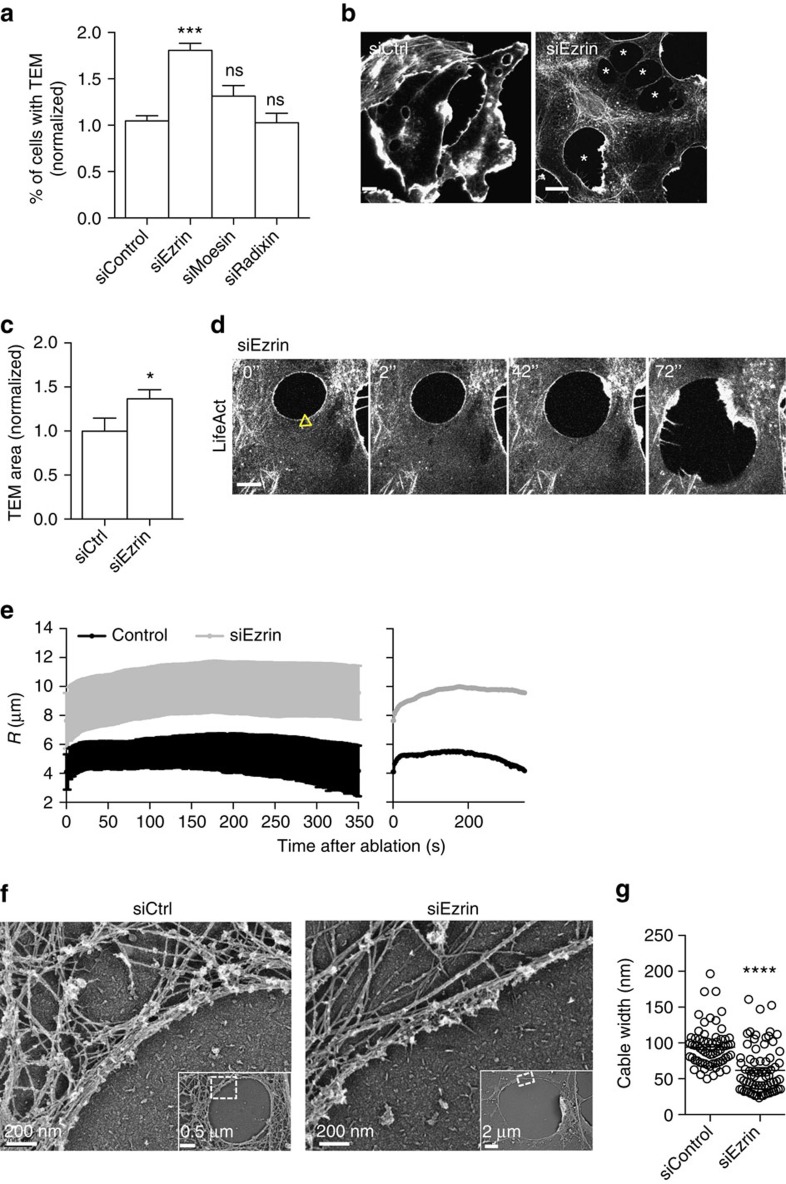
Transendothelial cell macroaperture (TEM) tunnels control endothelium barrier function and are triggered by several toxins from pathogenic bacteria that provoke vascular leakage. Cellular dewetting theory predicted that a line tension of uncharacterized origin works at TEM boundaries to limit their widening. Here, by conducting high-resolution microscopy approaches we unveil the presence of an actomyosin cable encircling TEMs. We develop a theoretical cellular dewetting framework to interpret TEM physical parameters that are quantitatively determined by laser ablation experiments. This establishes the critical role of ezrin and non-muscle myosin II (NMII) in the progressive implementation of line tension. Mechanistically, fluorescence-recovery-after-photobleaching experiments point for the upstream role of ezrin in stabilizing actin filaments at the edges of TEMs, thereby favouring their crosslinking by NMIIa. Collectively, our findings ascribe to ezrin and NMIIa a critical function of enhancing line tension at the cell boundary surrounding the TEMs by promoting the formation of an actomyosin ring.
跨内皮细胞大孔 (TEM) 隧道控制着内皮细胞屏障功能,并且可被几种来自致病细菌的毒素触发,引发血管渗漏。细胞去湿理论预测,在 TEM 边界处存在一种尚未确定来源的线张力,以限制其扩大。在这里,通过进行高分辨率显微镜方法,我们揭示了围绕 TEM 的肌动球蛋白电缆的存在。我们开发了一个理论细胞去湿框架来解释 TEM 的物理参数,这些参数通过激光消融实验定量确定。这确立了 ezrin 和非肌肉肌球蛋白 II(NMII)在逐渐实施线张力方面的关键作用。从机制上讲,荧光恢复后光漂白实验指出 ezrin 在 TEM 边缘稳定肌动蛋白纤维的上游作用,从而有利于 NMIIa 对其交联。总的来说,我们的发现表明,ezrin 和 NMIIa 通过促进肌动球蛋白环的形成,在 TEM 周围的细胞边界处增强线张力,从而发挥关键作用。