Byrd Polar and Climate Research Center, The Ohio State University, 1090 Carmack Road, Columbus, Ohio 43210, USA.
Brookhaven National Laboratory, Building 490D, PO Box 5000, Upton, New York 11973, USA.
Nat Commun. 2017 Jun 15;8:15799. doi: 10.1038/ncomms15799.
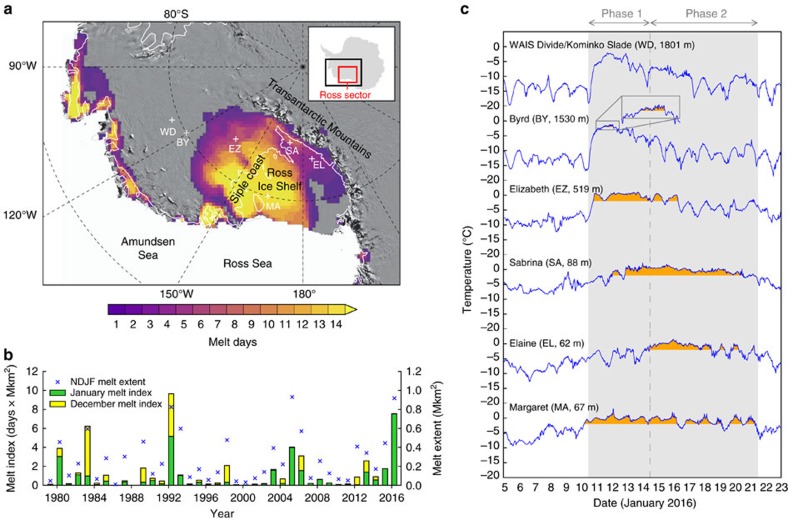
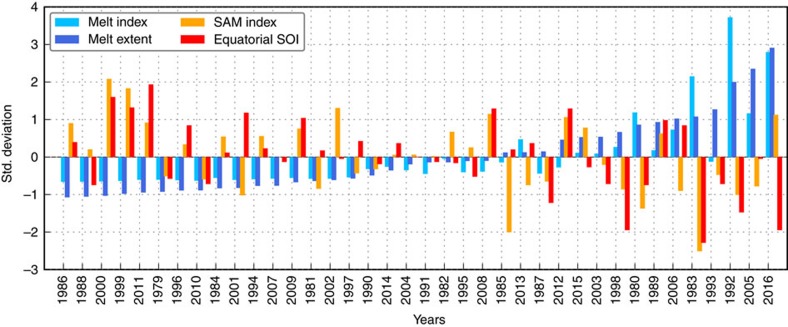
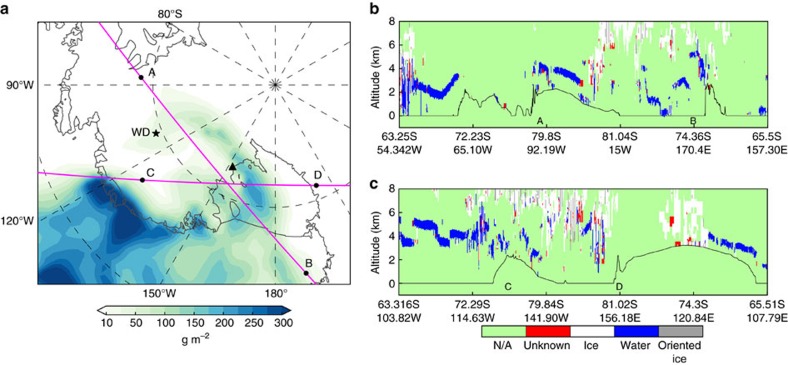
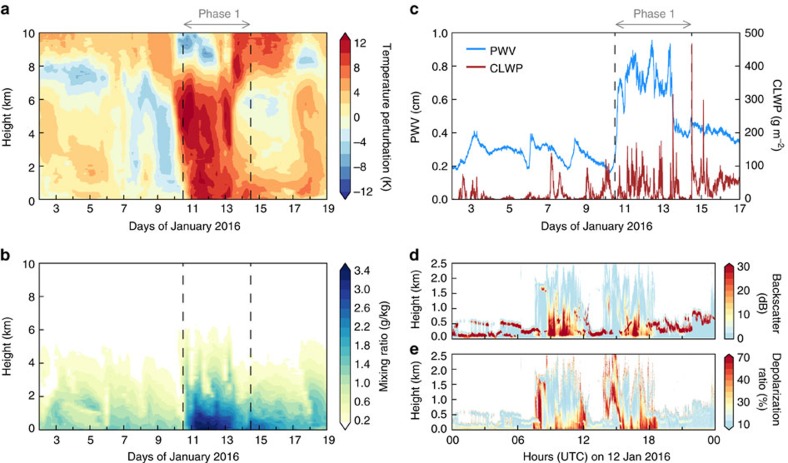
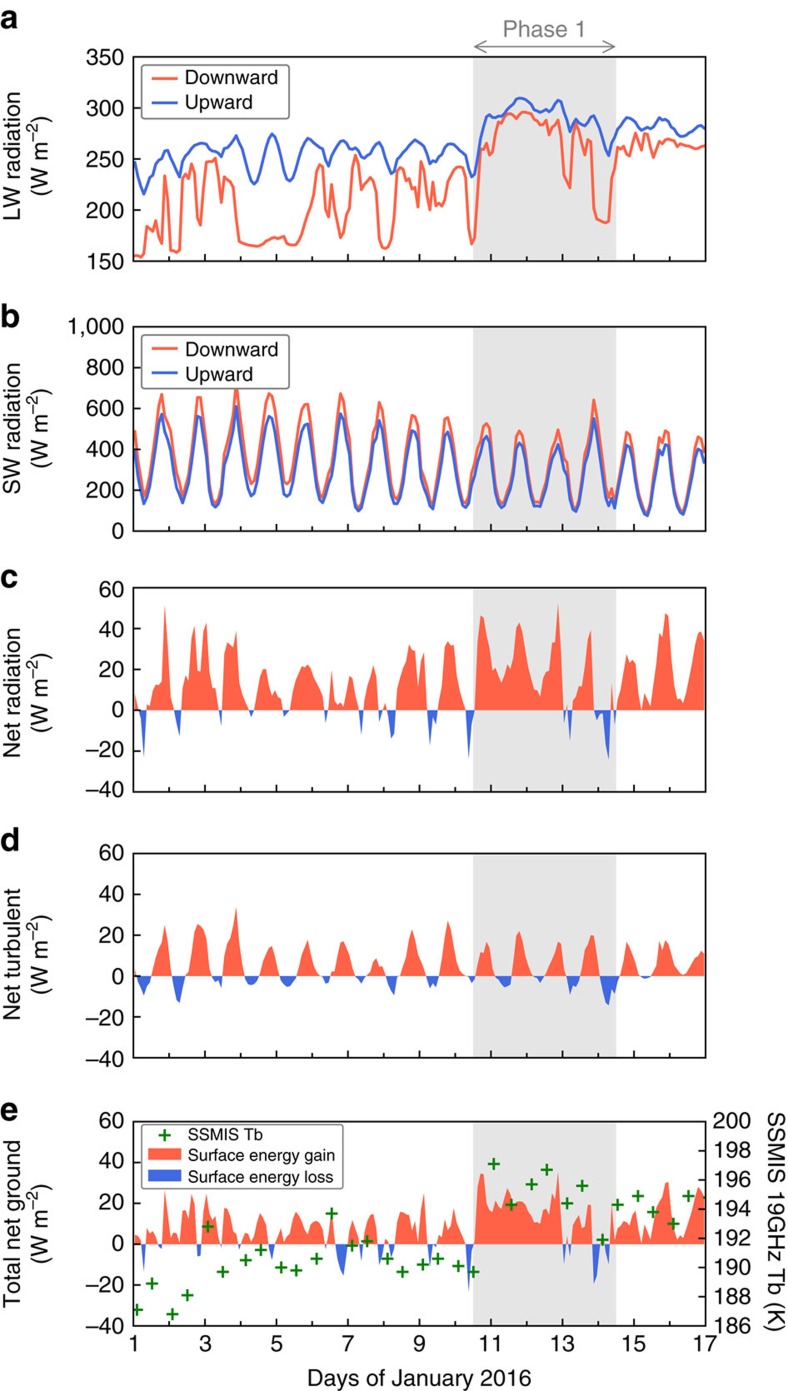
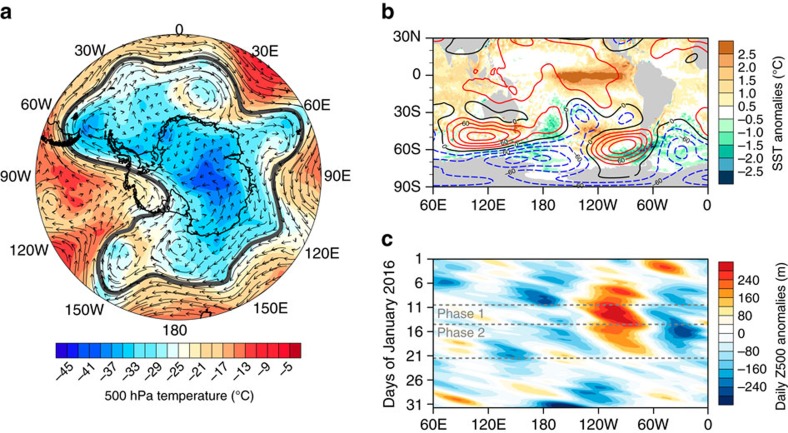
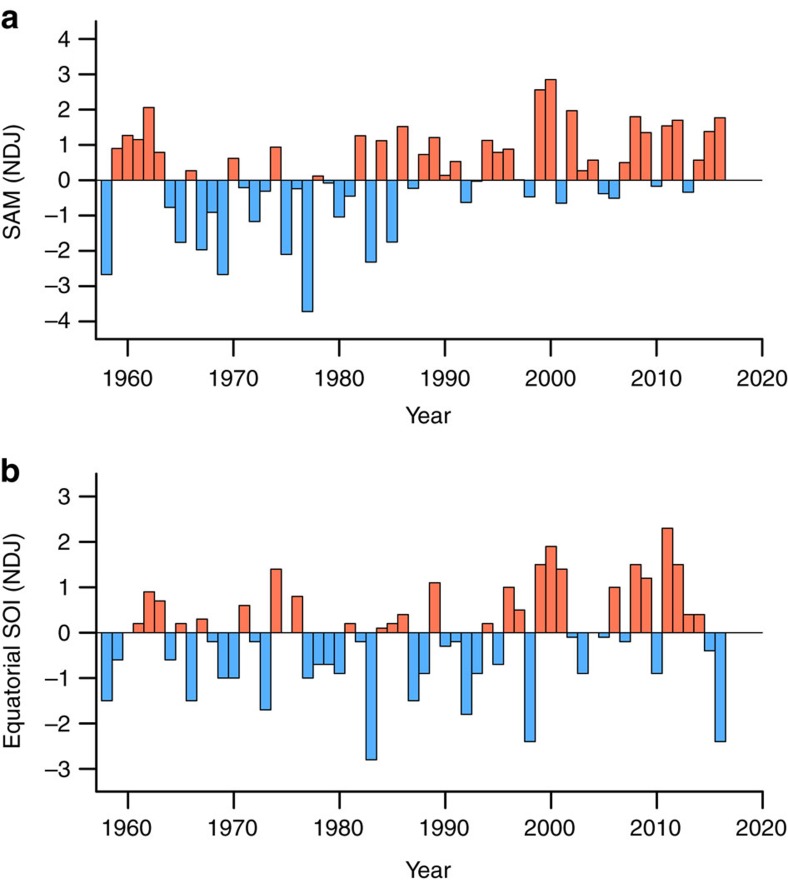
Over the past two decades the primary driver of mass loss from the West Antarctic Ice Sheet (WAIS) has been warm ocean water underneath coastal ice shelves, not a warmer atmosphere. Yet, surface melt occurs sporadically over low-lying areas of the WAIS and is not fully understood. Here we report on an episode of extensive and prolonged surface melting observed in the Ross Sea sector of the WAIS in January 2016. A comprehensive cloud and radiation experiment at the WAIS ice divide, downwind of the melt region, provided detailed insight into the physical processes at play during the event. The unusual extent and duration of the melting are linked to strong and sustained advection of warm marine air toward the area, likely favoured by the concurrent strong El Niño event. The increase in the number of extreme El Niño events projected for the twenty-first century could expose the WAIS to more frequent major melt events.
在过去的二十年中,导致西南极冰盖(WAIS)大量流失的主要因素是沿海冰架下的温暖海水,而不是更温暖的大气。然而,WAIS 地势低洼地区的地表融化仍时有发生,且尚未被完全了解。本文报道了 2016 年 1 月在罗斯海扇区 WAIS 发生的一次大规模且持续时间长的地表融化事件。在融化区域下风处的 WAIS 冰脊进行了一项全面的云和辐射实验,为该事件期间发挥作用的物理过程提供了详细的了解。这种不寻常的融化范围和持续时间与向该地区强烈和持续的暖海空气平流有关,这种情况可能受到同期强烈厄尔尼诺事件的影响。在二十一世纪,预计极端厄尔尼诺事件的数量将会增加,这可能会使 WAIS 更容易受到更频繁的大规模融化事件的影响。