Ren Huibo, Dang Xie, Cai Xianzhi, Yu Peihang, Li Yajun, Zhang Shanshan, Liu Menghong, Chen Binqing, Lin Deshu
Basic Forestry and Proteomics Research Center, Fujian Provincial Key Laboratory of Haixia Applied Plant Systems Biology, College of Life Science, Fujian Agriculture and Forestry University, Fuzhou, China.
Haixia Institute of Science and Technology, Fujian Agriculture and Forestry University, Fuzhou, China.
PLoS Genet. 2017 Jun 23;13(6):e1006851. doi: 10.1371/journal.pgen.1006851. eCollection 2017 Jun.
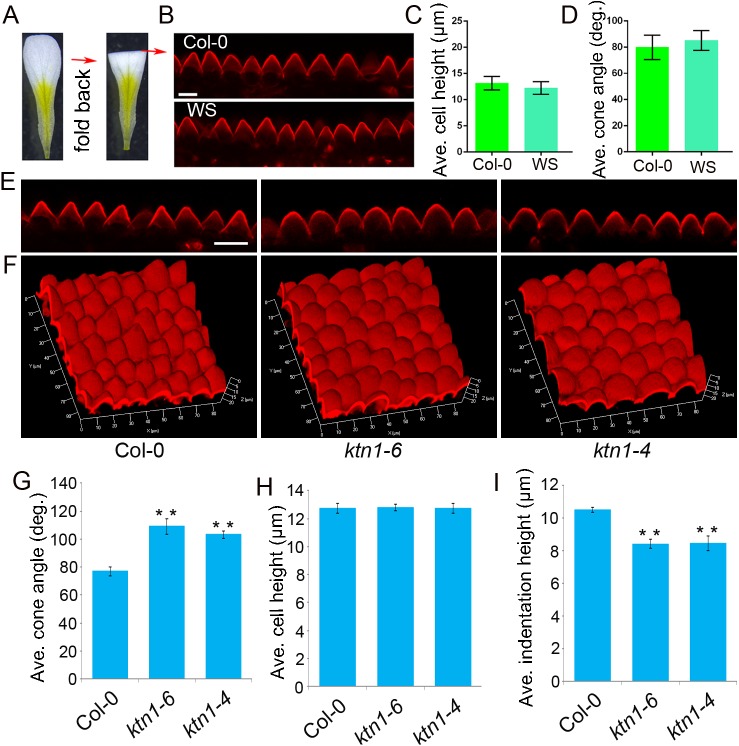
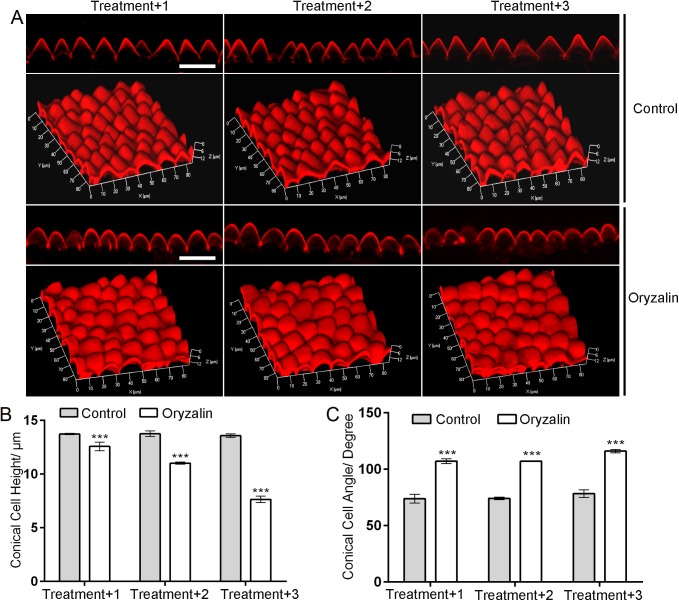
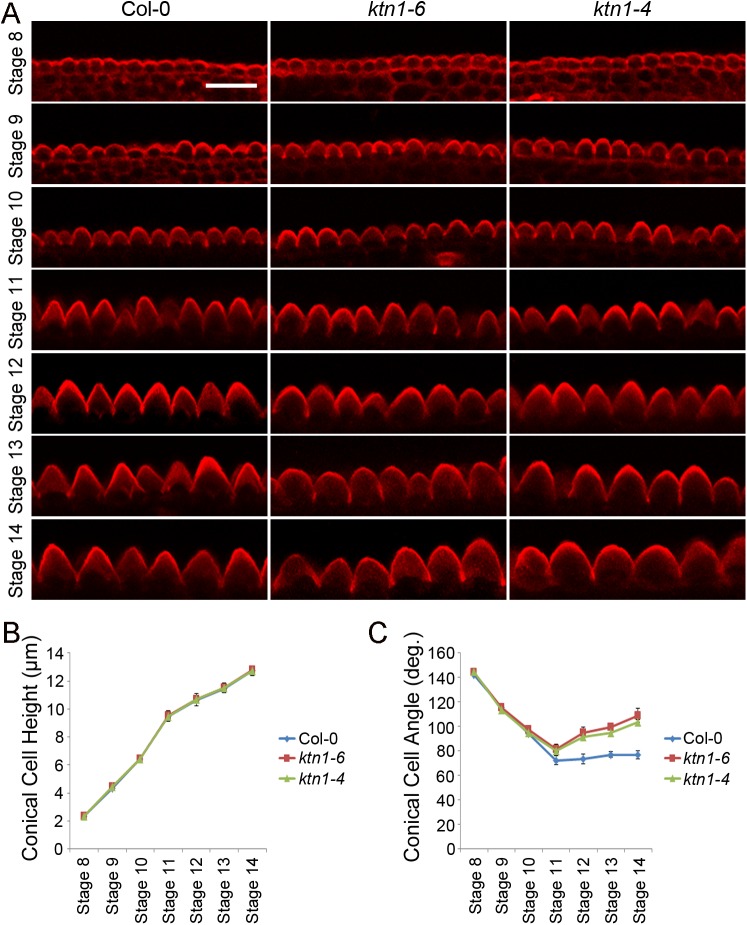
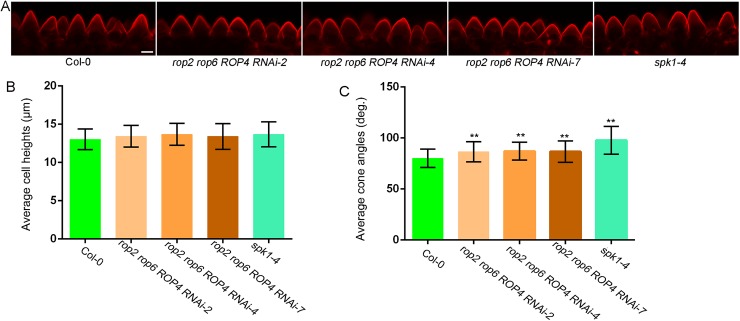
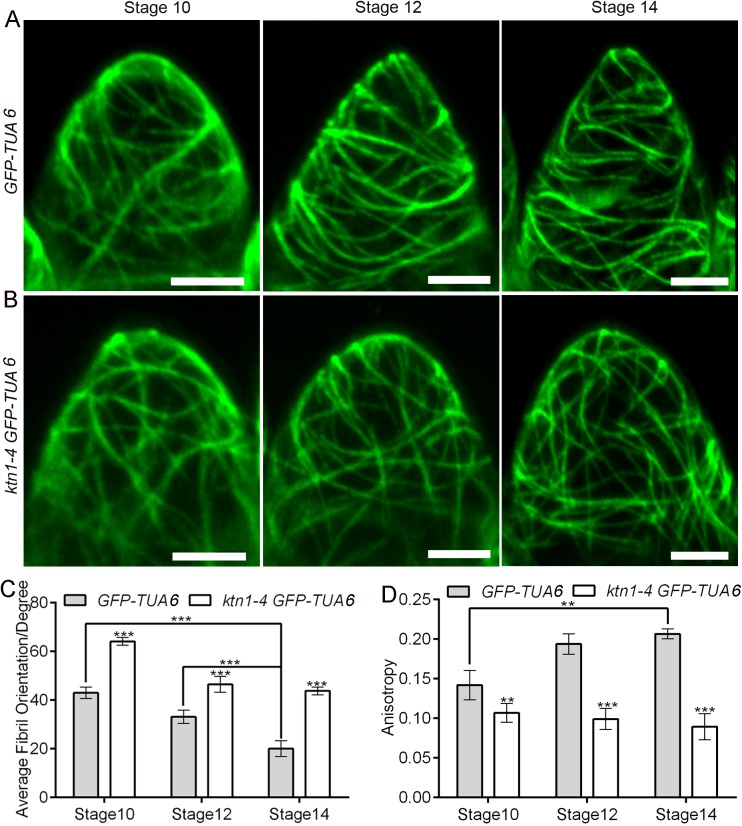
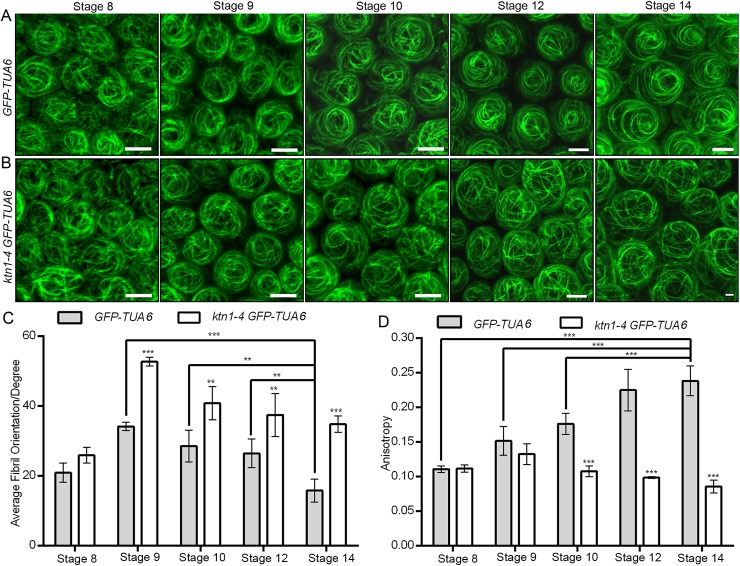
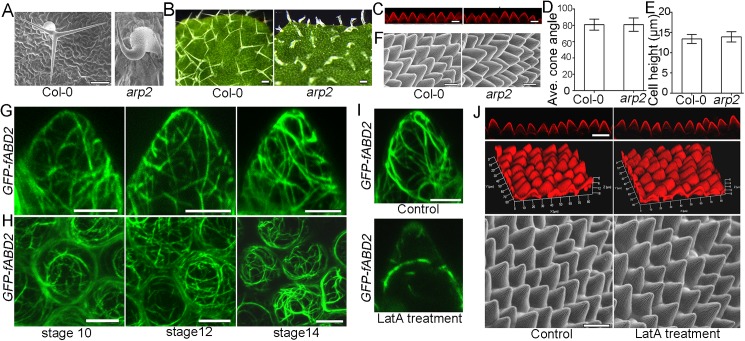
The physiological functions of epidermal cells are largely determined by their diverse morphologies. Most flowering plants have special conical-shaped petal epidermal cells that are thought to influence light capture and reflectance, and provide pollinator grips, but the molecular mechanisms controlling conical cell shape remain largely unknown. Here, we developed a live-confocal imaging approach to quantify geometric parameters of conical cells in Arabidopsis thaliana (A. thaliana). Through genetic screens, we identified katanin (KTN1) mutants showing a phenotype of decreased tip sharpening of conical cells. Furthermore, we demonstrated that SPIKE1 and Rho of Plants (ROP) GTPases were required for the final shape formation of conical cells, as KTN1 does. Live-cell imaging showed that wild-type cells exhibited random orientation of cortical microtubule arrays at early developmental stages but displayed a well-ordered circumferential orientation of microtubule arrays at later stages. By contrast, loss of KTN1 prevented random microtubule networks from shifting into well-ordered arrays. We further showed that the filamentous actin cap, which is a typical feature of several plant epidermal cell types including root hairs and leaf trichomes, was not observed in the growth apexes of conical cells during cell development. Moreover, our genetic and pharmacological data suggested that microtubules but not actin are required for conical cell shaping. Together, our results provide a novel imaging approach for studying petal conical cell morphogenesis and suggest that the spatio-temporal organization of microtubule arrays plays crucial roles in controlling conical cell shape.
表皮细胞的生理功能很大程度上由其多样的形态决定。大多数开花植物具有特殊的锥形花瓣表皮细胞,这些细胞被认为会影响光的捕获和反射,并为传粉者提供附着点,但控制锥形细胞形状的分子机制在很大程度上仍不清楚。在这里,我们开发了一种实时共聚焦成像方法来量化拟南芥中锥形细胞的几何参数。通过遗传筛选,我们鉴定出了katanin(KTN1)突变体,其表现出锥形细胞尖端变尖程度降低的表型。此外,我们证明了SPIKE1和植物Rho(ROP)小G蛋白对于锥形细胞的最终形状形成是必需的,就像KTN1一样。活细胞成像显示,野生型细胞在发育早期皮层微管阵列呈现随机取向,但在后期则呈现出有序的圆周取向。相比之下,KTN1的缺失阻止了随机微管网络转变为有序阵列。我们进一步表明,在包括根毛和叶毛状体在内的几种植物表皮细胞类型中典型存在的丝状肌动蛋白帽,在锥形细胞发育过程中的生长顶端并未观察到。此外,我们的遗传和药理学数据表明,微管而非肌动蛋白是锥形细胞塑形所必需的。总之,我们的结果为研究花瓣锥形细胞形态发生提供了一种新的成像方法,并表明微管阵列的时空组织在控制锥形细胞形状中起着关键作用。