Tuju James, Kamuyu Gathoni, Murungi Linda M, Osier Faith H A
KEMRI-Wellcome Trust Research Programme, Centre for Geographic Medicine Coast, Kilifi, Kenya.
Department of Biochemistry, Pwani University, Kilifi, Kenya.
Immunology. 2017 Oct;152(2):195-206. doi: 10.1111/imm.12780. Epub 2017 Jul 24.
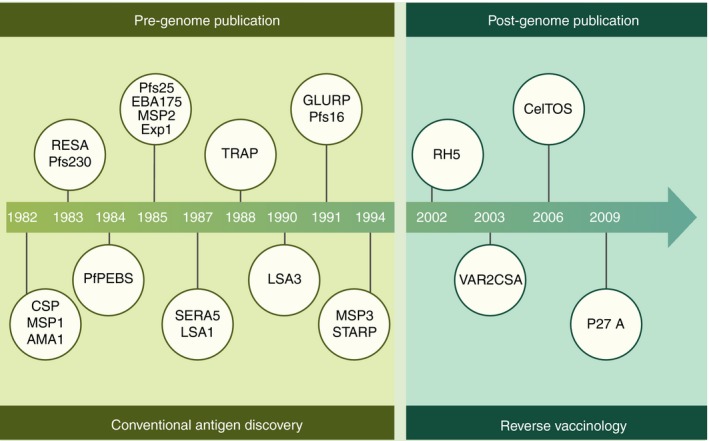
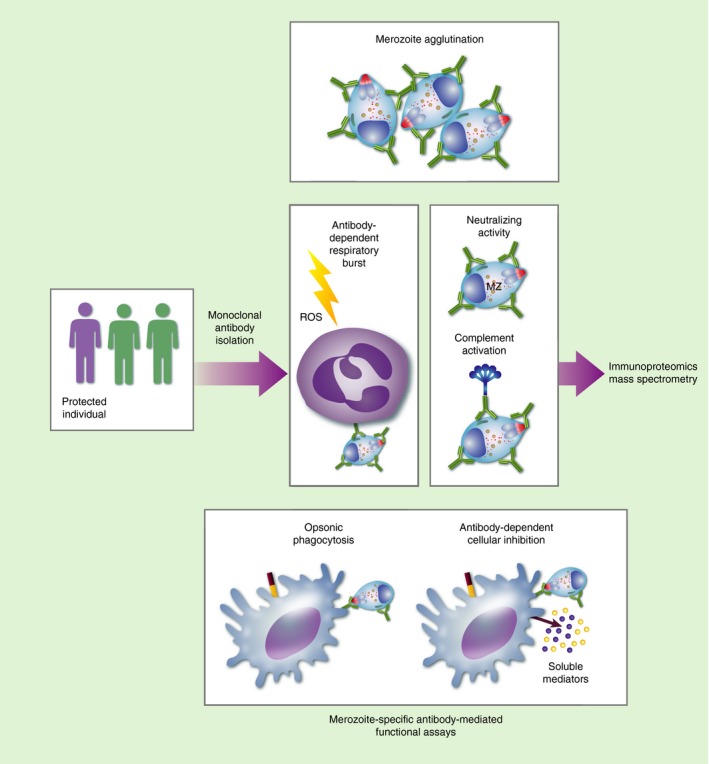
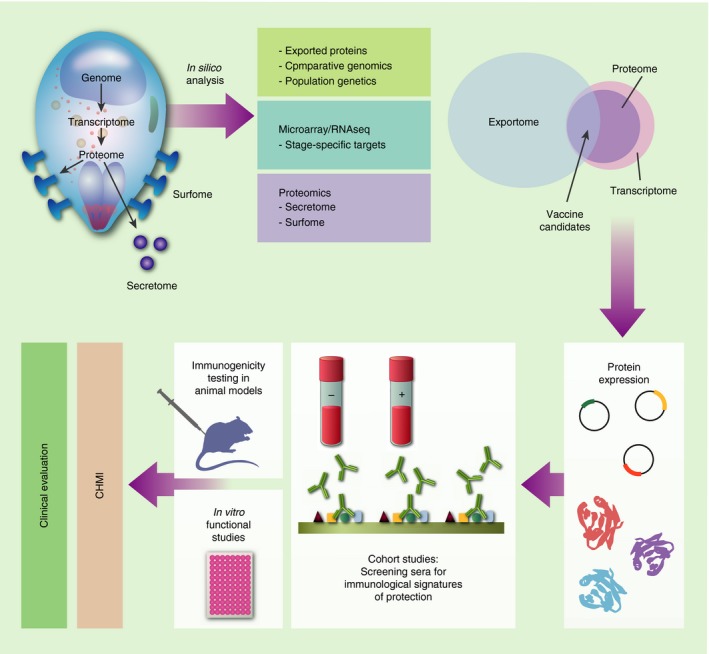
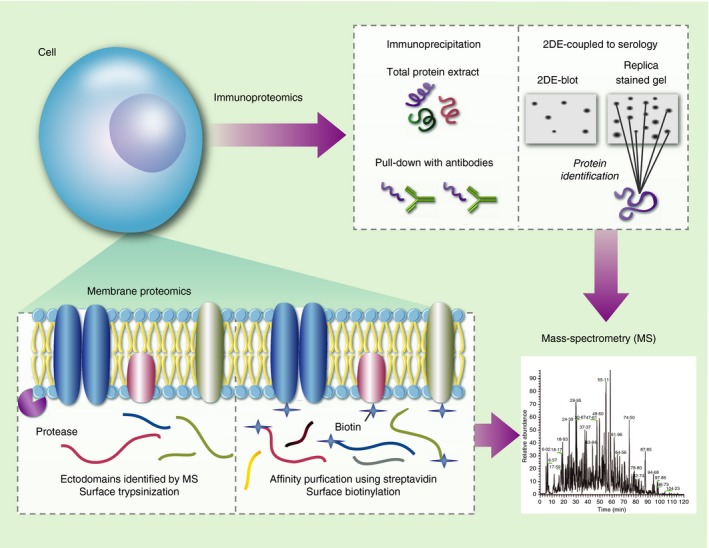
Although epidemiological observations, IgG passive transfer studies and experimental infections in humans all support the feasibility of developing highly effective malaria vaccines, the precise antigens that induce protective immunity remain uncertain. Here, we review the methodologies applied to vaccine candidate discovery for Plasmodium falciparum malaria from the pre- to post-genomic era. Probing of genomic and cDNA libraries with antibodies of defined specificities or functional activity predominated the former, whereas reverse vaccinology encompassing high throughput in silico analyses of genomic, transcriptomic or proteomic parasite data sets is the mainstay of the latter. Antibody-guided vaccine design spanned both eras but currently benefits from technological advances facilitating high-throughput screening and downstream applications. We make the case that although we have exponentially increased our ability to identify numerous potential vaccine candidates in a relatively short space of time, a significant bottleneck remains in their validation and prioritization for evaluation in clinical trials. Longitudinal cohort studies provide supportive evidence but results are often conflicting between studies. Demonstration of antigen-specific antibody function is valuable but the relative importance of one mechanism over another with regards to protection remains undetermined. Animal models offer useful insights but may not accurately reflect human disease. Challenge studies in humans are preferable but prohibitively expensive. In the absence of reliable correlates of protection, suitable animal models or a better understanding of the mechanisms underlying protective immunity in humans, vaccine candidate discovery per se may not be sufficient to provide the paradigm shift necessary to develop the next generation of highly effective subunit malaria vaccines.
尽管流行病学观察、IgG被动转移研究以及人体实验性感染均支持开发高效疟疾疫苗的可行性,但诱导保护性免疫的精确抗原仍不明确。在此,我们回顾了从基因组时代之前到之后应用于恶性疟原虫疟疾候选疫苗发现的方法。用具有明确特异性或功能活性的抗体探测基因组文库和cDNA文库在前一个时代占主导地位,而涵盖对基因组、转录组或蛋白质组寄生虫数据集进行高通量计算机分析的反向疫苗学则是后一个时代的主要方法。抗体导向的疫苗设计跨越了两个时代,但目前受益于促进高通量筛选和下游应用的技术进步。我们认为,尽管我们在相对较短的时间内成倍提高了识别众多潜在候选疫苗的能力,但在对其进行验证并确定在临床试验中评估的优先级方面,仍然存在重大瓶颈。纵向队列研究提供了支持性证据,但各研究结果往往相互矛盾。证明抗原特异性抗体功能很有价值,但就保护而言,一种机制相对于另一种机制的相对重要性仍未确定。动物模型提供了有用的见解,但可能无法准确反映人类疾病。人体攻毒研究更可取,但成本过高。在缺乏可靠的保护相关指标、合适的动物模型或对人类保护性免疫潜在机制的更好理解的情况下,仅候选疫苗的发现可能不足以带来开发下一代高效亚单位疟疾疫苗所需的范式转变。