Xue Ruyue, Qian Yuna, Li Linhao, Yao Guidong, Yang Li, Sun Yingpu
Reproductive Medical Center, First Affiliated Hospital of Zhengzhou University, Zhengzhou, 450052, China.
Key Laboratory of Biorheological Science and Technology, Ministry of Education, Bioengineering College, Chongqing University, Chongqing, 400044, China.
Stem Cell Res Ther. 2017 Jun 24;8(1):148. doi: 10.1186/s13287-017-0588-0.
Polycaprolactone (PCL) has been regarded as a promising synthetic material for bone tissue engineering application. Owing to its unique biochemical properties and great compatibility, PCL fibers have come to be explored as a potential delivering scaffold for stem cells to support bone regeneration during clinical application.
The human derived mesenchymal stem cells (MSCs) were obtained from umbilical cord (UC), bone marrow (BM), and adipose tissue (AD), respectively. The osteogenic differentiation potency of various human MSCs on this novel synthetic biomaterial was also investigated in vitro.
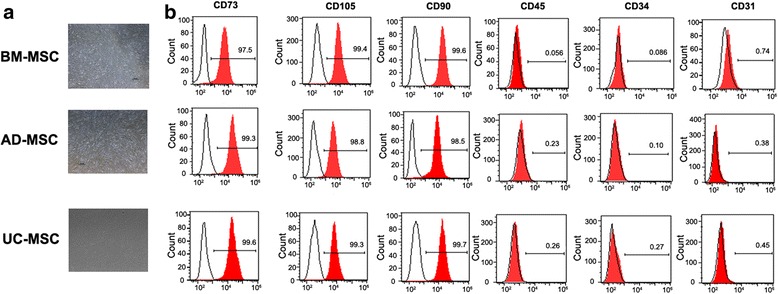
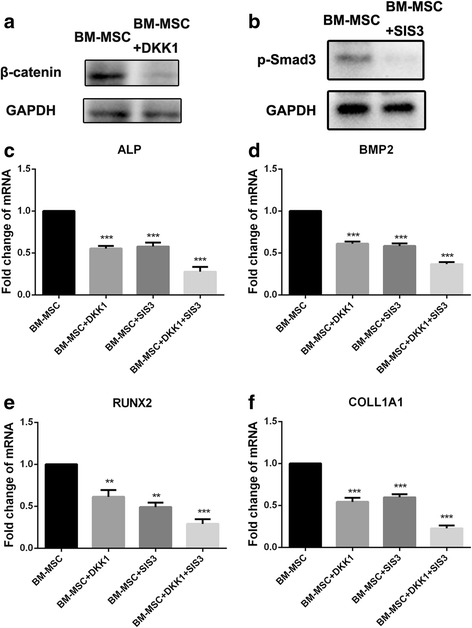
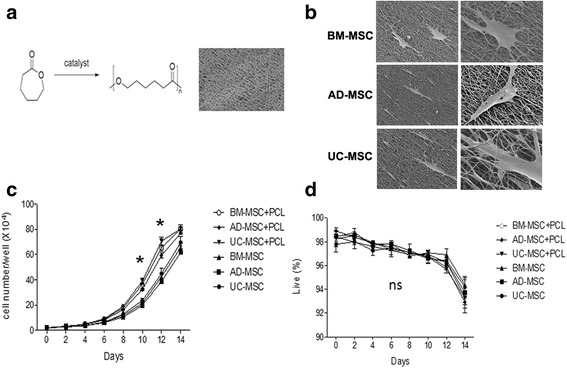
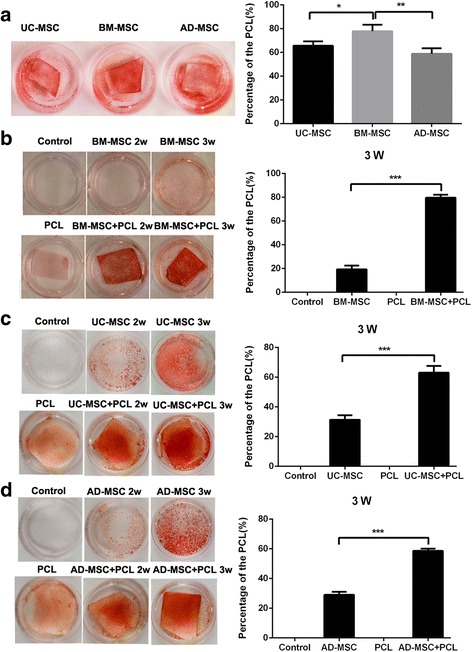
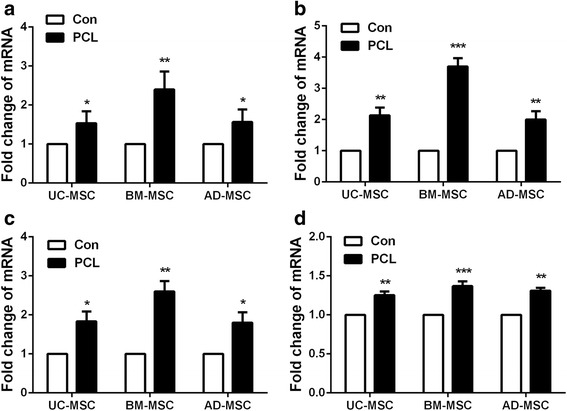
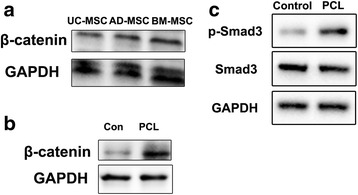
Here, we illustrated that those human UC-, BM-, and AD-derived MSCs exhibited fibroblast-like morphology and expressed characteristic markers. Impressively, PCL nanofiber scaffold could support those MSC adhesion and proliferation. Long-term culture on PCL nanofiber scaffold maintained the viability as well as accelerated the proliferation of those three different kinds of human MSCs. More importantly, the osteogenic differentiation potency of those human MSCs was increased significantly by culturing on PCL nanofiber scaffold. Of note, BM-derived MSCs demonstrated greater differentiation potency among the three kinds of MSCs. The Wnt/β-catenin and Smad3 signaling pathways contributed to the enhanced osteogenesis of human MSCs, which was activated consistently by PCL nanofiber scaffold.
The utilization of PCL nanofiber scaffold would provide a great application potential for MSC-based bone tissue repair by enhancing the osteogenic differentiation of human MSCs.
聚己内酯(PCL)被认为是一种有前景的用于骨组织工程的合成材料。由于其独特的生化特性和良好的相容性,PCL纤维已被探索作为一种潜在的干细胞递送支架,以在临床应用中支持骨再生。
分别从脐带(UC)、骨髓(BM)和脂肪组织(AD)中获取人源间充质干细胞(MSCs)。还在体外研究了各种人源MSCs在这种新型合成生物材料上的成骨分化潜能。
在此,我们表明那些源自人UC、BM和AD的MSCs呈现成纤维细胞样形态并表达特征性标志物。令人印象深刻的是,PCL纳米纤维支架能够支持那些MSCs的黏附和增殖。在PCL纳米纤维支架上长期培养维持了这三种不同类型人源MSCs的活力并加速了其增殖。更重要的是,通过在PCL纳米纤维支架上培养,那些人源MSCs的成骨分化潜能显著增加。值得注意的是,在这三种MSCs中,源自BM的MSCs表现出更大的分化潜能。Wnt/β-连环蛋白和Smad3信号通路促成了人源MSCs成骨增强,而PCL纳米纤维支架持续激活了这些信号通路。
PCL纳米纤维支架的应用通过增强人源MSCs的成骨分化,将为基于MSCs的骨组织修复提供巨大的应用潜力。