Clarke Dominic, Morley Erica, Robert Daniel
School of Biological Sciences, University of Bristol, Life Science Building, 24, Tyndall Avenue, Bristol, BS8 1TQ, UK.
J Comp Physiol A Neuroethol Sens Neural Behav Physiol. 2017 Sep;203(9):737-748. doi: 10.1007/s00359-017-1176-6. Epub 2017 Jun 24.
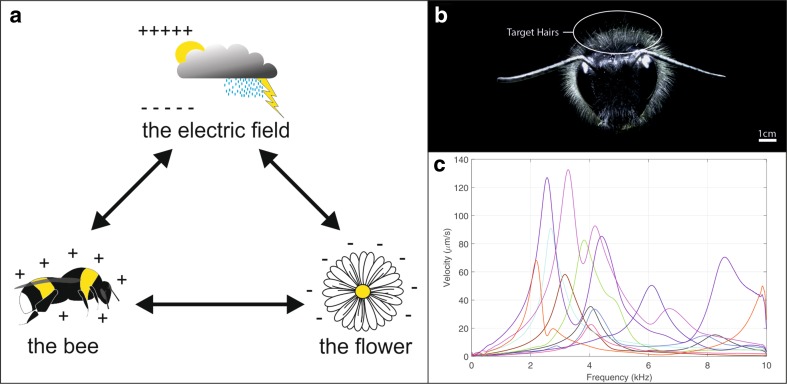
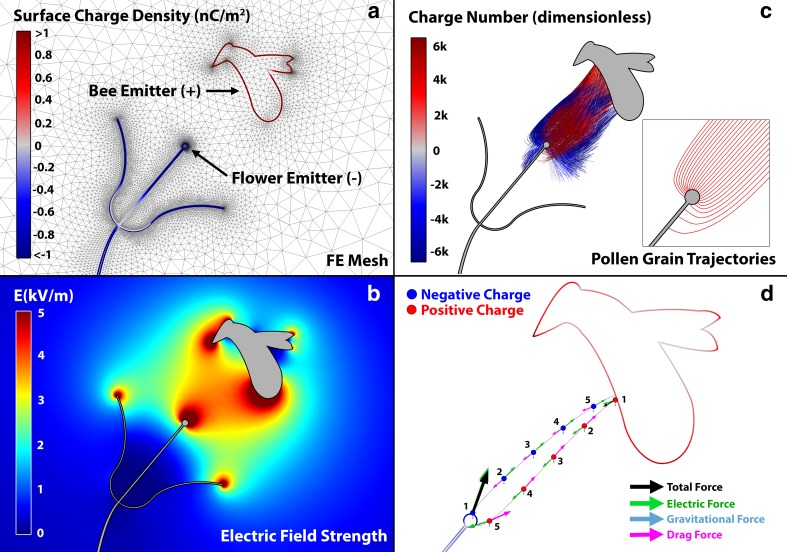
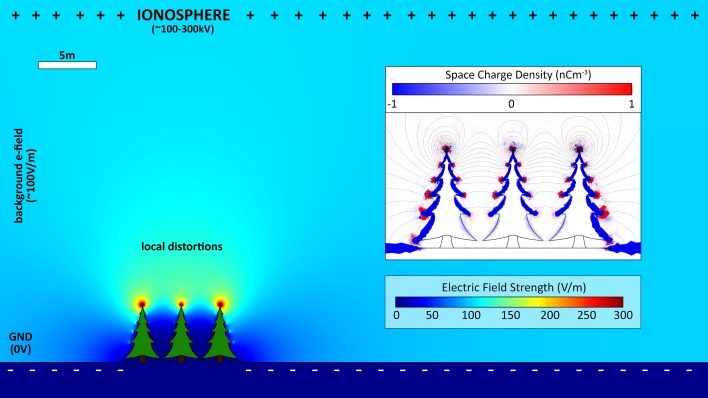
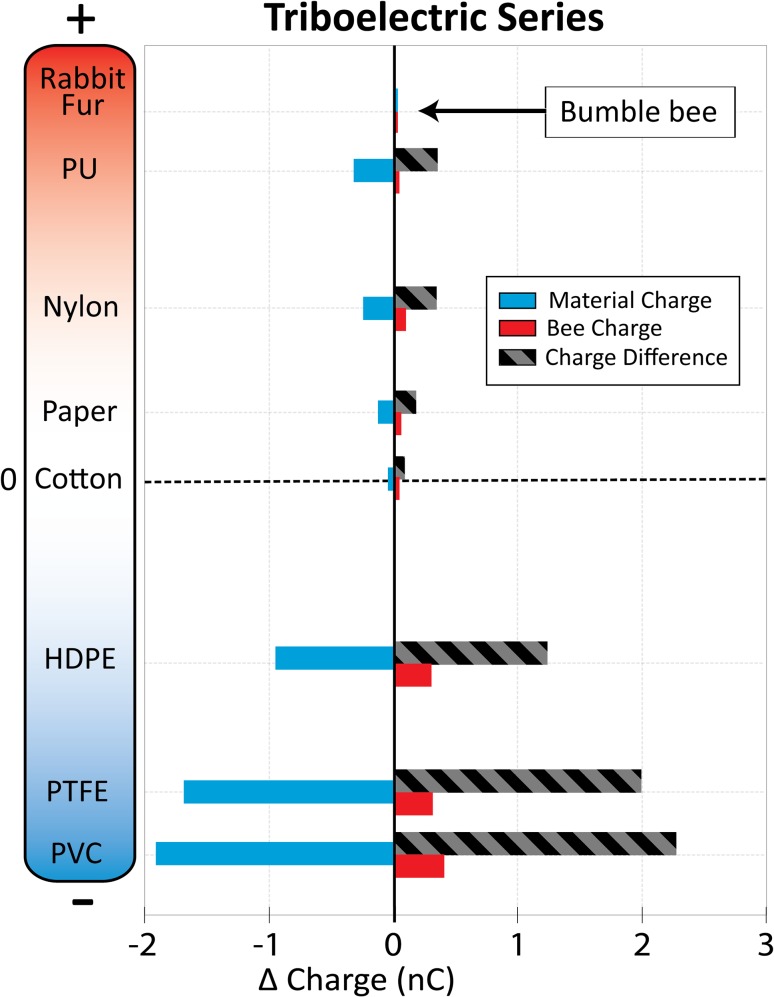
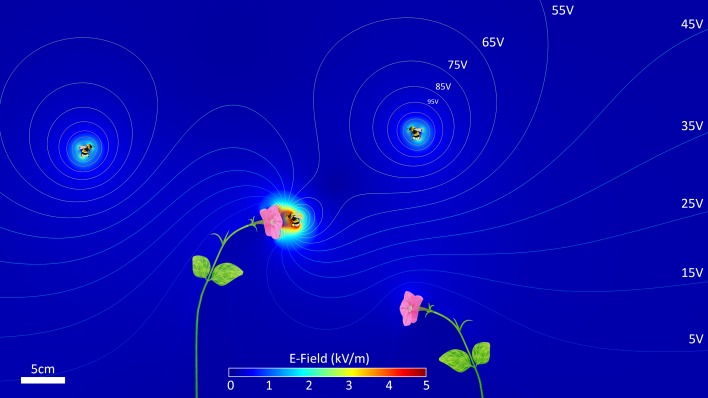
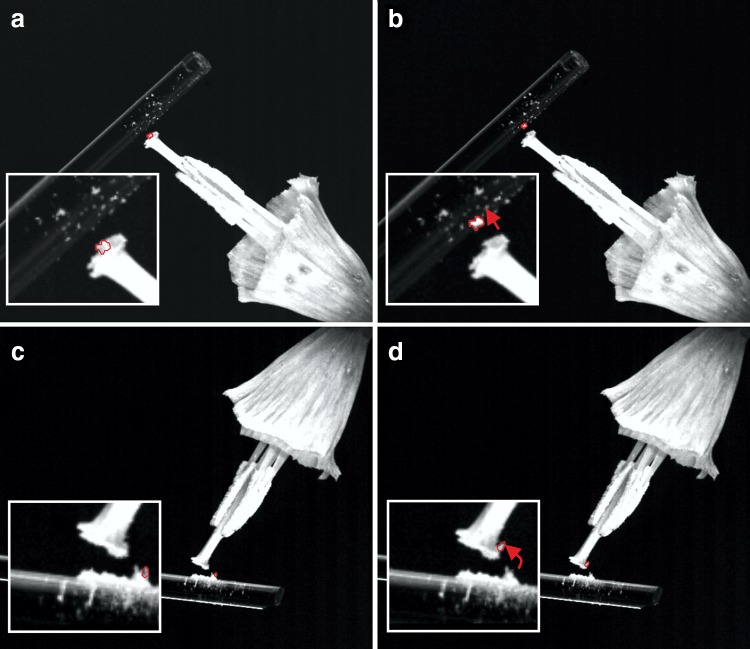
Bees and flowering plants have a long-standing and remarkable co-evolutionary history. Flowers and bees evolved traits that enable pollination, a process that is as important to plants as it is for pollinating insects. From the sensory ecological viewpoint, bee-flower interactions rely on senses such as vision, olfaction, humidity sensing, and touch. Recently, another sensory modality has been unveiled; the detection of the weak electrostatic field that arises between a flower and a bee. Here, we present our latest understanding of how these electric interactions arise and how they contribute to pollination and electroreception. Finite-element modelling and experimental evidence offer new insights into how these interactions are organised and how they can be further studied. Focussing on pollen transfer, we deconstruct some of the salient features of the three ingredients that enable electrostatic interactions, namely the atmospheric electric field, the capacity of bees to accumulate positive charge, and the propensity of plants to be relatively negatively charged. This article also aims at highlighting areas in need of further investigation, where more research is required to better understand the mechanisms of electrostatic interactions and aerial electroreception.
蜜蜂与开花植物有着悠久而显著的共同进化历史。花朵和蜜蜂进化出了能够实现授粉的特征,授粉过程对植物和传粉昆虫都至关重要。从感官生态学的角度来看,蜜蜂与花朵的相互作用依赖于视觉、嗅觉、湿度感知和触觉等感官。最近,另一种感官模态被揭示出来;即对花朵与蜜蜂之间产生的微弱静电场的探测。在此,我们阐述了对这些电相互作用如何产生以及它们如何促进授粉和电感受的最新理解。有限元建模和实验证据为这些相互作用如何组织以及如何进一步研究提供了新的见解。聚焦于花粉传播,我们剖析了促成静电相互作用的三个要素的一些显著特征,即大气电场、蜜蜂积累正电荷的能力以及植物相对带负电荷的倾向。本文还旨在突出需要进一步研究的领域,在这些领域需要更多研究以更好地理解静电相互作用和空中电感受的机制。