Weinfurt Kevin P, Bollinger Juli M, Brelsford Kathleen M, Bresciani Martina, Lampron Zachary, Lin Li, Topazian Rachel J, Sugarman Jeremy
*Duke Clinical Research Institute †Department of Psychiatry and Behavioral Sciences, Duke University School of Medicine, Durham, NC ‡Johns Hopkins Berman Institute of Bioethics §Department of Medicine, Johns Hopkins University School of Medicine ∥Department of Health Policy and Management, Johns Hopkins Bloomberg School of Public Health, Baltimore, MD.
Med Care. 2017 Nov;55(11):970-978. doi: 10.1097/MLR.0000000000000762.
For pragmatic clinical research comparing commonly used treatments, questions exist about if and how to notify participants about it and secure their authorization for participation.
To determine how patients react when they seek clinical care and encounter one of several different pragmatic clinical research studies.
In an online survey using a between-subjects experimental design, respondents read and responded to 1 of 24 hypothetical research scenarios reflecting different types of studies and approaches to notification and authorization (eg, general notification, oral consent, written consent).
English-speaking US adults 18 years and older.
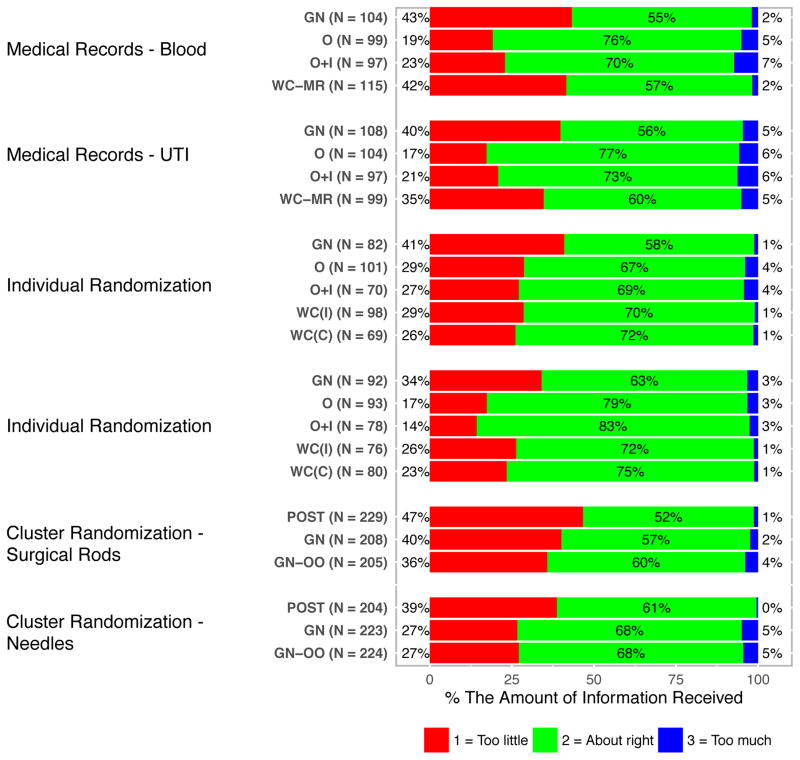
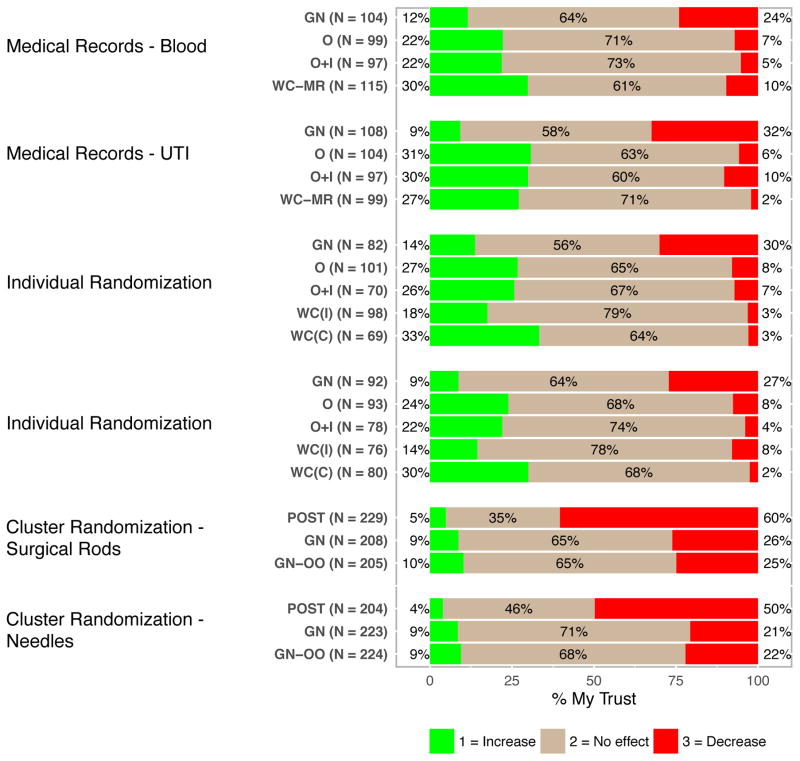
Willingness to participate in the hypothetical study, acceptability of the notification and authorization approach, understanding of the study, perceptions of benefit/harm, trust, and perception of amount of study information received.
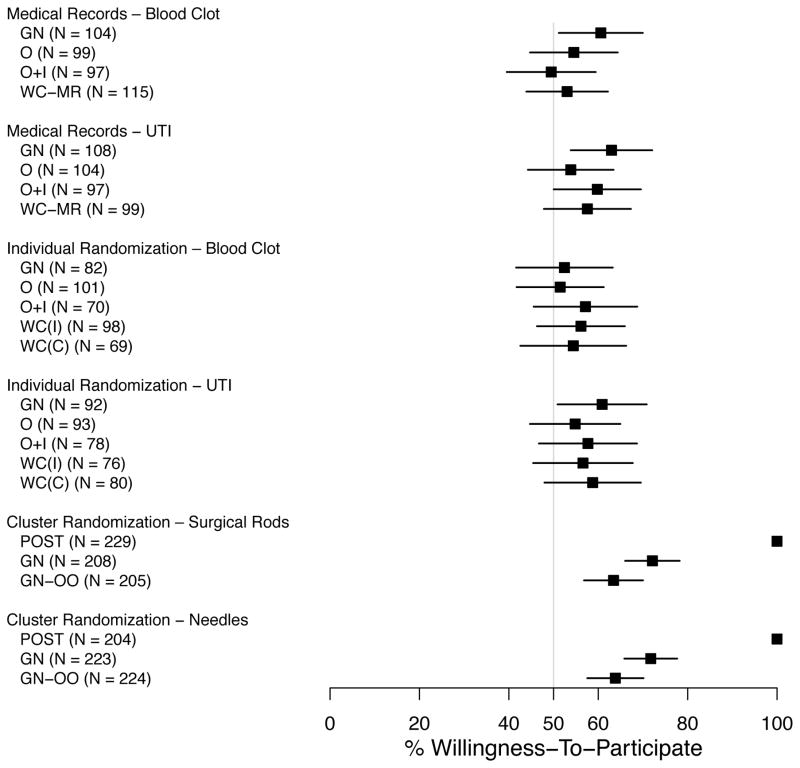
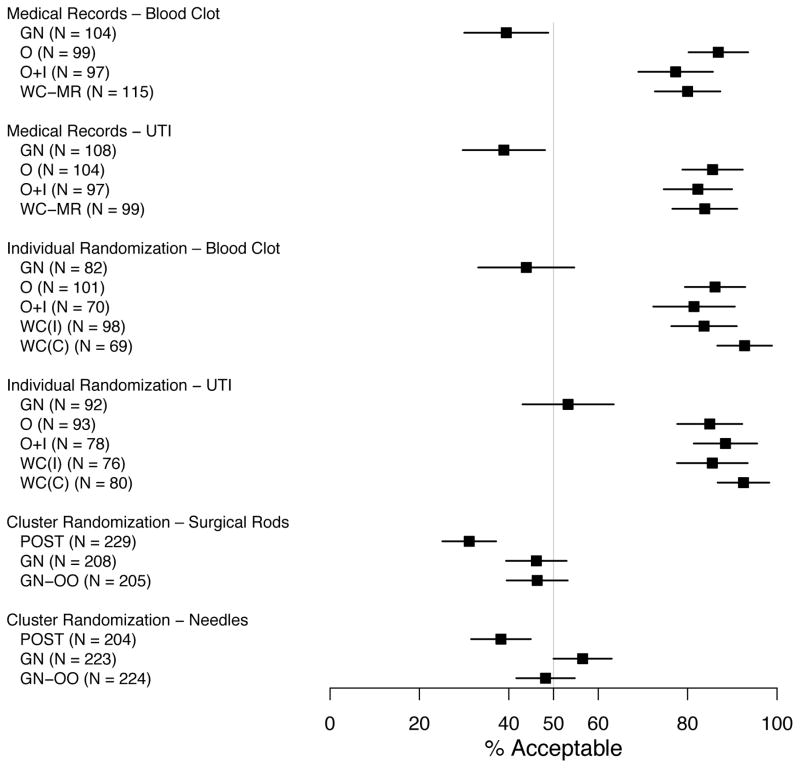
Willingness to participate did not differ by notification and authorization approach. Some (21%-36%) of the patients randomized to general notification with an explicit opt-out provision were not aware they would be enrolled by default. Acceptability was greatest for and similar among notification and authorization approaches that actively engaged the patient (eg, oral or written consent) and lower for approaches with less engagement (eg, general notification). Problems of understanding were found among 20%-55% of respondents, depending on the particular scenario. Most respondents (77%-94%) felt that participation in the hypothetical study posed no risks of harm to their health or privacy.
Current attitudes about notification and authorization approaches and difficulties understanding pragmatic clinical research pose significant challenges for pragmatic research. Data from this study provide a starting point to developing solutions to these surprisingly complex issues.
对于比较常用治疗方法的实用临床研究,存在是否以及如何告知参与者并获得他们参与授权的问题。
确定患者在寻求临床护理并遇到几种不同的实用临床研究之一时的反应。
在一项采用组间实验设计的在线调查中,受访者阅读并回复了24种假设研究场景中的一种,这些场景反映了不同类型的研究以及告知和授权方法(例如,一般告知、口头同意、书面同意)。
18岁及以上的美国英语成年人。
参与假设研究的意愿、告知和授权方法的可接受性、对研究的理解、对益处/危害的认知、信任以及对所接收研究信息量的认知。
参与意愿在告知和授权方法上没有差异。随机分配到带有明确退出条款的一般告知组的患者中,有一些(21%-36%)没有意识到他们会默认被纳入研究。对于积极让患者参与的告知和授权方法(例如口头或书面同意),可接受性最高且相似,而对于参与度较低的方法(例如一般告知),可接受性较低。根据具体场景,20%-55%的受访者存在理解问题。大多数受访者(77%-94%)认为参与假设研究对他们的健康或隐私没有危害风险。
当前对告知和授权方法的态度以及理解实用临床研究的困难对实用研究构成了重大挑战。本研究的数据为解决这些惊人复杂的问题提供了一个起点。