Hsueh Pei-Tan, Wang Hsuan-Han, Liu Chiu-Lin, Ni Wei-Fen, Chen Ya-Lei, Liu Jong-Kang
Department of Biological Sciences, National Sun Yat-sen University, Kaohsiung, Taiwan.
Department of Biotechnology, National Kaohsiung Normal University, Kaohsiung, Taiwan.
PLoS One. 2017 Jun 26;12(6):e0179970. doi: 10.1371/journal.pone.0179970. eCollection 2017.
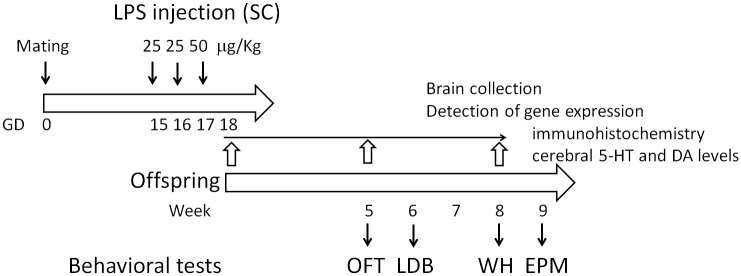
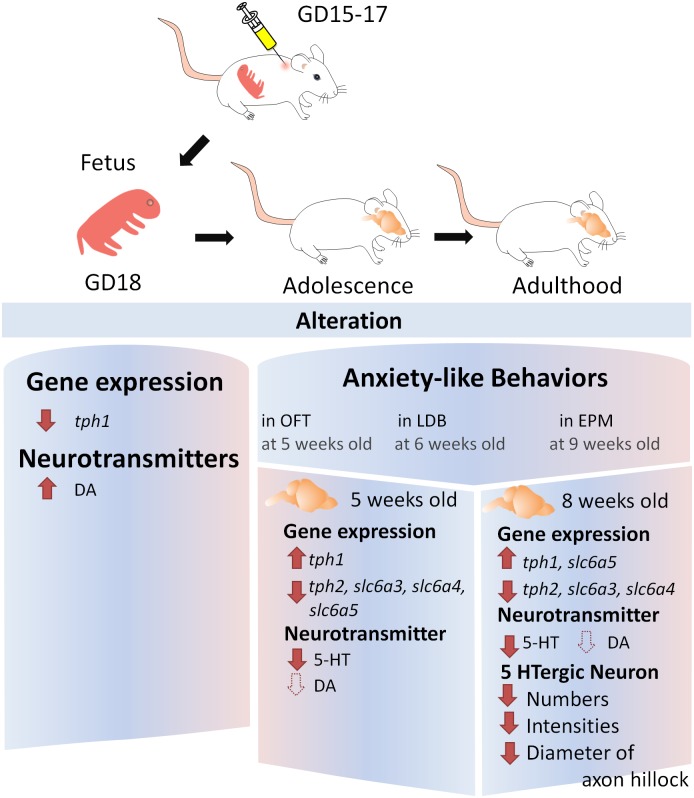
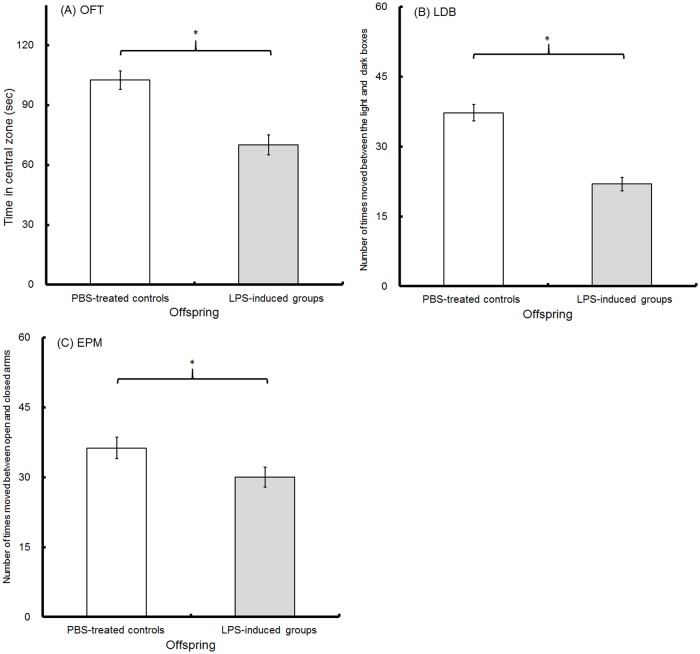
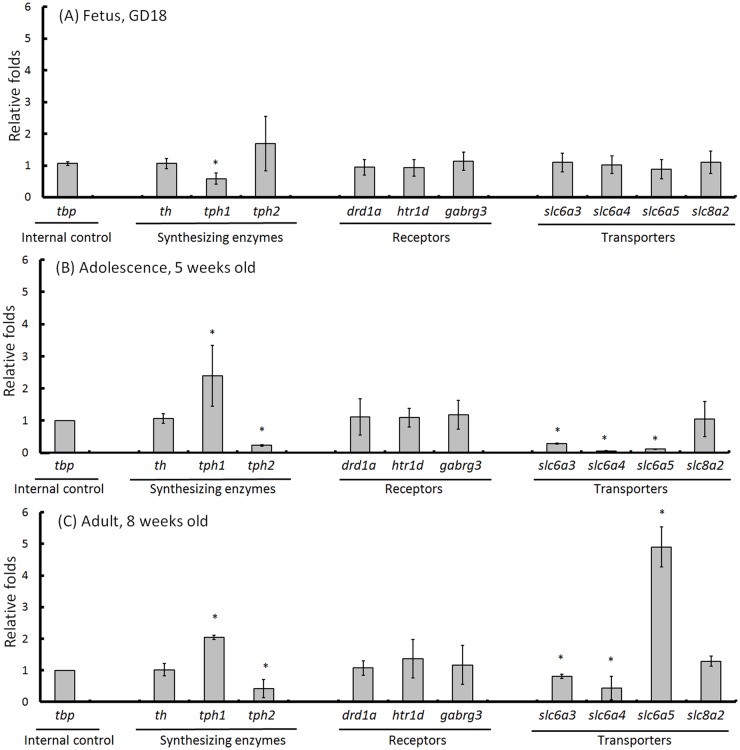
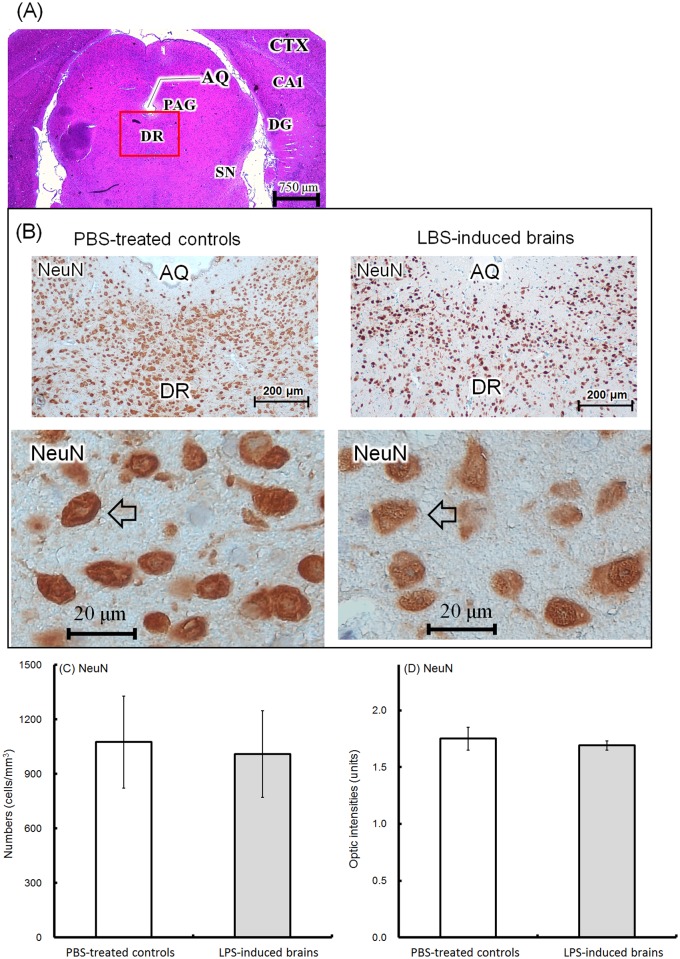
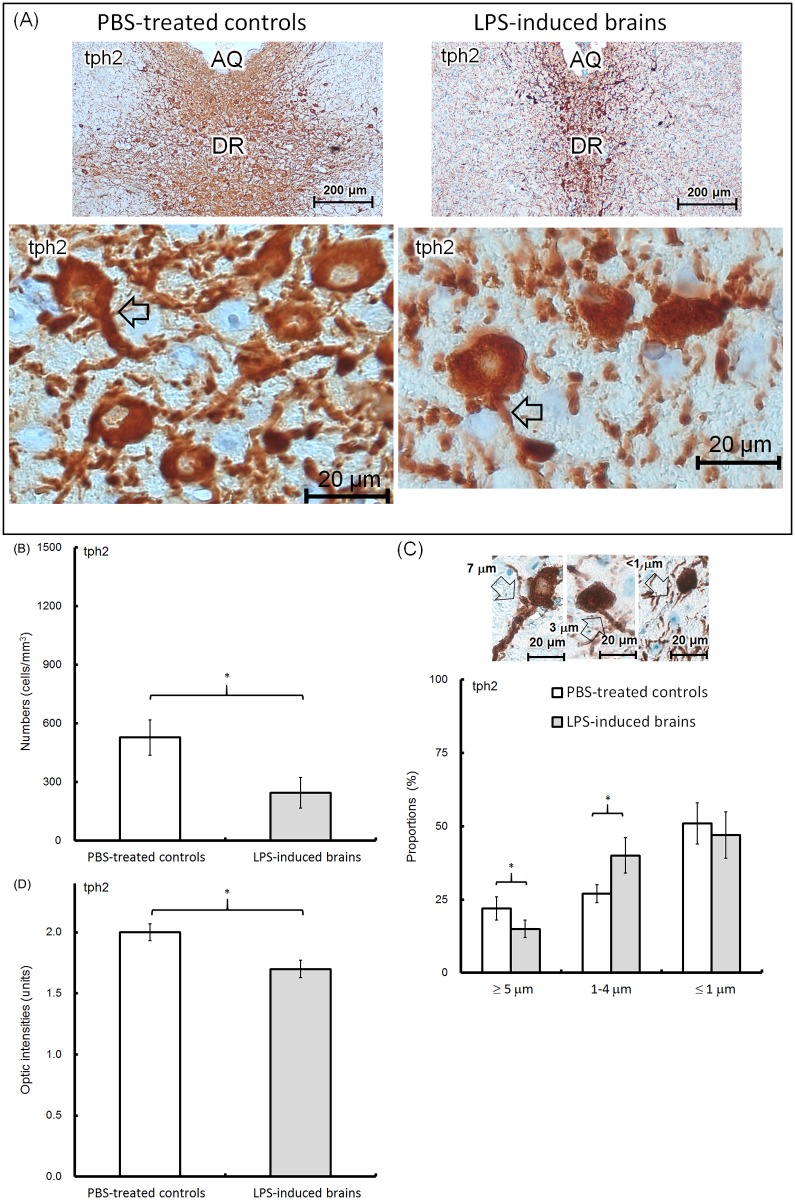
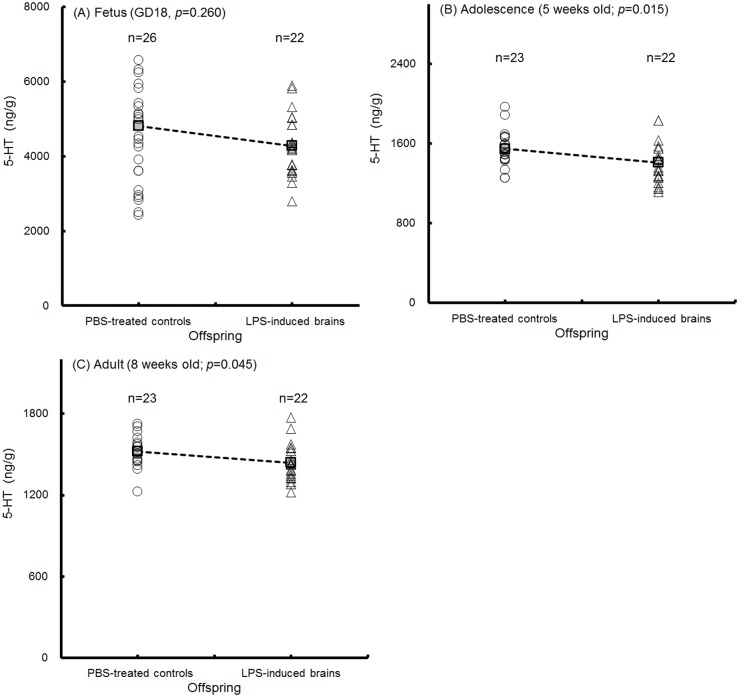
Prenatal exposure to lipopolysaccharide (LPS), which likely occurs due to infection or contact with environmental allergens during pregnancy, is a proposed risk factor that induces anxiety- and autism spectrum disorder-like behaviors in offspring. However, the molecular and behavioral changes in offspring after maternal immune activation have not been completely identified. We hypothesized that a subcutaneous injection of LPS in a pregnant mouse would induce changes in cerebral serotonin (5-HT) in parallel to the appearance of anxiety-like behaviors in the dam's offspring. After LPS injections (total, 100 μg/Kg), the time spent in the central region during the open field test and the number of times that the mice moved between the light and dark boxes and between the open and closed arms on the elevated plus maze test revealed anxiety-like behaviors in offspring at 5, 6 and 9 weeks of age. The mRNA expression levels of tph2 (5-HT synthesizing enzyme) and slc6a4 (5-HT transporter) were down-regulated in both adolescent (5 weeks of age) and adult (8 weeks of age) brains. Immunohistochemistry revealed that the numbers and sizes of tph2-expressing cells were notably decreased in the raphe nuclei of the midbrain of adults. Moreover, compared with controls (phosphate-buffered saline-treated offspring), the cerebral 5-HT concentration at adolescence and adulthood in LPS-induced offspring was significantly decreased. We concluded that maternal immune activation induced by exposure to a low dose of LPS decreased cerebral 5-HT levels in parallel to the down-regulation of the tph2 and slc6a4 genes and in conjunction with anxiety-like behaviors in offspring.
孕期接触脂多糖(LPS),这可能是由于孕期感染或接触环境过敏原所致,是一种被认为会诱发后代出现焦虑和自闭症谱系障碍样行为的风险因素。然而,母体免疫激活后后代的分子和行为变化尚未完全明确。我们假设,给怀孕小鼠皮下注射LPS会导致其后代大脑中血清素(5-HT)发生变化,同时母鼠后代会出现焦虑样行为。注射LPS(总量100μg/Kg)后,旷场试验中在中央区域停留的时间,以及高架十字迷宫试验中小鼠在明箱和暗箱之间、开放臂和封闭臂之间移动的次数,显示5、6和9周龄后代存在焦虑样行为。青少年(5周龄)和成年(8周龄)大脑中tph2(5-HT合成酶)和slc6a4(5-HT转运体)的mRNA表达水平均下调。免疫组织化学显示,成年小鼠中脑缝际核中表达tph2的细胞数量和大小显著减少。此外,与对照组(磷酸盐缓冲盐水处理的后代)相比,LPS诱导后代在青春期和成年期的大脑5-HT浓度显著降低。我们得出结论,低剂量LPS诱导的母体免疫激活会降低大脑5-HT水平,同时伴随着tph2和slc6a4基因的下调,并与后代的焦虑样行为相关。