Fang Qiong, Jiang Anhong, Tao Wei, Xin Lin
Department of Anatomy, Anhui Medical College, Hefei, 230601, Anhui, China.
Department of Radiology, The Second Affiliated Hospital of Anhui Medical University, Hefei, 230601, China.
Biomed Eng Online. 2017 Jun 26;16(1):84. doi: 10.1186/s12938-017-0374-3.
The drainage portion of the vein of Labbé varies, and it is difficult to predict whether the operation is likely to damage this vein. The aim of this study was to correlate the microanatomy of the vein of Labbé with digital subtraction angiography (DSA) and computed tomographic venography (CTV), in order to provide a basis for the preservation of the vein of Labbé during a supratentorial surgical approach.
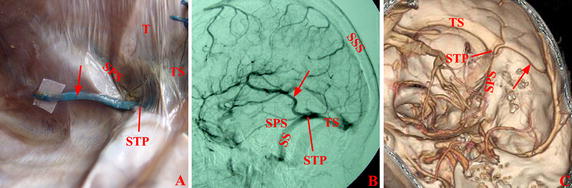
A total of 30 human cadavers (60 sides) and 61 living patients (110 sides) were examined in this study. Each cadaver head was injected with blue latex via the superior sagittal sinus and the internal jugular veins. The venograms of each patient were obtained from the venous phases of DSA (60 sides for 36 patients) or CTV (50 sides for 25 patients).
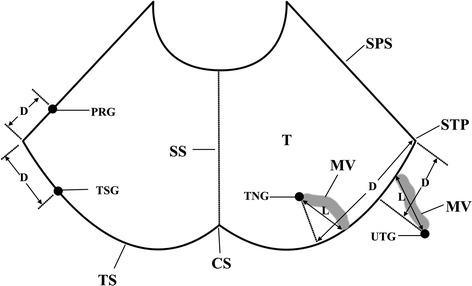
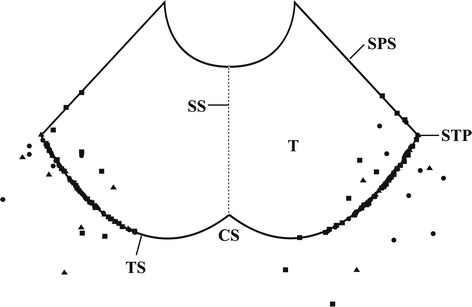
The patients were divided into four subgroups based on the location where a vein entered the dural sinus: the transverse sinus group, the tentorial group, the petrosal group, and the upper-transverse sinus group. The veins of Labbé in transverse sinus group and petrosal group directly entered dural sinus. The veins of Labbé in tentorial group and upper-transverse sinus group indirectly entered transverse sinus via the tentorium sinus or the upper-transverse sinus. These sinuses were meningeal veins running through two layers of the cerebral dura mater. The length of meningeal veins in these groups was 10.0 ± 7.2 mm. The veins of Labbé were mainly localized around the STP junction, which was the confluence of sigmoid sinus, transverse sinus, and superior petrosal sinus. The distance between the dural entrance of veins and the STP junction was 16.8 ± 10.2 mm. There was no significant difference in the results of the DSA and CTV examinations when compared to the observations in cadavers.
Preoperative venograms are useful to design an individualized surgical approach for the preservation of the vein of Labbé. In general, the supratentorial median approach has the least chance to damage this vein. However, when preoperative venograms show that the vein of Labbé is too close to the confluence of sinuses or the meningeal veins are too long, an alternative approach should be chosen.
Labbe静脉的引流部分存在变异,难以预测手术是否可能损伤该静脉。本研究的目的是将Labbe静脉的微观解剖结构与数字减影血管造影(DSA)和计算机断层静脉造影(CTV)相关联,以便为幕上手术入路期间保留Labbe静脉提供依据。
本研究共检查了30具人类尸体(60侧)和61例活体患者(110侧)。每具尸体头部通过上矢状窦和颈内静脉注入蓝色乳胶。每位患者的静脉造影图像来自DSA的静脉期(36例患者60侧)或CTV(25例患者50侧)。
根据静脉进入硬脑膜窦的位置,将患者分为四个亚组:横窦组、小脑幕组、岩骨组和上横窦组。横窦组和岩骨组的Labbe静脉直接进入硬脑膜窦。小脑幕组和上横窦组的Labbe静脉通过小脑幕窦或上横窦间接进入横窦。这些窦是穿过硬脑膜两层的脑膜静脉。这些组中脑膜静脉的长度为10.0±7.2mm。Labbe静脉主要位于乙状窦、横窦和岩上窦汇合处的STP交界处周围。静脉的硬脑膜入口与STP交界处之间的距离为16.8±10.2mm。与尸体观察结果相比,DSA和CTV检查结果无显著差异。
术前静脉造影有助于设计个性化的手术入路以保留Labbe静脉。一般来说,幕上正中入路损伤该静脉的机会最小。然而,当术前静脉造影显示Labbe静脉离窦汇合处太近或脑膜静脉太长时,应选择其他入路。