Zarei Mahsa, Lal Shruti, Parker Seth J, Nevler Avinoam, Vaziri-Gohar Ali, Dukleska Katerina, Mambelli-Lisboa Nicole C, Moffat Cynthia, Blanco Fernando F, Chand Saswati N, Jimbo Masaya, Cozzitorto Joseph A, Jiang Wei, Yeo Charles J, Londin Eric R, Seifert Erin L, Metallo Christian M, Brody Jonathan R, Winter Jordan M
Department of Surgery, Division of Surgical Research, Jefferson Pancreas, Biliary and Related Cancer Center, Thomas Jefferson University, Philadelphia, Pennsylvania.
Department of Bioengineering, University of California, San Diego, La Jolla, California.
Cancer Res. 2017 Aug 15;77(16):4460-4471. doi: 10.1158/0008-5472.CAN-17-0015. Epub 2017 Jun 26.
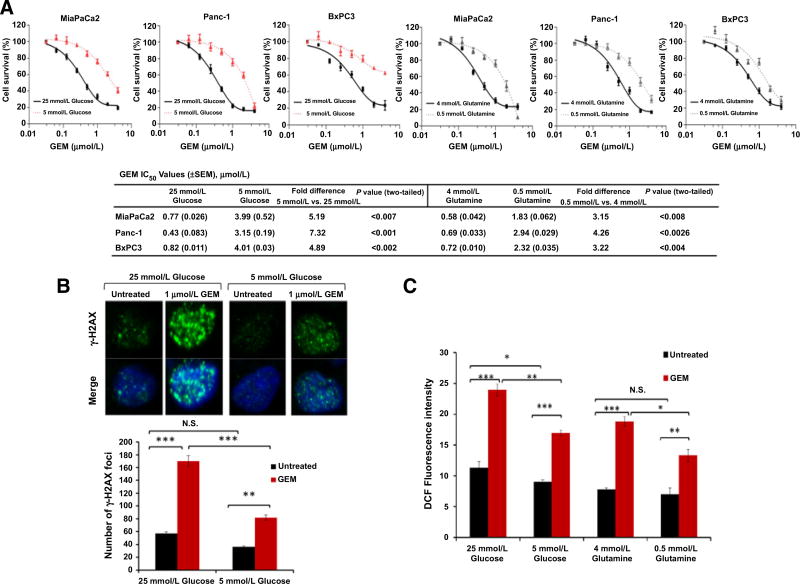
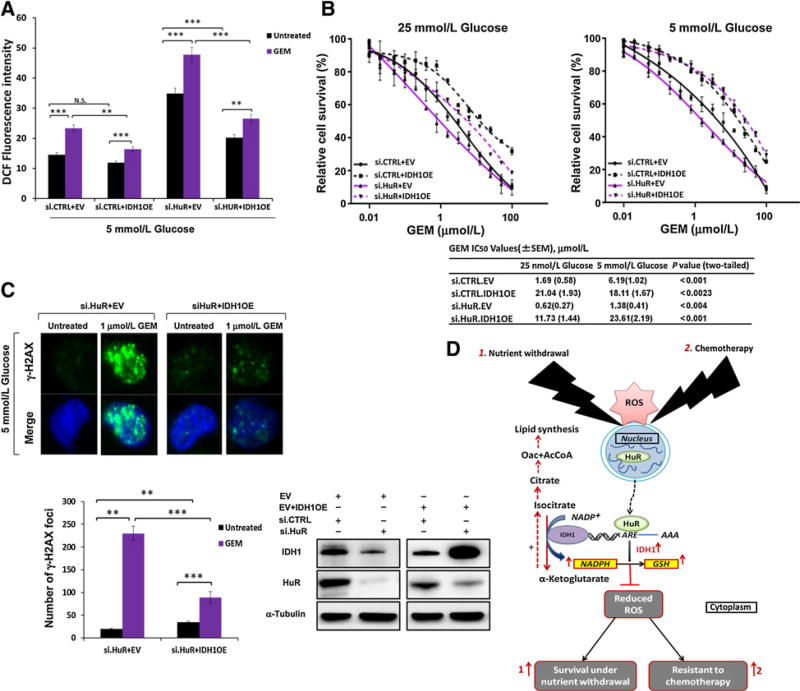
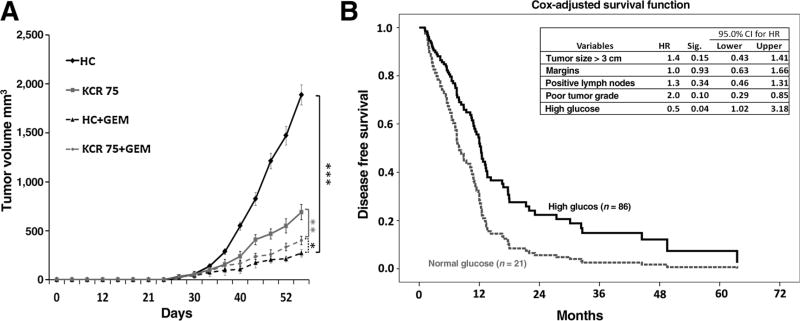
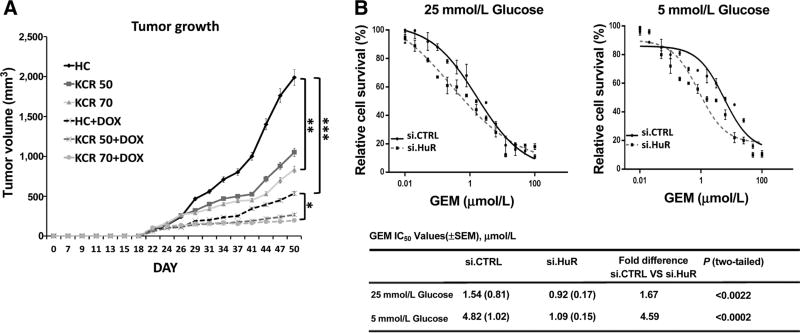
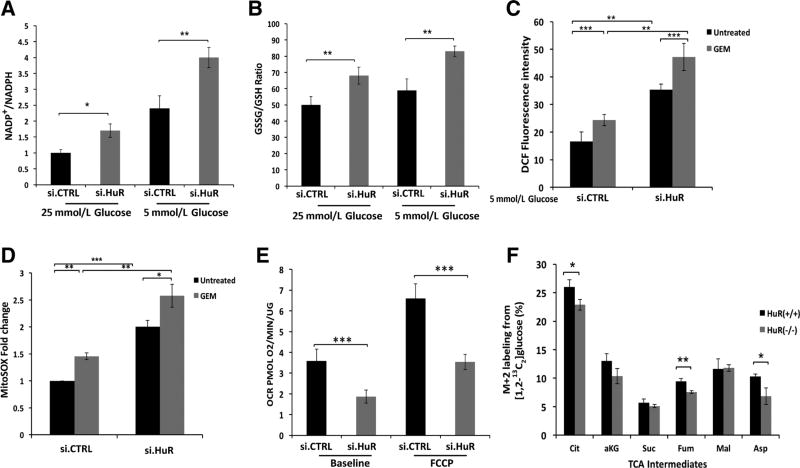
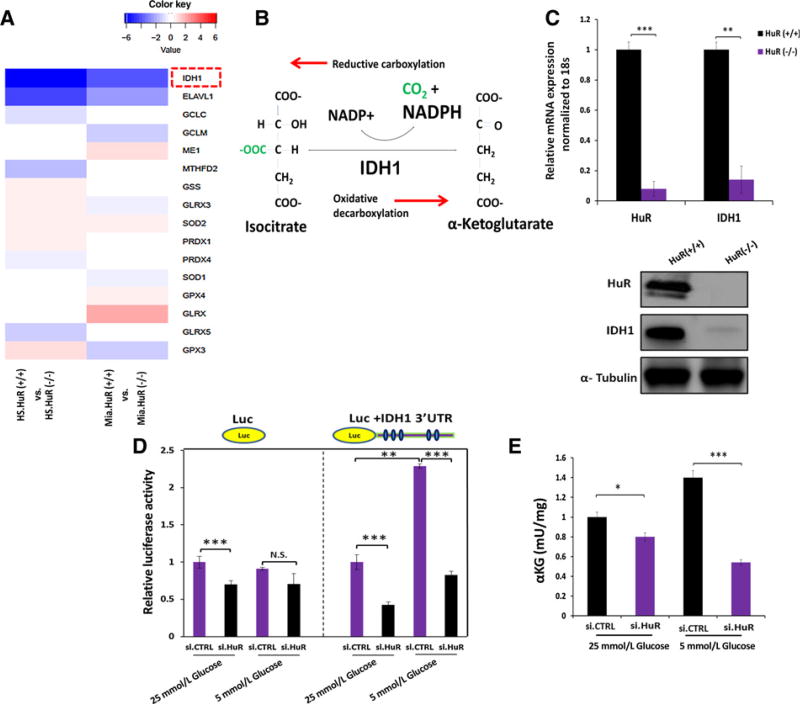
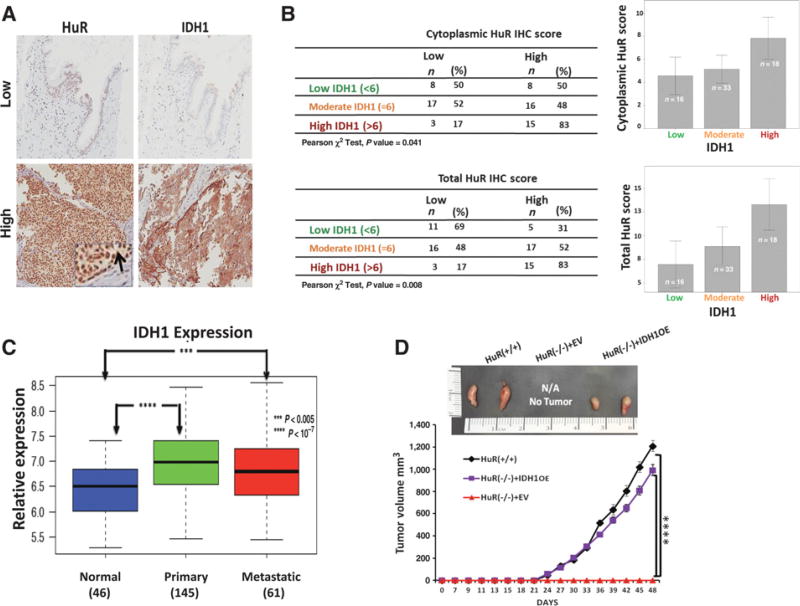
Cancer aggressiveness may result from the selective pressure of a harsh nutrient-deprived microenvironment. Here we illustrate how such conditions promote chemotherapy resistance in pancreatic ductal adenocarcinoma (PDAC). Glucose or glutamine withdrawal resulted in a 5- to 10-fold protective effect with chemotherapy treatment. PDAC xenografts were less sensitive to gemcitabine in hypoglycemic mice compared with hyperglycemic mice. Consistent with this observation, patients receiving adjuvant gemcitabine ( = 107) with elevated serum glucose levels (HgbA1C > 6.5%) exhibited improved survival. We identified enhanced antioxidant defense as a driver of chemoresistance in this setting. ROS levels were doubled by either nutrient withdrawal or gemcitabine treatment, but depriving PDAC cells of nutrients before gemcitabine treatment attenuated this effect. Mechanistic investigations based on RNAi or CRISPR approaches implicated the RNA binding protein HuR in preserving survival under nutrient withdrawal, with or without gemcitabine. Notably, RNA deep sequencing and functional analyses in HuR-deficient PDAC cell lines identified isocitrate dehydrogenase 1 (IDH1) as the sole antioxidant enzyme under HuR regulation. HuR-deficient PDAC cells lacked the ability to engraft successfully in immunocompromised mice, but IDH1 overexpression in these cells was sufficient to fully restore chemoresistance under low nutrient conditions. Overall, our findings highlight the HuR-IDH1 regulatory axis as a critical, actionable therapeutic target in pancreatic cancer. .
癌症的侵袭性可能源于恶劣的营养缺乏微环境的选择性压力。在此,我们阐述了这种情况如何促进胰腺导管腺癌(PDAC)的化疗耐药性。葡萄糖或谷氨酰胺缺乏与化疗联合使用时可产生5至10倍的保护作用。与高血糖小鼠相比,PDAC异种移植瘤在低血糖小鼠中对吉西他滨的敏感性较低。与这一观察结果一致,接受辅助吉西他滨治疗(n = 107)且血清葡萄糖水平升高(糖化血红蛋白> 6.5%)的患者生存率有所提高。我们发现增强的抗氧化防御是这种情况下化疗耐药的驱动因素。营养缺乏或吉西他滨治疗均可使活性氧水平加倍,但在吉西他滨治疗前剥夺PDAC细胞的营养可减弱这种效应。基于RNA干扰或CRISPR方法的机制研究表明,RNA结合蛋白HuR在营养缺乏条件下(无论有无吉西他滨)维持细胞存活中起作用。值得注意的是,对HuR缺陷型PDAC细胞系进行的RNA深度测序和功能分析确定异柠檬酸脱氢酶1(IDH1)是受HuR调控的唯一抗氧化酶。HuR缺陷型PDAC细胞缺乏在免疫缺陷小鼠中成功植入的能力,但这些细胞中IDH1的过表达足以在低营养条件下完全恢复化疗耐药性。总体而言,我们的研究结果突出了HuR-IDH1调控轴是胰腺癌中一个关键的、可操作的治疗靶点。