Russell Ashley E, Doll Danielle N, Sarkar Saumyendra N, Simpkins James W
Physiology & Pharmacology, Center for Basic and Translational Stroke Research, Blanchett Rockefeller Neuroscience Institute, West Virginia University, Morgantown, West Virginia, USA.
J Clin Cell Immunol. 2016 Dec;7(6). doi: 10.4172/2155-9899.1000467. Epub 2016 Nov 14.
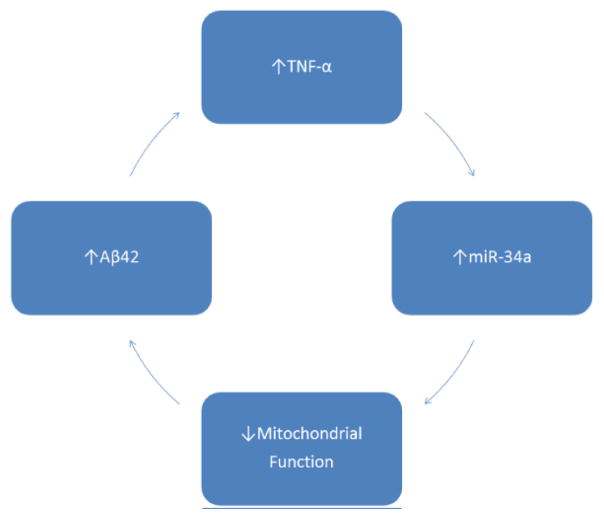
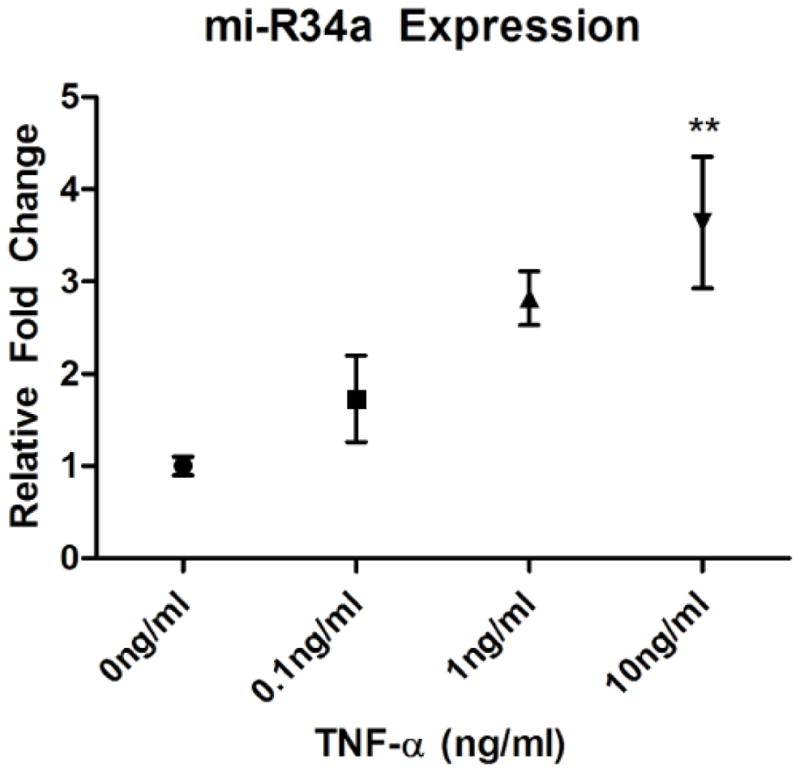
This short communication describes our research which demonstrates that TNF-α causes a rapid decline in mitochondrial function, leading to neuronal cell death. As such, this neurotoxic proinflammatory cytokine may play a role in brain damage from stroke and neurodegeneration in chronic conditions such as Alzheimer's disease (AD) and Parkinson's disease. We have extended this initial observation by demonstrating that TNF-α stimulates a microRNA (miR-34a) which we have shown reduces five key proteins in the mitochondrial electron transport chain through base-pair complementarity. miR-34a is increased in affected brain regions of Alzheimer's patients and transgenic AD mouse models. We have further shown that oligomeric amyloid beta 42 (oAβ42) stimulates miR-34a. Collectively, these data suggest that TNF-α, oAβ42, and miR-34a participate in a vicious cycle, resulting in mitochondrial dysfunction, which is critical to the neuropathology of AD.
这篇简短的通讯描述了我们的研究,该研究表明肿瘤坏死因子-α(TNF-α)会导致线粒体功能迅速下降,进而导致神经元细胞死亡。因此,这种具有神经毒性的促炎细胞因子可能在中风引起的脑损伤以及阿尔茨海默病(AD)和帕金森病等慢性疾病的神经退行性变中起作用。我们通过证明TNF-α刺激一种微小RNA(miR-34a)扩展了这一初步观察结果,我们已表明该微小RNA通过碱基互补配对减少线粒体电子传递链中的五种关键蛋白质。在阿尔茨海默病患者和转基因AD小鼠模型的受影响脑区中,miR-34a有所增加。我们还进一步表明,寡聚淀粉样β蛋白42(oAβ42)会刺激miR-34a。总体而言,这些数据表明TNF-α、oAβ42和miR-34a参与了一个恶性循环,导致线粒体功能障碍,这对AD的神经病理学至关重要。