Hong Chang-Ki, Shim Yu Shik, Sim Sook Young, Joo Jin-Yang, Kwon Min A, Kim Yong Bae, Chung Joonho
Department of Neurosurgery, Gangnam Severance Hospital, Yonsei University College of Medicine, 211, Eonjuro, Gangnam-gu, Seoul, 06273, Republic of Korea.
Severance Institute for Vascular and Metabolic Research, Yonsei University, Seoul, Republic of Korea.
J Headache Pain. 2017 Dec;18(1):64. doi: 10.1186/s10194-017-0774-6. Epub 2017 Jun 26.
No evidence is available on the risks of neurologically asymptomatic minimal traumatic intracranial hemorrhage (mTIH) in patients with traumatic brain injury (TBI) for post-traumatic headache (PTH). The purpose of this study was to investigate whether mTIH in patients with TBI was associated with PTH and to evaluate its risk factors.
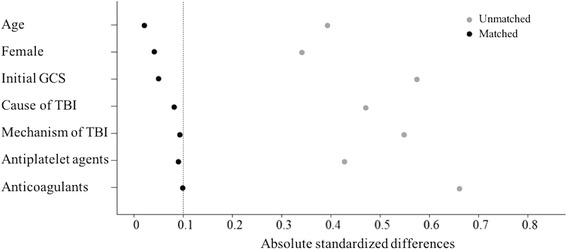
Between September 2009 and December 2014, 1484 patients with TBI were treated at our institution, 57 of whom had mTIH after TBI and were include in this study. We performed propensity score matching to establish a control group among the 823 patients with TBI treated during the same period. Patients with TBI rated their headaches prospectively using a numeric rating scale (NRS). We compared NRS scores between mTIH group (n = 57) and non-mTIH group (n = 57) and evaluated risk factors of moderate-to-severe PTH (NRS ≥ 4) at the 12-month follow-up.
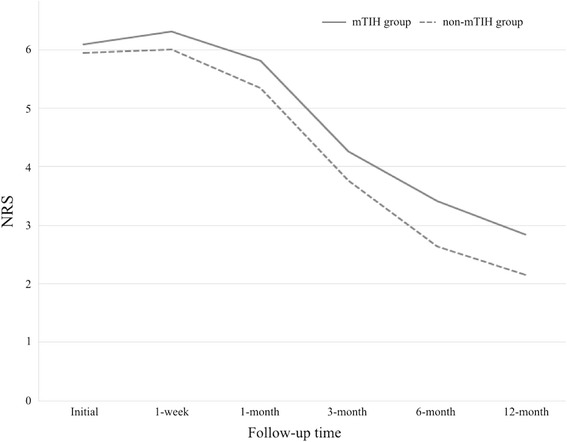
Moderate-to-severe PTH was reported by 21.9% of patients (29.8% in mTIH group and 14.0% in non-mTIH group B, p = 0.012) at the 12-month follow-up. The mean NRS was higher in mTIH group than in non-mTIH group throughout the follow-up period (95% confidence interval [CI], 0.11 to 1.14; p < 0.05, ANCOVA). Logistic regression analysis showed that post-traumatic seizure (odds ratio, 1.520; 95% CI, 1.128-6.785; p = 0.047) and mTIH (odds ratio, 2.194; 95% CI, 1.285-8.475; p = 0.039) were independently associated with moderate-to-severe PTH at the 12-month follow-up.
Moderate-to-severe PTH can be expected after TBI in patients with mTIH and post-traumatic seizure. PTH occurs more frequently in patients with mTIH than in those without mTIH.
关于创伤性脑损伤(TBI)患者中神经学无症状的轻度创伤性颅内出血(mTIH)与创伤后头痛(PTH)风险之间的关系尚无证据。本研究的目的是调查TBI患者中的mTIH是否与PTH相关,并评估其危险因素。
2009年9月至2014年12月期间,我院收治了1484例TBI患者,其中57例在TBI后发生mTIH并纳入本研究。我们进行了倾向评分匹配,以在同期接受治疗的823例TBI患者中建立一个对照组。TBI患者使用数字评分量表(NRS)对其头痛进行前瞻性评估。我们比较了mTIH组(n = 57)和非mTIH组(n = 57)之间的NRS评分,并在12个月随访时评估中重度PTH(NRS≥4)的危险因素。
在12个月随访时,21.9%的患者报告有中重度PTH(mTIH组为29.8%,非mTIH组B为14.0%,p = 0.012)。在整个随访期间,mTIH组的平均NRS高于非mTIH组(95%置信区间[CI],0.11至1.14;p < 0.05,协方差分析)。逻辑回归分析显示,创伤后癫痫(比值比,1.520;95%CI,1.128 - 6.785;p = 0.047)和mTIH(比值比,2.194;95%CI,1.285 - 8.475;p = 0.039)在12个月随访时与中重度PTH独立相关。
mTIH和创伤后癫痫的TBI患者在伤后可出现中重度PTH。mTIH患者发生PTH的频率高于无mTIH的患者。