Wu Xiangbing, Zhang Yi Ping, Qu Wenrui, Shields Lisa B E, Shields Christopher B, Xu Xiao-Ming
Spinal Cord and Brain Injury Research Group, Stark Neurosciences Research Institute, Department of Neurological Surgery and Goodman and Campbell Brain and Spine, Indiana University School of Medicine.
Norton Neuroscience Institute, Norton Healthcare.
J Vis Exp. 2017 Jun 18(124):54988. doi: 10.3791/54988.
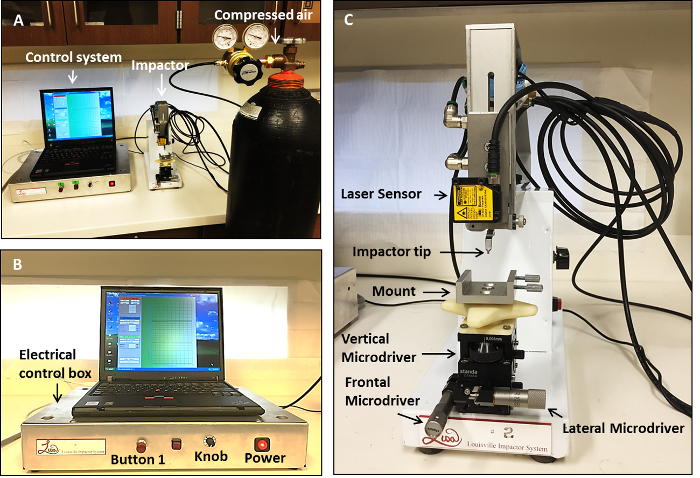
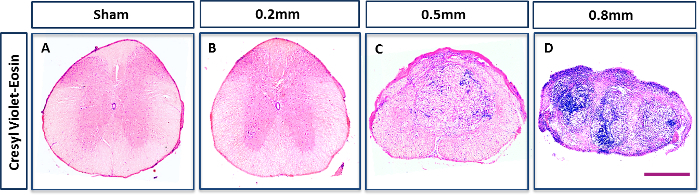
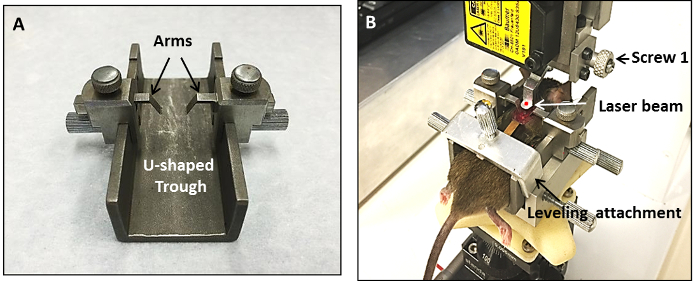
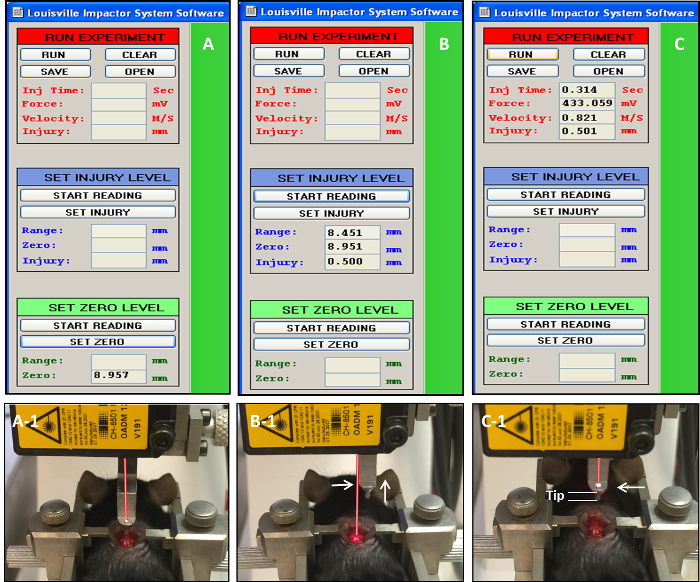
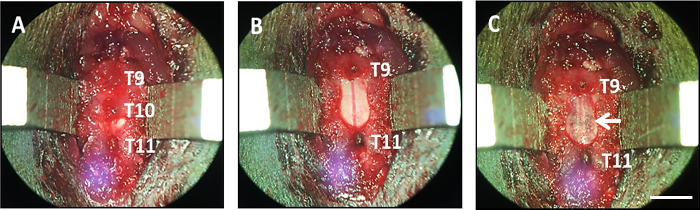
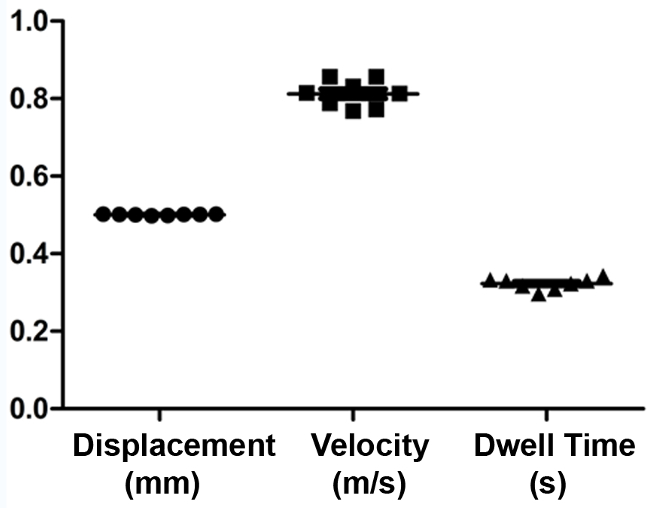
Producing a consistent and reproducible contusive spinal cord injury (SCI) is critical to minimizing behavioral and histological variabilities between experimental animals. Several contusive SCI models have been developed to produce injuries using different mechanisms. The severity of the SCI is based on the height that a given weight is dropped, the injury force, or the spinal cord displacement. In the current study, we introduce a novel mouse contusive SCI device, the Louisville Injury System Apparatus (LISA) impactor, which can create a displacement-based SCI with high injury velocity and accuracy. This system utilizes laser distance sensors combined with advanced software to produce graded and highly-reproducible injuries. We performed a contusive SCI at the 10 thoracic vertebral (T10) level in mice to demonstrate the step-by-step procedure. The model can also be applied to the cervical and lumbar spinal levels.
产生一致且可重复的脊髓挫伤性损伤(SCI)对于最小化实验动物之间的行为和组织学变异性至关重要。已经开发了几种挫伤性SCI模型,以使用不同机制产生损伤。SCI的严重程度基于给定重量下落的高度、损伤力或脊髓位移。在本研究中,我们介绍了一种新型小鼠挫伤性SCI装置,即路易斯维尔损伤系统仪器(LISA)撞击器,它可以以高损伤速度和精度产生基于位移的SCI。该系统利用激光距离传感器结合先进软件来产生分级且高度可重复的损伤。我们在小鼠的第10胸椎(T10)水平进行了挫伤性SCI,以演示逐步操作过程。该模型也可应用于颈椎和腰椎水平。