Muschiol Sandra, Erlendsson Simon, Aschtgen Marie-Stephanie, Oliveira Vitor, Schmieder Peter, de Lichtenberg Casper, Teilum Kaare, Boesen Thomas, Akbey Umit, Henriques-Normark Birgitta
From the Department of Microbiology, Tumor and Cell Biology, Karolinska Institutet, 171 77 Stockholm, Sweden,; Department of Clinical Microbiology, Karolinska University Hospital, 171 76 Stockholm, Sweden,.
Structural Biology and NMR Laboratory, Linderstrøm-Lang Center for Protein Science, Department of Biology, University of Copenhagen, Ole Maaløes Vej 5, 2200 Copenhagen N, Denmark.
J Biol Chem. 2017 Aug 25;292(34):14134-14146. doi: 10.1074/jbc.M117.787671. Epub 2017 Jun 28.
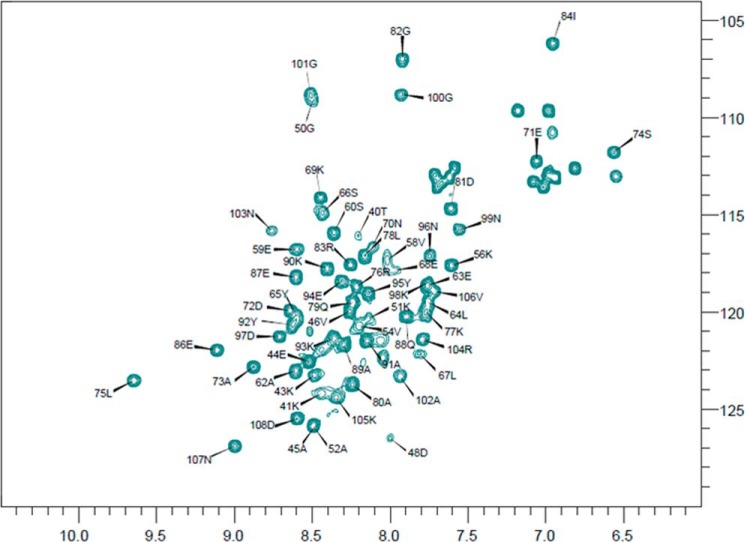
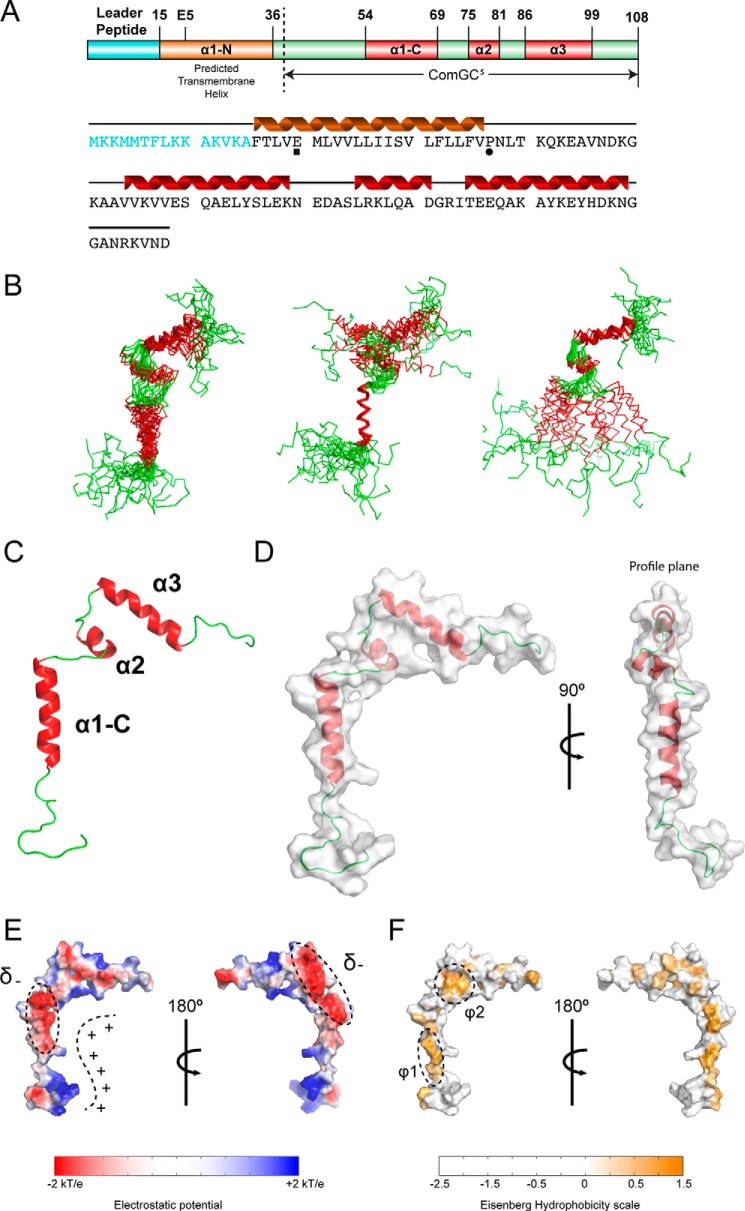
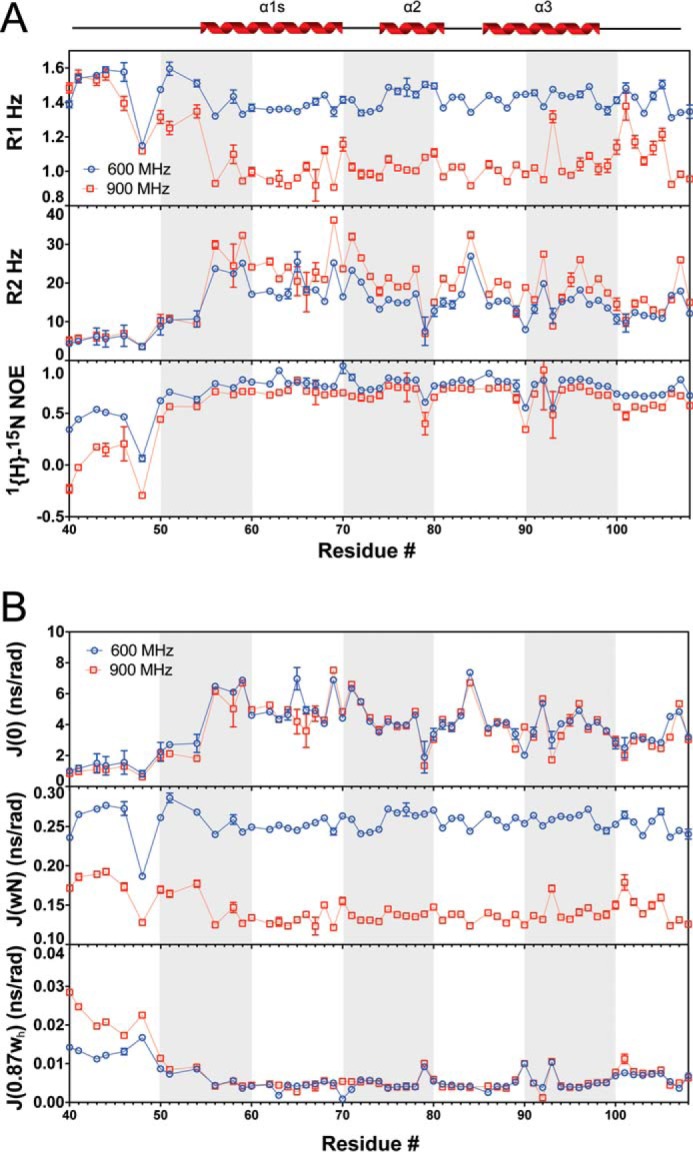
Type IV pili are important virulence factors on the surface of many pathogenic bacteria and have been implicated in a wide range of diverse functions, including attachment, twitching motility, biofilm formation, and horizontal gene transfer. The respiratory pathogen deploys type IV pili to take up DNA during transformation. These "competence pili" are composed of the major pilin protein ComGC and exclusively assembled during bacterial competence, but their biogenesis remains unclear. Here, we report the high resolution NMR structure of N-terminal truncated ComGC revealing a highly flexible and structurally divergent type IV pilin. It consists of only three α-helical segments forming a well-defined electronegative cavity and confined electronegative and hydrophobic patches. The structure is particularly flexible between the first and second α-helix with the first helical part exhibiting slightly slower dynamics than the rest of the pilin, suggesting that the first helix is involved in forming the pilus structure core and that parts of helices two and three are primarily surface-exposed. Taken together, our results provide the first structure of a type IV pilin protein involved in the formation of competence-induced pili in Gram-positive bacteria and corroborate the remarkable structural diversity among type IV pilin proteins.
IV型菌毛是许多病原菌表面重要的毒力因子,涉及多种不同功能,包括黏附、颤动运动、生物膜形成和水平基因转移。呼吸道病原体在转化过程中利用IV型菌毛摄取DNA。这些“感受态菌毛”由主要菌毛蛋白ComGC组成,仅在细菌感受态期间组装,但其生物发生过程仍不清楚。在此,我们报道了N端截短的ComGC的高分辨率核磁共振结构,揭示了一种高度灵活且结构不同的IV型菌毛蛋白。它仅由三个α螺旋片段组成,形成一个明确的负电腔以及受限的负电和疏水区域。该结构在第一个和第二个α螺旋之间特别灵活,第一个螺旋部分的动力学比菌毛蛋白的其余部分略慢,这表明第一个螺旋参与形成菌毛结构核心,而第二个和第三个螺旋的部分主要暴露于表面。综上所述,我们的结果提供了参与革兰氏阳性菌感受态诱导菌毛形成的IV型菌毛蛋白的首个结构,并证实了IV型菌毛蛋白之间显著的结构多样性。