Department of Internal Medicine, Section of Gastroenterology, University of Nevada School of Medicine, Las Vegas, NV, USA.
Division of Gastroenterology and Hepatology, Department of Medicine, Stanford University Medical Center, Stanford, CA, USA.
Drugs. 2017 Aug;77(12):1263-1280. doi: 10.1007/s40265-017-0769-2.
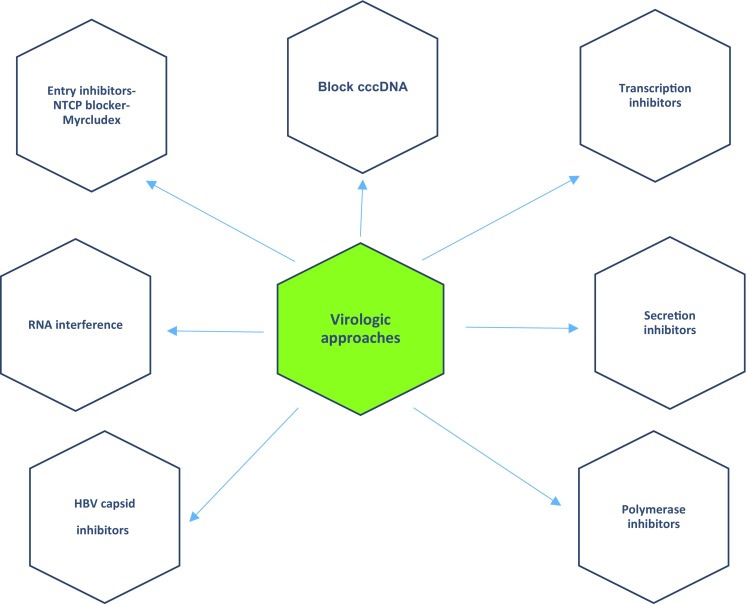
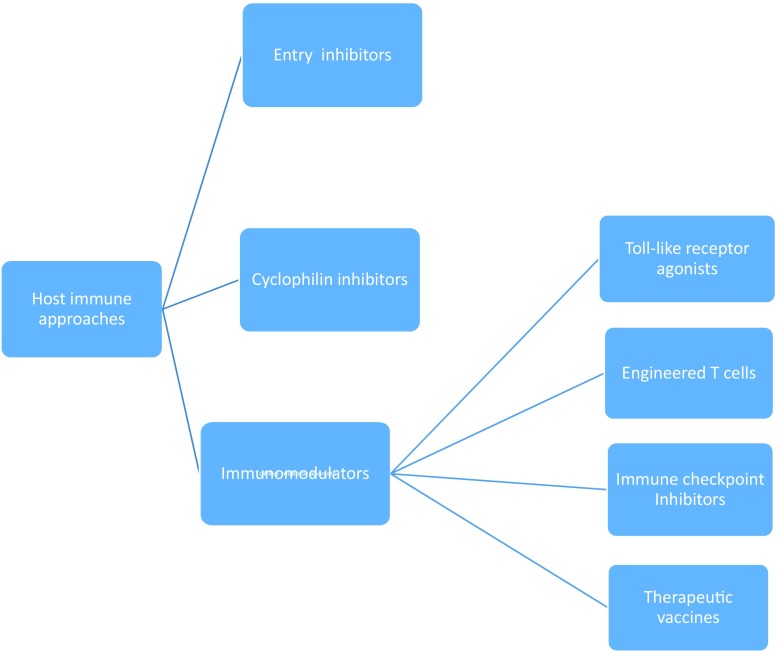
With high morbidity and mortality worldwide, there is great interest in effective therapies for chronic hepatitis B (CHB) virus. There are currently several dozen investigational agents being developed for treatment of CHB. They can be broadly divided into two categories: (1) direct-acting antivirals (DAAs) that interfere with a specific step in viral replication; and (2) host-targeting agents that inhibit viral replication by modifying host cell function, with the latter group further divided into the subcategories of immune modulators and agents that target other host functions. Included among the DAAs being developed are RNA interference therapies, covalently closed circular DNA (cccDNA) formation and transcription inhibitors, core/capsid inhibitors, reverse transcriptase inhibitors, hepatitis B surface antigen (HBsAg) release inhibitors, antisense oligonucleotides, and helioxanthin analogues. Included among the host-targeting agents are entry inhibitors, cyclophilin inhibitors, and multiple immunomodulatory agents, including Toll-like receptor agonists, immune checkpoint inhibitors, therapeutic vaccines, engineered T cells, and several cytokine agents, including recombinant human interleukin-7 (CYT107) and SB 9200, a novel therapy that is believed to both have direct antiviral properties and to induce endogenous interferon. In this review we discuss agents that are currently in the clinical stage of development for CHB treatment as well as strategies and agents currently at the evaluation and discovery phase and potential future targets. Effective approaches to CHB may require suppression of viral replication combined with one or more host-targeting agents. Some of the recent research advances have led to the hope that with such a combined approach we may have a functional cure for CHB in the not distant future.
由于全球范围内的高发病率和死亡率,人们对慢性乙型肝炎 (CHB) 病毒的有效治疗方法非常感兴趣。目前正在开发几十种用于治疗 CHB 的研究性药物。它们可以大致分为两类:(1)直接作用抗病毒药物 (DAA),可干扰病毒复制的特定步骤;(2)宿主靶向药物,通过改变宿主细胞功能来抑制病毒复制,后者进一步分为免疫调节剂和靶向其他宿主功能的药物。正在开发的 DAA 包括 RNA 干扰疗法、共价闭合环状 DNA (cccDNA) 形成和转录抑制剂、核心/衣壳抑制剂、逆转录酶抑制剂、乙型肝炎表面抗原 (HBsAg) 释放抑制剂、反义寡核苷酸和海黄嘌呤类似物。宿主靶向药物包括进入抑制剂、亲环素抑制剂和多种免疫调节剂,包括 Toll 样受体激动剂、免疫检查点抑制剂、治疗性疫苗、工程化 T 细胞和几种细胞因子药物,包括重组人白细胞介素 7 (CYT107) 和 SB 9200,这是一种新型治疗方法,据信具有直接抗病毒特性和诱导内源性干扰素。在这篇综述中,我们讨论了目前处于 CHB 治疗临床开发阶段的药物以及目前处于评估和发现阶段的策略和药物,以及潜在的未来靶点。有效的 CHB 治疗方法可能需要抑制病毒复制,同时结合一种或多种宿主靶向药物。最近的一些研究进展使人们希望通过这种联合治疗方法,我们可能在不久的将来对 CHB 实现功能性治愈。