Korolowicz Kyle E, Iyer Radhakrishnan P, Czerwinski Stefanie, Suresh Manasa, Yang Junming, Padmanabhan Seetharamaiyer, Sheri Anjaneyulu, Pandey Rajendra K, Skell Jeffrey, Marquis Judith K, Kallakury Bhaskar V, Tucker Robin D, Menne Stephan
Department of Microbiology & Immunology, Georgetown University Medical Center, Washington, DC, 20057, United States of America.
Spring Bank Pharmaceuticals, Inc., Suite S-7, 113 Cedar Street, Milford, MA, 01757, United States of America.
PLoS One. 2016 Aug 23;11(8):e0161313. doi: 10.1371/journal.pone.0161313. eCollection 2016.
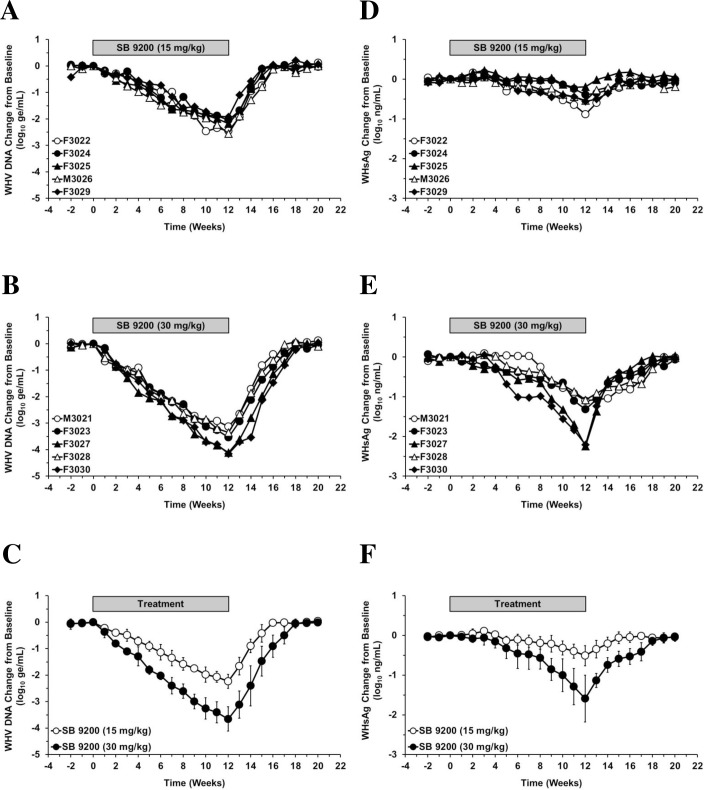
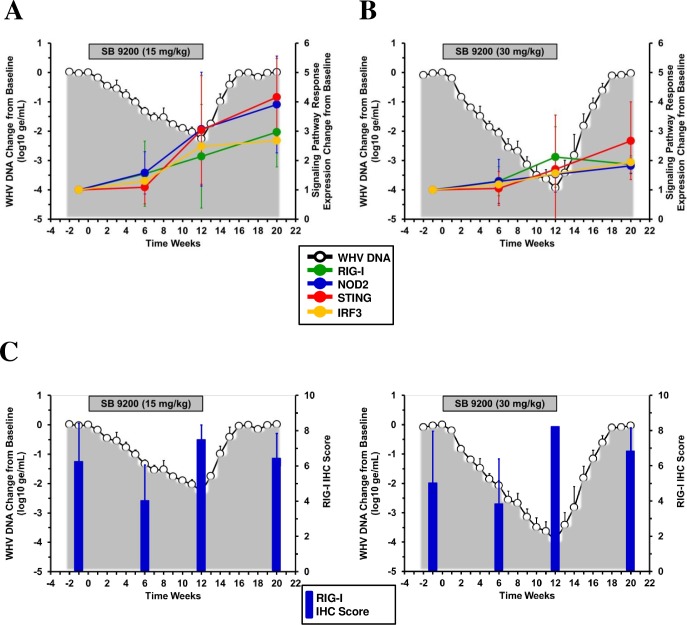
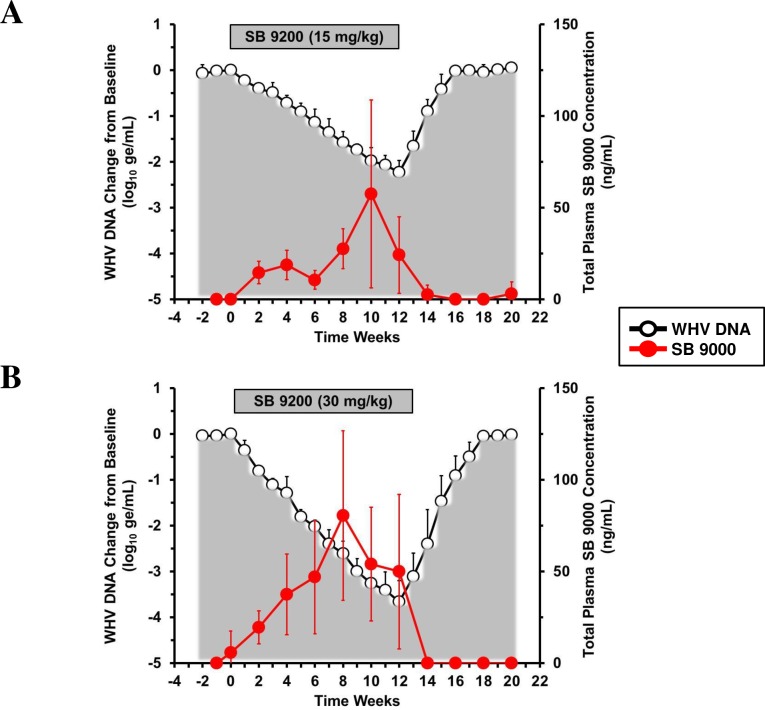
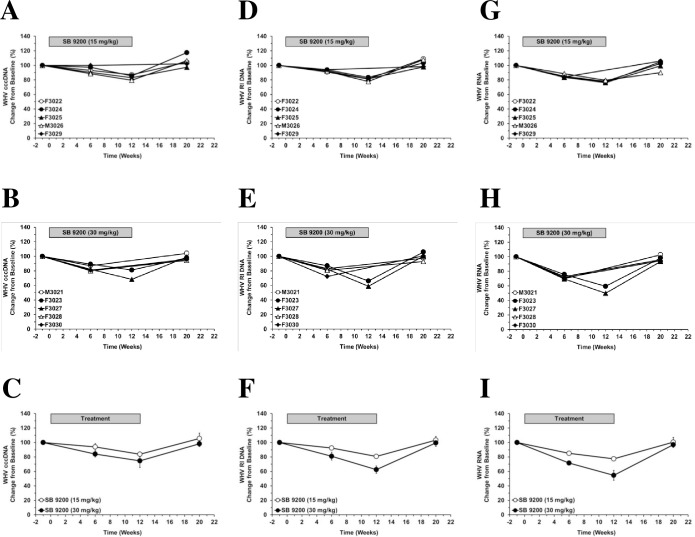
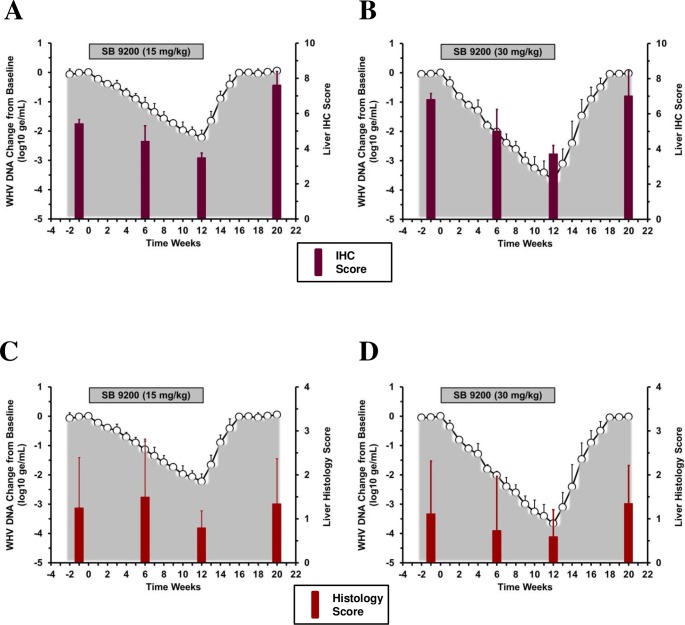
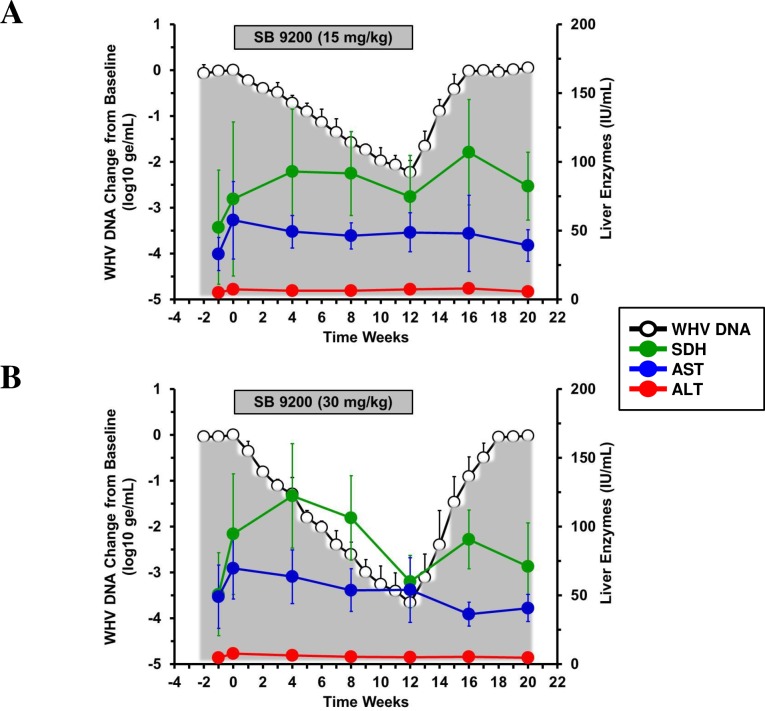
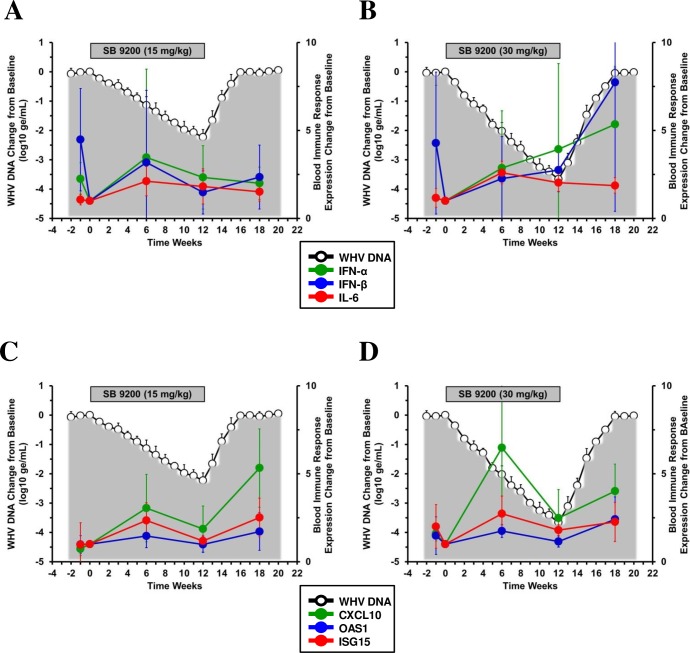
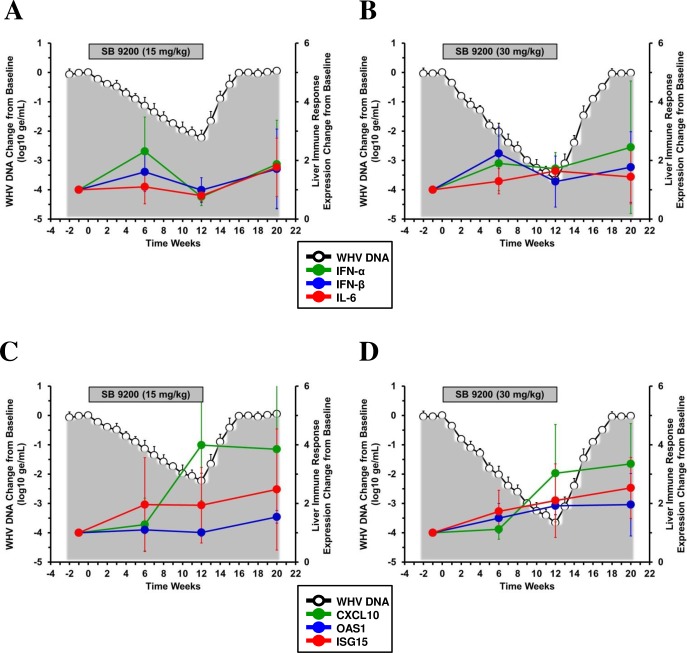
SB 9200, an oral prodrug of the dinucleotide SB 9000, is being developed for the treatment of chronic hepatitis B virus (HBV) infection and represents a novel class of antivirals. SB 9200 is thought to activate the viral sensor proteins, retinoic acid-inducible gene 1 (RIG-I) and nucleotide-binding oligomerization domain-containing protein 2 (NOD2) resulting in interferon (IFN) mediated antiviral immune responses in virus-infected cells. Additionally, the binding of SB 9200 to these sensor proteins could also sterically block the ability of the viral polymerase to access pre-genomic RNA for nucleic acid synthesis. The immune stimulating and direct antiviral properties of SB 9200 were evaluated in woodchucks chronically infected with woodchuck hepatitis virus (WHV) by daily, oral dosing at 15 and 30 mg/kg for 12 weeks. Prolonged treatment resulted in 2.2 and 3.7 log10 reductions in serum WHV DNA and in 0.5 and 1.6 log10 declines in serum WHV surface antigen from pretreatment level with the lower or higher dose of SB 9200, respectively. SB 9200 treatment also resulted in lower hepatic levels of WHV nucleic acids and antigen and reduced liver inflammation. Following treatment cessation, recrudescence of viral replication was observed but with dose-dependent delays in viral relapse. The antiviral effects were associated with dose-dependent and long-lasting induction of IFN-α, IFN-β and IFN-stimulated genes in blood and liver, which correlated with the prolonged activation of the RIG-I/NOD2 pathway and hepatic presence of elevated RIG-I protein levels. These results suggest that in addition to a direct antiviral activity, SB 9200 induces antiviral immunity during chronic hepadnaviral infection via activation of the viral sensor pathway.
SB 9200是二核苷酸SB 9000的口服前体药物,正被开发用于治疗慢性乙型肝炎病毒(HBV)感染,代表了一类新型抗病毒药物。SB 9200被认为可激活病毒传感蛋白、维甲酸诱导基因1(RIG-I)和含核苷酸结合寡聚化结构域蛋白2(NOD2),从而在病毒感染细胞中引发干扰素(IFN)介导的抗病毒免疫反应。此外,SB 9200与这些传感蛋白的结合还可能在空间上阻碍病毒聚合酶获取前基因组RNA进行核酸合成的能力。通过以15毫克/千克和30毫克/千克的剂量每日口服给药12周,对慢性感染土拨鼠肝炎病毒(WHV)的土拨鼠进行评估,以研究SB 9200的免疫刺激和直接抗病毒特性。长期治疗使血清WHV DNA分别降低了2.2和3.7个对数10,血清WHV表面抗原较SB 9200低剂量或高剂量预处理水平分别下降了0.5和1.6个对数10。SB 9200治疗还导致肝脏中WHV核酸和抗原水平降低,肝脏炎症减轻。停药后,观察到病毒复制复发,但病毒复发出现剂量依赖性延迟。抗病毒作用与血液和肝脏中IFN-α、IFN-β和IFN刺激基因的剂量依赖性和持久诱导有关,这与RIG-I/NOD2途径的延长激活以及肝脏中RIG-I蛋白水平升高相关。这些结果表明,除了直接抗病毒活性外,SB 9200在慢性嗜肝DNA病毒感染期间通过激活病毒传感途径诱导抗病毒免疫。