Rouault-Pierre K, Mian S A, Goulard M, Abarrategi A, Di Tulio A, Smith A E, Mohamedali A, Best S, Nloga A-M, Kulasekararaj A G, Ades L, Chomienne C, Fenaux P, Dosquet C, Mufti G J, Bonnet D
Haematopoietic Stem Cell Laboratory, The Francis Crick Institute, London, UK.
King's College London School of Medicine, Department of Haematological Medicine, London, UK.
Leukemia. 2017 Dec;31(12):2702-2708. doi: 10.1038/leu.2017.172. Epub 2017 Jun 2.
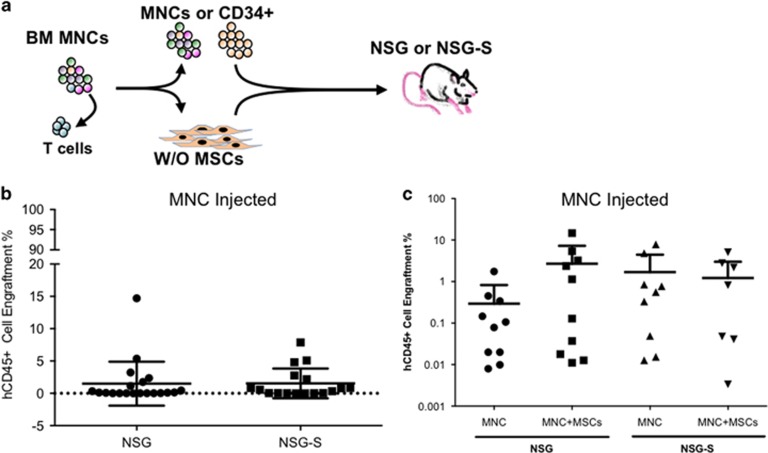
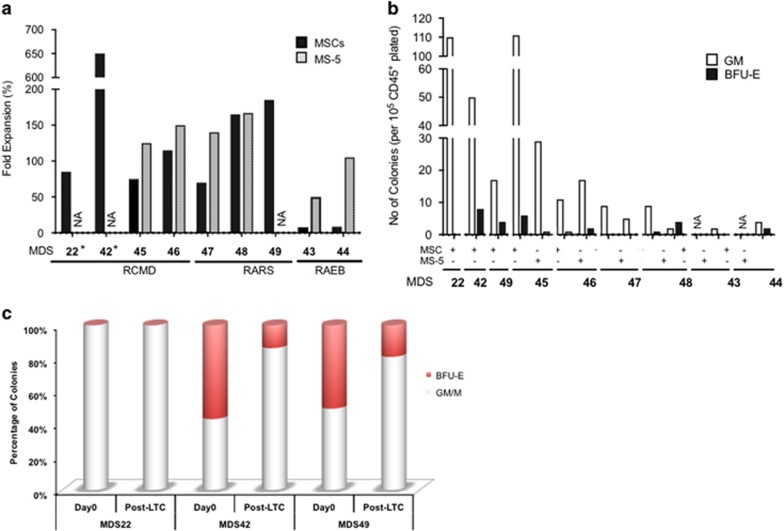
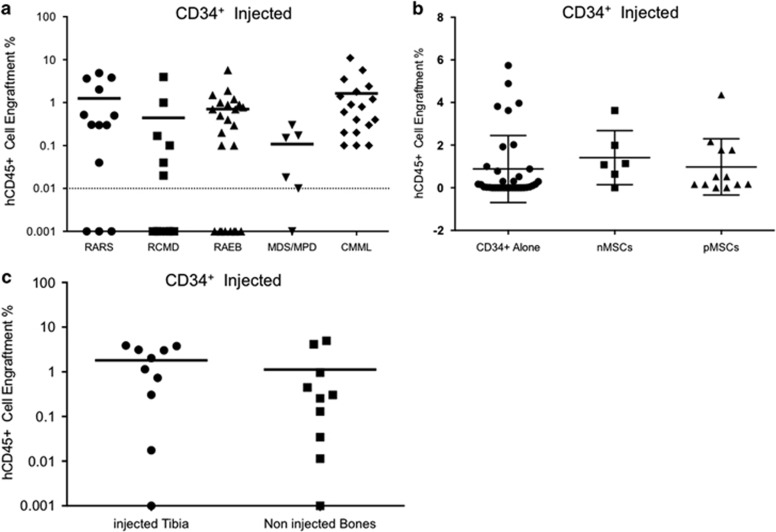
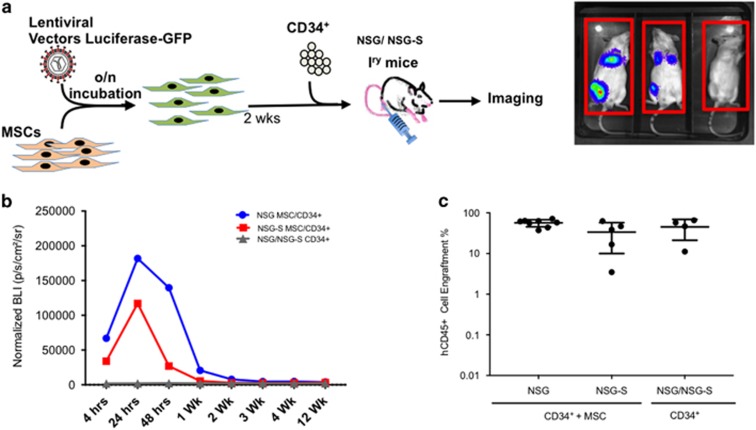
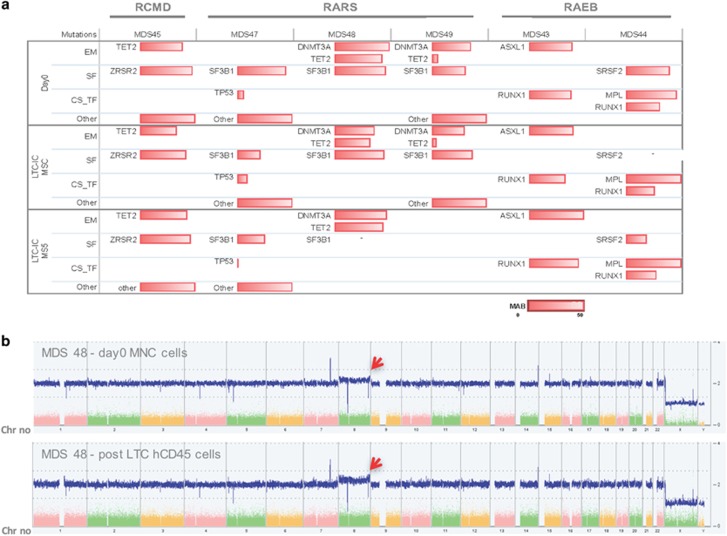
Myelodysplastic syndromes (MDS) represent a heterogeneous group of hematological clonal disorders. Here, we have tested the bone marrow (BM) cells from 38 MDS patients covering all risk groups in two immunodeficient mouse models: NSG and NSG-S. Our data show comparable level of engraftment in both models. The level of engraftment was patient specific with no correlation to any specific MDS risk group. Furthermore, the co-injection of mesenchymal stromal cells (MSCs) did not improve the level of engraftment. Finally, we have developed an in vitro two-dimensional co-culture system as an alternative tool to in vivo. Using our in vitro system, we have been able to co-culture CD34 cells from MDS patient BM on auto- and/or allogeneic MSCs over 4 weeks with a fold expansion of up to 600 times. More importantly, these expanded cells conserved their MDS clonal architecture as well as genomic integrity.
骨髓增生异常综合征(MDS)是一组异质性血液系统克隆性疾病。在此,我们在两种免疫缺陷小鼠模型(NSG和NSG-S)中检测了38例涵盖所有风险组的MDS患者的骨髓(BM)细胞。我们的数据显示,两种模型中的植入水平相当。植入水平具有患者特异性,与任何特定的MDS风险组均无相关性。此外,共注射间充质基质细胞(MSC)并未提高植入水平。最后,我们开发了一种体外二维共培养系统,作为体内实验的替代工具。使用我们的体外系统,我们能够将MDS患者BM中的CD34细胞与自体和/或异基因MSC共培养4周,细胞扩增倍数高达600倍。更重要的是,这些扩增的细胞保留了其MDS克隆结构以及基因组完整性。