Institut für Experimentelle Endokrinologie, Charité-Universitätsmedizin Berlin, Berlin, D-13353, Germany.
Department of Cell Biology, Harvard Medical School, Boston, MA, 02115, USA.
Sci Rep. 2017 Jun 29;7(1):4391. doi: 10.1038/s41598-017-04586-9.
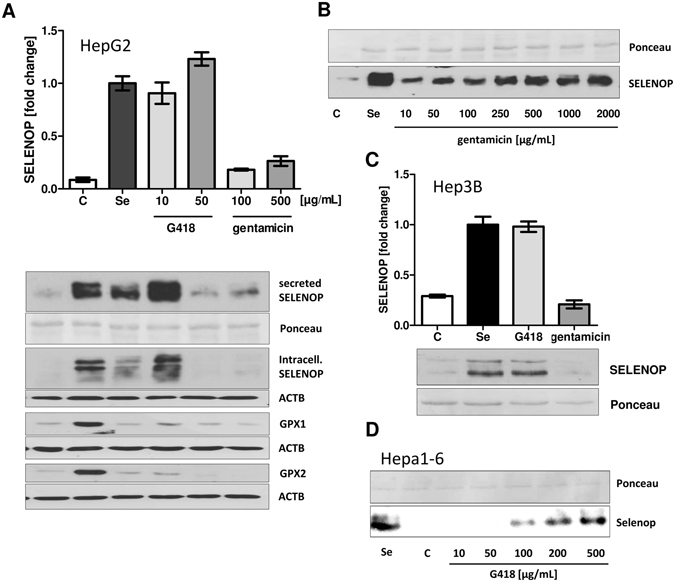
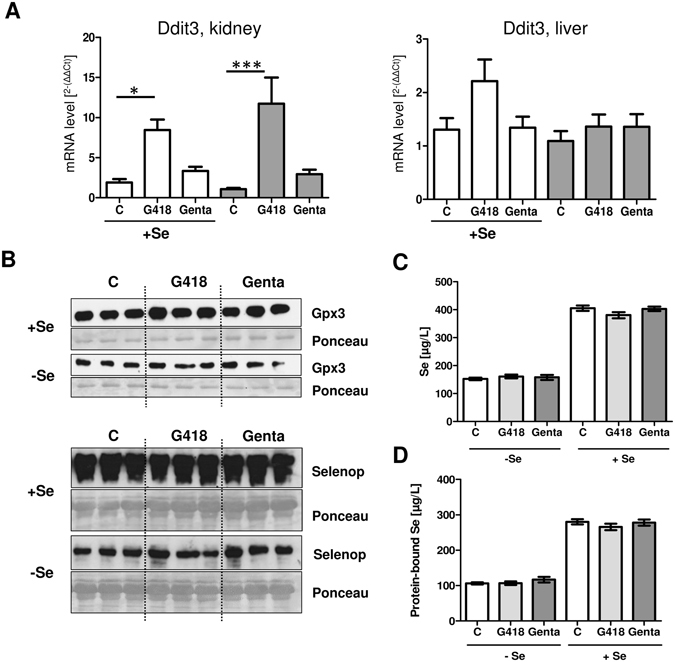
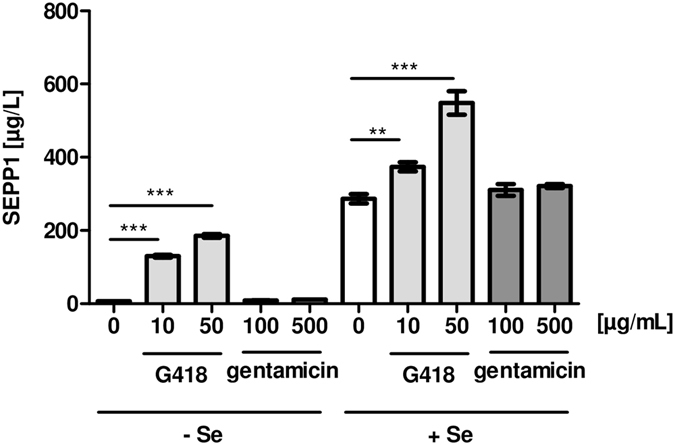
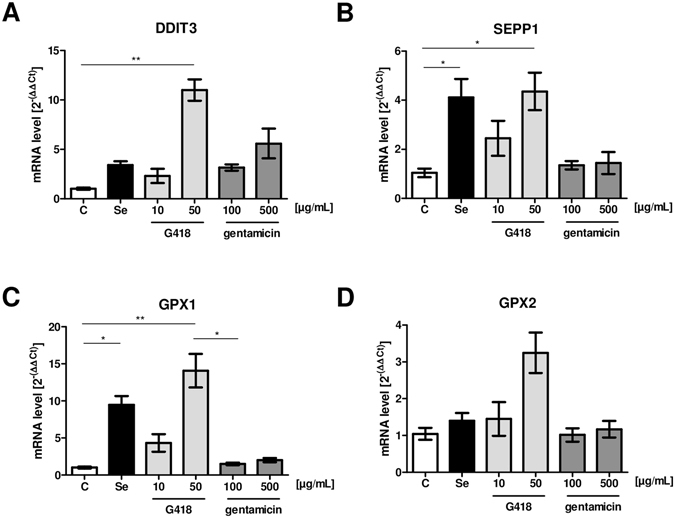
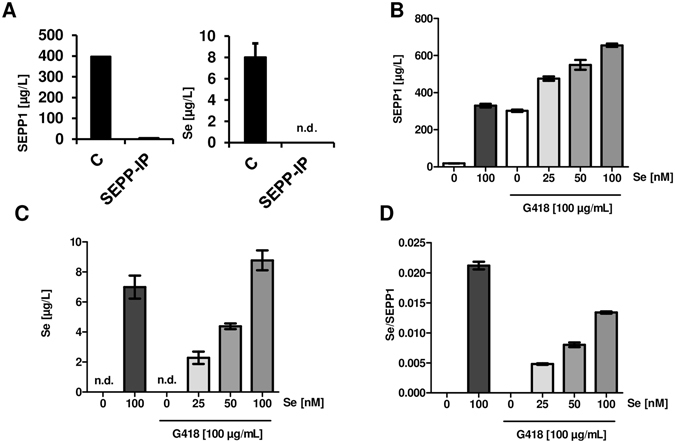
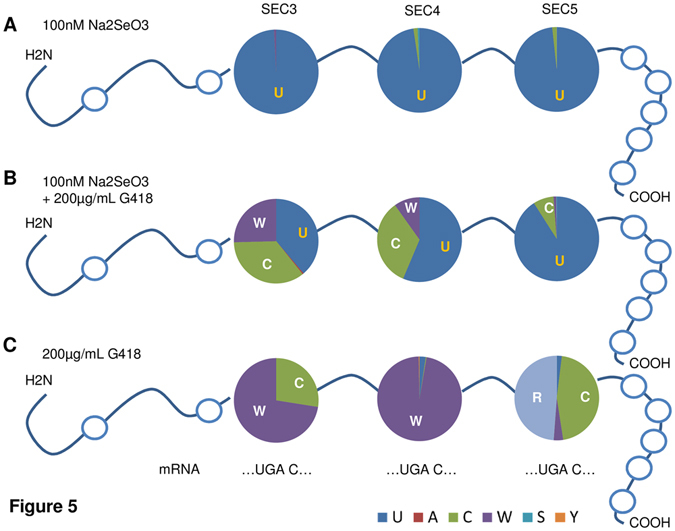
Selenoprotein biosynthesis relies on the co-translational insertion of selenocysteine in response to UGA codons. Aminoglycoside antibiotics interfere with ribosomal function and may cause codon misreading. We hypothesized that biosynthesis of the selenium (Se) transporter selenoprotein P (SELENOP) is particularly sensitive to antibiotics due to its ten in frame UGA codons. As liver regulates Se metabolism, we tested the aminoglycosides G418 and gentamicin in hepatoma cell lines (HepG2, Hep3B and Hepa1-6) and in experimental mice. In vitro, SELENOP levels increased strongly in response to G418, whereas expression of the glutathione peroxidases GPX1 and GPX2 was marginally affected. Se content of G418-induced SELENOP was dependent on Se availability, and was completely suppressed by G418 under Se-poor conditions. Selenocysteine residues were replaced mainly by cysteine, tryptophan and arginine in a codon-specific manner. Interestingly, in young healthy mice, antibiotic treatment failed to affect Selenop biosynthesis to a detectable degree. These findings suggest that the interfering activity of aminoglycosides on selenoprotein biosynthesis can be severe, but depend on the Se status, and other parameters likely including age and general health. Focused analyses with aminoglycoside-treated patients are needed next to evaluate a possible interference of selenoprotein biosynthesis by the antibiotics and elucidate potential side effects.
硒蛋白的生物合成依赖于 UGA 密码子的共翻译插入来合成硒代半胱氨酸。氨基糖苷类抗生素干扰核糖体的功能,并可能导致密码子误读。我们假设由于其十个框架内的 UGA 密码子,硒(Se)转运蛋白硒蛋白 P(SELENOP)的生物合成对抗生素特别敏感。由于肝脏调节 Se 代谢,我们在肝癌细胞系(HepG2、Hep3B 和 Hepa1-6)和实验小鼠中测试了氨基糖苷类抗生素 G418 和庆大霉素。在体外,G418 强烈诱导 SELENOP 水平升高,而谷胱甘肽过氧化物酶 GPX1 和 GPX2 的表达则受到轻微影响。G418 诱导的 SELENOP 的 Se 含量取决于 Se 的可用性,并且在 Se 缺乏条件下完全被 G418 抑制。硒代半胱氨酸残基以特定于密码子的方式主要被半胱氨酸、色氨酸和精氨酸取代。有趣的是,在年轻健康的小鼠中,抗生素处理未能在可检测的程度上影响 Selenop 生物合成。这些发现表明,氨基糖苷类对硒蛋白生物合成的干扰活性可能很严重,但取决于 Se 状态以及其他可能包括年龄和总体健康的参数。接下来需要对接受氨基糖苷类抗生素治疗的患者进行有针对性的分析,以评估抗生素对硒蛋白生物合成的可能干扰,并阐明潜在的副作用。