van Hengel Ingmar A J, Riool Martijn, Fratila-Apachitei Lidy E, Witte-Bouma Janneke, Farrell Eric, Zadpoor Amir A, Zaat Sebastian A J, Apachitei Iulian
Department of Biomechanical Engineering, Faculty of Mechanical, Maritime, and Materials Engineering, Delft University of Technology (TU Delft), Mekelweg 2, 2628 CD Delft, The Netherlands.
Additive Manufacturing Lab, Faculty of Mechanical, Maritime, and Materials Engineering, Delft University of Technology (TU Delft), Mekelweg 2, 2628 CD Delft, The Netherlands.
Data Brief. 2017 Jun 9;13:385-389. doi: 10.1016/j.dib.2017.06.015. eCollection 2017 Aug.
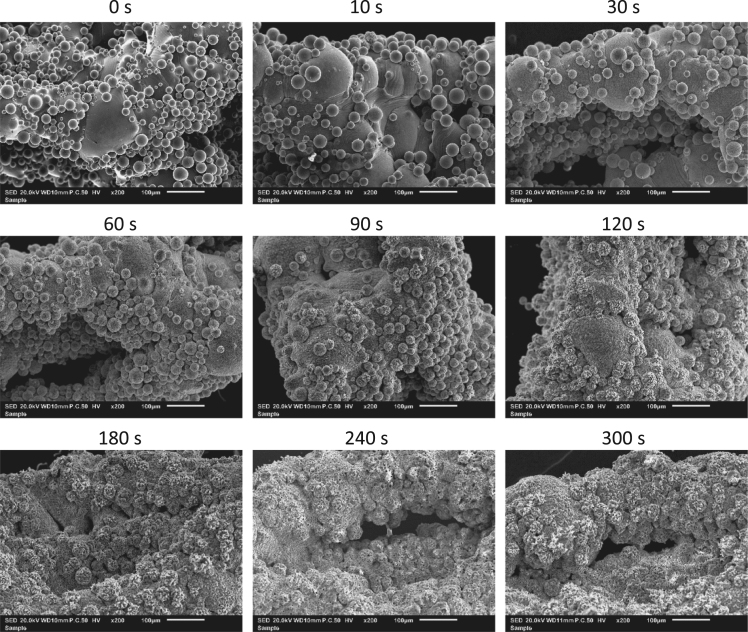
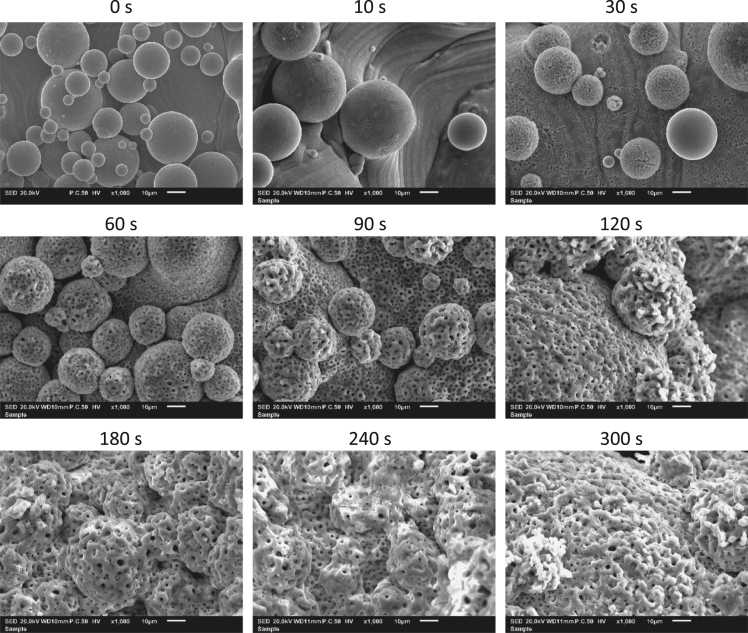
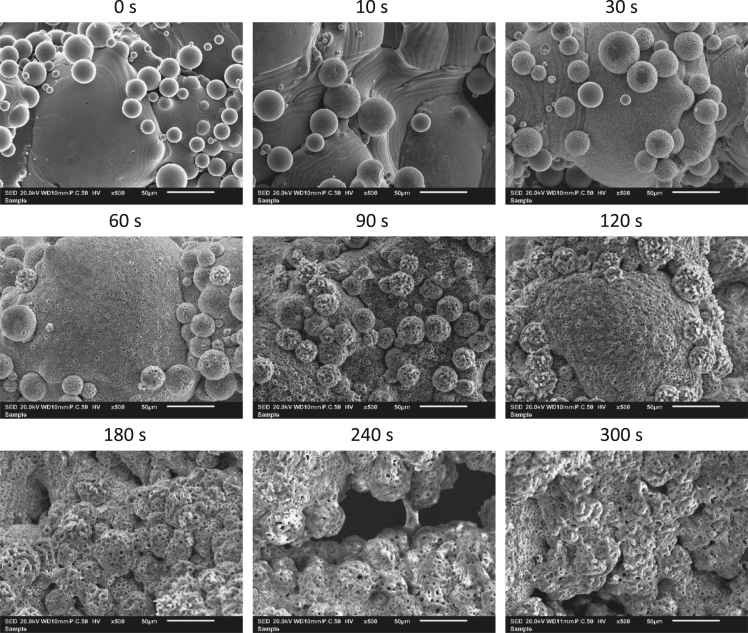
Additively manufactured Ti-6Al-4V implants were biofunctionalized using plasma electrolytic oxidation. At various time points during this process scanning electron microscopy imaging was performed to analyze the surface morphology (van Hengel et al., 2017) [1]. This data shows the changes in surface morphology during plasma electrolytic oxidation. Data presented in this article are related to the research article "Selective laser melting porous metallic implants with immobilized silver nanoparticles kill and prevent biofilm formation by methicillin-resistant Staphylococcus aureus" (van Hengel et al., 2017) [1].
通过等离子体电解氧化对增材制造的Ti-6Al-4V植入物进行生物功能化处理。在此过程中的各个时间点,进行扫描电子显微镜成像以分析表面形态(van Hengel等人,2017年)[1]。该数据显示了等离子体电解氧化过程中表面形态的变化。本文所呈现的数据与研究论文《具有固定化银纳米颗粒的选择性激光熔化多孔金属植入物可杀死并防止耐甲氧西林金黄色葡萄球菌形成生物膜》(van Hengel等人,2017年)[1]相关。