Hammerschmidt-Kamper Christiane, Biljes Daniel, Merches Katja, Steiner Irina, Daldrup Thomas, Bol-Schoenmakers Marianne, Pieters Raymond H H, Esser Charlotte
IUF - Leibniz Research Institute for Environmental Medicine, Düsseldorf, Germany.
Institute of Legal Medicine, Department of Forensic Toxicology, University Hospital of Düsseldorf, Düsseldorf, Germany.
PLoS One. 2017 Jun 30;12(6):e0180321. doi: 10.1371/journal.pone.0180321. eCollection 2017.
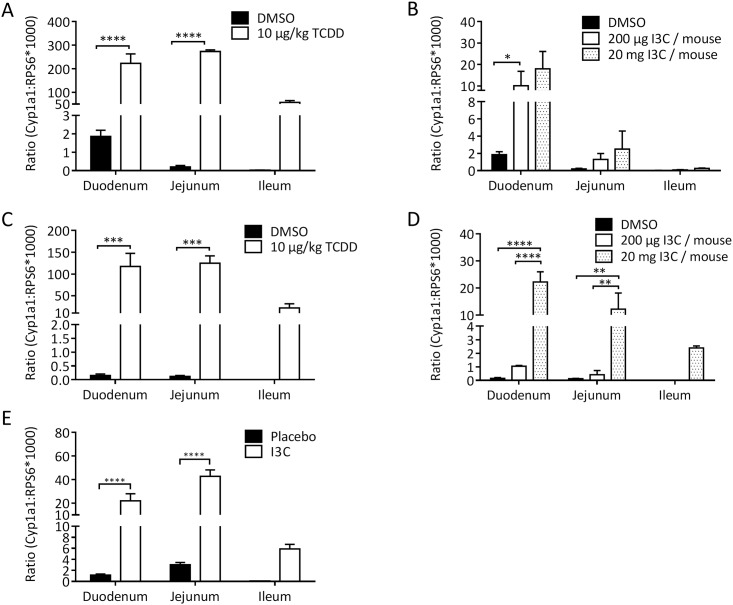
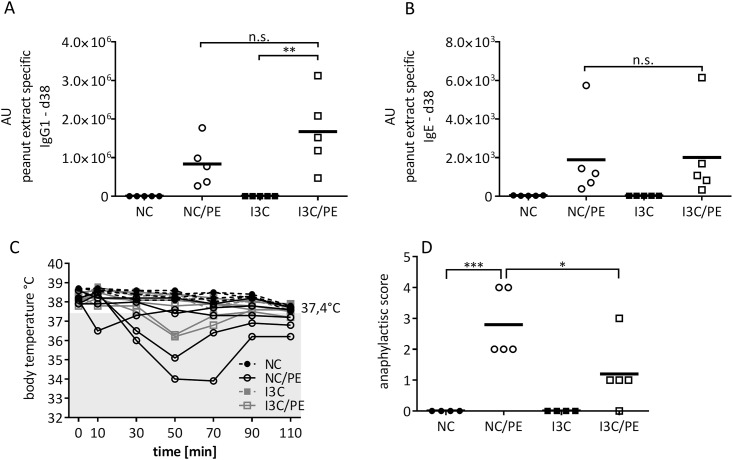
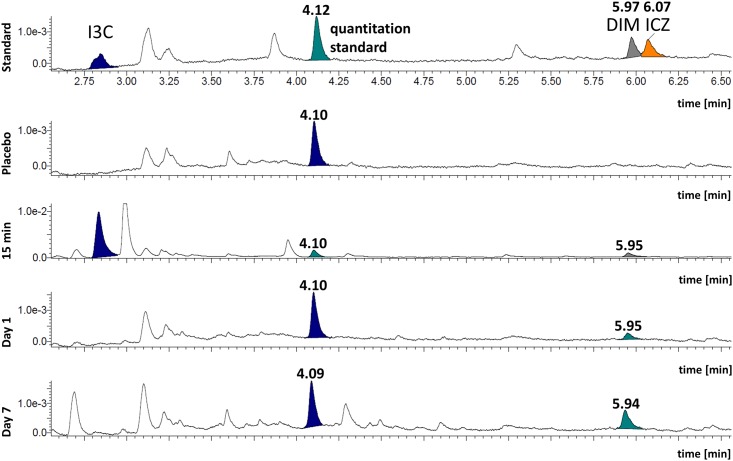
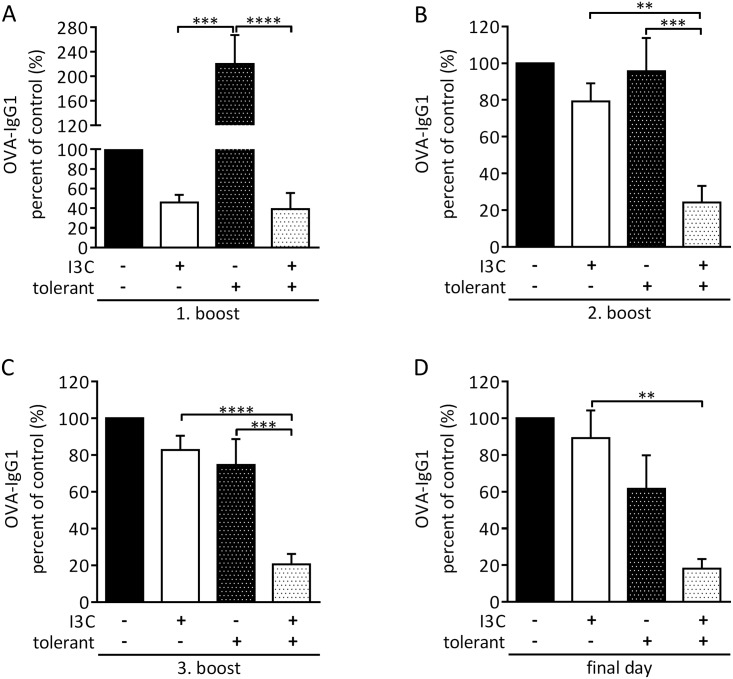
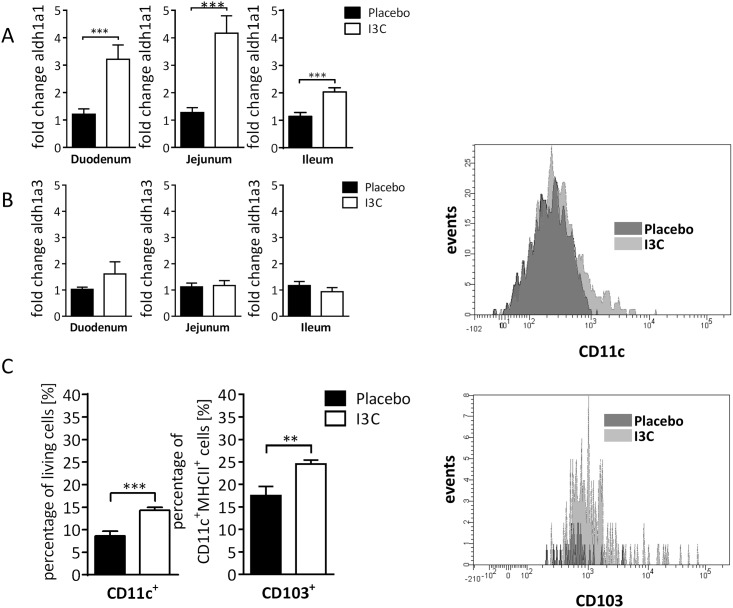
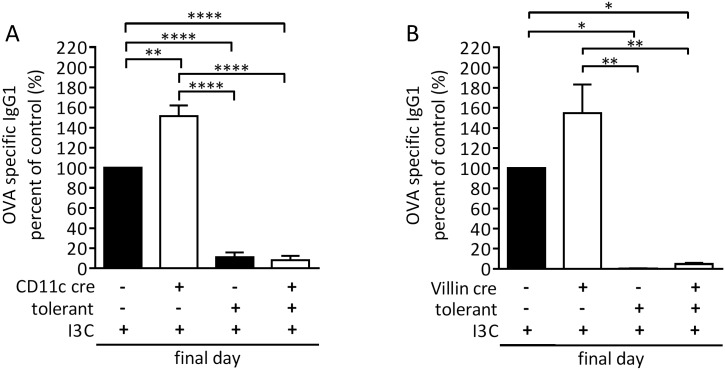
In general, dietary antigens are tolerated by the gut associated immune system. Impairment of this so-called oral tolerance is a serious health risk. We have previously shown that activation of the ligand-dependent transcription factor aryl hydrocarbon receptor (AhR) by the environmental pollutant 2,3,7,8-tetrachlorodibenzo-p-dioxin (TCDD) affects both oral tolerance and food allergy. In this study, we determine whether a common plant-derived, dietary AhR-ligand modulates oral tolerance as well. We therefore fed mice with indole-3-carbinole (I3C), an AhR ligand that is abundant in cruciferous plants. We show that several I3C metabolites were detectable in the serum after feeding, including the high-affinity ligand 3,3´-diindolylmethane (DIM). I3C feeding robustly induced the AhR-target gene CYP4501A1 in the intestine; I3C feeding also induced the aldh1 gene, whose product catalyzes the formation of retinoic acid (RA), an inducer of regulatory T cells. We then measured parameters indicating oral tolerance and severity of peanut-induced food allergy. In contrast to the tolerance-breaking effect of TCDD, feeding mice with chow containing 2 g/kg I3C lowered the serum anti-ovalbumin IgG1 response in an experimental oral tolerance protocol. Moreover, I3C feeding attenuated symptoms of peanut allergy. In conclusion, the dietary compound I3C can positively influence a vital immune function of the gut.
一般来说,肠道相关免疫系统可耐受饮食中的抗原。这种所谓的口服耐受性受损会带来严重的健康风险。我们之前已经表明,环境污染物2,3,7,8-四氯二苯并对二恶英(TCDD)激活配体依赖性转录因子芳烃受体(AhR)会影响口服耐受性和食物过敏。在本研究中,我们确定一种常见的植物源饮食AhR配体是否也能调节口服耐受性。因此,我们给小鼠喂食吲哚-3-甲醇(I3C),这是一种在十字花科植物中含量丰富的AhR配体。我们发现喂食后血清中可检测到几种I3C代谢产物,包括高亲和力配体3,3'-二吲哚甲烷(DIM)。喂食I3C能强烈诱导肠道中的AhR靶基因CYP4501A1;喂食I3C还能诱导醛脱氢酶1基因,其产物催化视黄酸(RA)的形成,视黄酸是调节性T细胞的诱导剂。然后,我们测量了表明口服耐受性和花生诱导的食物过敏严重程度的参数。与TCDD破坏耐受性的作用相反,在实验性口服耐受性方案中,给小鼠喂食含2 g/kg I3C的食物可降低血清抗卵清蛋白IgG1反应。此外,喂食I3C可减轻花生过敏症状。总之,饮食化合物I3C可对肠道的一项重要免疫功能产生积极影响。