Viksveen Petter, Relton Clare, Nicholl Jon
The Department of Health Studies, The University of Stavanger, Kjell Arholms hus, Kjell Arholms gate 39, 4021, Stavanger, Norway.
The University of Sheffield, Faculty of Medicine, Dentistry and Health, School of Health and Related Research, Regent Court, 30 Regent Street, Sheffield, S1 4DA, UK.
Trials. 2017 Jun 30;18(1):299. doi: 10.1186/s13063-017-2040-2.
Despite controversy regarding homeopathy, some patients consult homeopaths for depression. Evidence is required to determine whether this is an effective, acceptable and safe intervention for these patients.
A pragmatic trial using the "cohort multiple randomised controlled trial" design was used to test the effectiveness of adjunctive treatment by homeopaths compared to usual care alone, over a period of 12 months in patients with self-reported depression. One third of patients were randomly selected for an offer of treatment provided by a homeopath. The primary outcome measure was the Patient Health Questionnaire (PHQ-9) at 6 months. Secondary outcomes included depression scores at 12 months; and the Generalised Anxiety Disorder (GAD-7) outcome at 6 and 12 months.
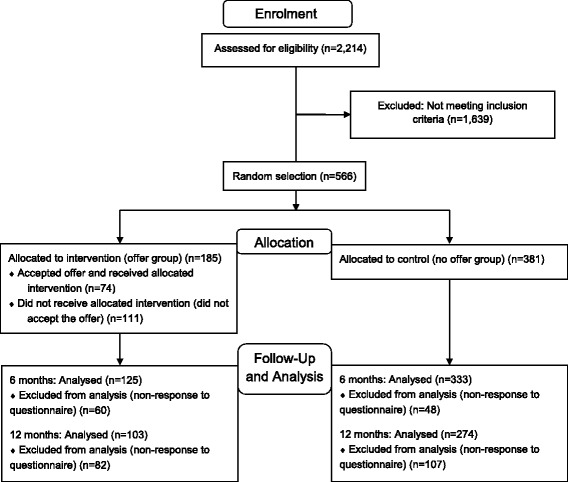
The trial over-recruited by 17% with a total of 566 patients. Forty percent took up the offer and received treatment. An intention-to-treat analysis of the offer group at 6 months reported a 1.4-point lower mean depression score than the no offer group (95% CI 0.2, 2.5, p = 0.019), with a small standardized treatment effect size (d = 0.30). Using instrumental variables analysis, a moderate treatment effect size in favour of those treated was found (d = 0.57) with a between group difference of 2.6 points (95% CI 0.5, 4.7, p = 0.018). Results were maintained at 12 months. Secondary analyses showed similar results. Similar results were found for anxiety (GAD-7). No evidence suggested any important risk involved with the intervention.
This trial provides preliminary support for both the acceptability and the effectiveness of treatment by a homeopath for patients with self-reported depression. Our results provide support for further pragmatic research to provide more precise estimates of treatment effect.
ISRCTN registry, ISRCTN02484593 . Registered on 7 January 2013.
尽管顺势疗法存在争议,但仍有一些抑郁症患者咨询顺势疗法医生。需要证据来确定这对这些患者来说是否是一种有效、可接受且安全的干预措施。
采用“队列多重随机对照试验”设计的实用试验,以测试顺势疗法医生辅助治疗与单纯常规护理相比的有效性,为期12个月,研究对象为自我报告患有抑郁症的患者。三分之一的患者被随机选择接受顺势疗法医生提供的治疗。主要结局指标是6个月时的患者健康问卷(PHQ - 9)。次要结局包括12个月时的抑郁评分;以及6个月和12个月时的广泛性焦虑障碍(GAD - 7)结局。
该试验超额招募了17%,共有566名患者。40%的人接受了提议并接受了治疗。对提议组在6个月时进行的意向性分析显示,其平均抑郁评分比未接受提议组低1.4分(95%置信区间0.2, 2.5,p = 0.019),标准化治疗效应量较小(d = 0.30)。使用工具变量分析,发现对接受治疗者有中等治疗效应量(d = 0.57),组间差异为2.6分(95%置信区间0.5, 4.7,p = 0.018)。结果在12个月时得以维持。次要分析显示了类似结果。焦虑(GAD - 7)方面也发现了类似结果。没有证据表明该干预措施存在任何重大风险。
该试验为顺势疗法医生对自我报告患有抑郁症患者的治疗的可接受性和有效性提供了初步支持。我们的结果为进一步的实用研究提供了支持,以便更精确地估计治疗效果。
ISRCTN注册库,ISRCTN02484593。于2013年1月7日注册。