Marret Mary J, Choo Wan Yuen
Department of Paediatrics, Faculty of Medicine, University of Malaya, Kuala Lumpur, Malaysia.
Department of Social and Preventive Medicine, Faculty of Medicine, University of Malaya, Kuala Lumpur, Malaysia.
BMJ Open. 2017 Jun 30;7(6):e014959. doi: 10.1136/bmjopen-2016-014959.
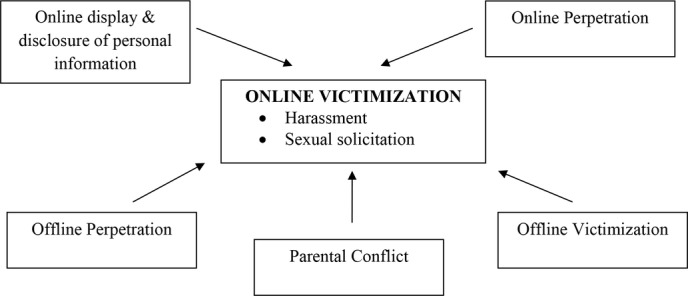
To determine the prevalence of online interpersonal victimisation and its association with patterns of social networking site (SNS) use, offline victimisation, offline perpetration and parental conflict among Malaysian adolescents using SNS.
A cross-sectional study of students from randomly selected public secondary schools in the state of Negeri Sembilan was conducted using an anonymous self-administered questionnaire. The questionnaire examined patterns of SNS use and included measures of online victimisation, online perpetration, offline victimisation and parental conflict. A response rate of 91% from a total of 1634 yielded a sample of 1487 students between 15 years and 16 years of age.
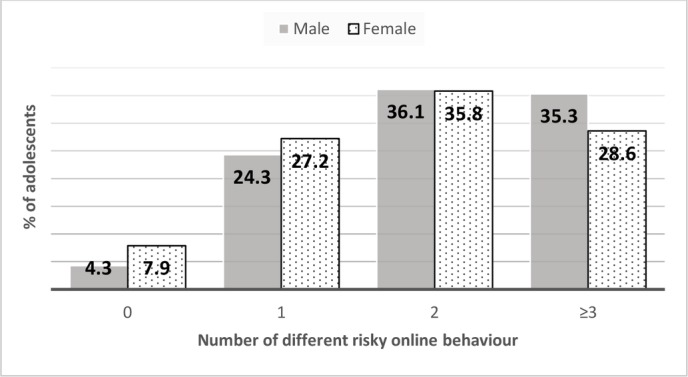
Ninety-two per cent of respondents had used at least one SNS. More than half of SNS users (52.2%) reported experiences of online victimisation over the past 12 months. Boys were significantly more likely to experience online harassment compared with girls (52.2% vs 43.3%, p<0.001). There were no significant gender differences in experiences of unwanted sexual solicitation. Adolescents who engaged in perpetration behaviours online had almost six times higher odds of reporting frequent online victimisation compared with online behaviours involving personal disclosure. There was a significant dose-response relationship between engagement in multiple types of online behaviour and the risk of frequent online victimisation. Both online and offline perpetrations were associated with an increased risk of victimisation. Those who were victimised offline or experienced parental conflict were twice as likely to report online victimisation.
Interventions to prevent online electronic aggression should target perpetration behaviour both online and offline. Youth should be equipped with skills in communication and decision-making in relationships that can be applied across a spectrum of contexts both online and offline.
确定马来西亚使用社交网站(SNS)的青少年中网络人际受害行为的患病率及其与社交网站使用模式、线下受害行为、线下犯罪行为和父母冲突之间的关联。
使用匿名自填问卷对森美兰州随机抽取的公立中学学生进行横断面研究。问卷调查了社交网站的使用模式,并包括网络受害行为、网络犯罪行为、线下受害行为和父母冲突的测量指标。在总共1634名学生中,91%的回复率产生了一个由1487名15至16岁学生组成的样本。
92%的受访者使用过至少一种社交网站。超过一半的社交网站用户(52.2%)报告在过去12个月中有网络受害经历。与女孩相比,男孩遭受网络骚扰的可能性显著更高(52.2%对43.3%,p<0.001)。在遭受不必要的性 solicitation 方面,没有显著的性别差异。与涉及个人披露的网络行为相比,参与网络犯罪行为的青少年报告频繁网络受害的几率几乎高出六倍。参与多种类型网络行为与频繁网络受害风险之间存在显著的剂量反应关系。线上和线下的犯罪行为都与受害风险增加有关。那些在离线状态下成为受害者或经历父母冲突的人报告网络受害的可能性是其他人的两倍。
预防网络电子攻击的干预措施应针对线上和线下的犯罪行为。应使青少年具备在人际关系中进行沟通和决策的技能,这些技能可应用于线上和线下的各种情境。