Microelement Research Center, Huazhong Agricultural University, Wuhan, 430070, China.
Hubei Provincial Engineering Laboratory for New-Type Fertilizer, Wuhan, 430070, China.
Sci Rep. 2017 Jun 30;7(1):4420. doi: 10.1038/s41598-017-04655-z.
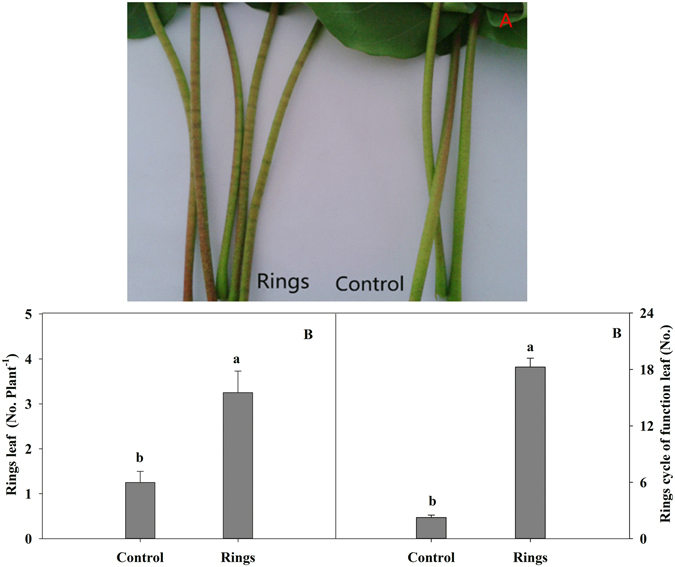
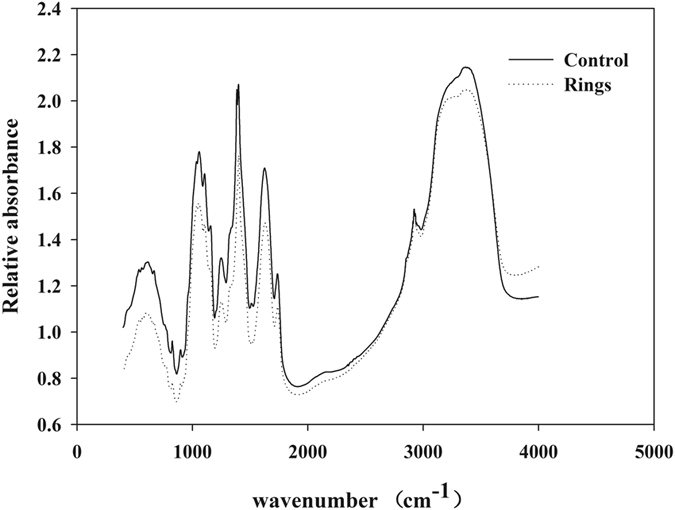
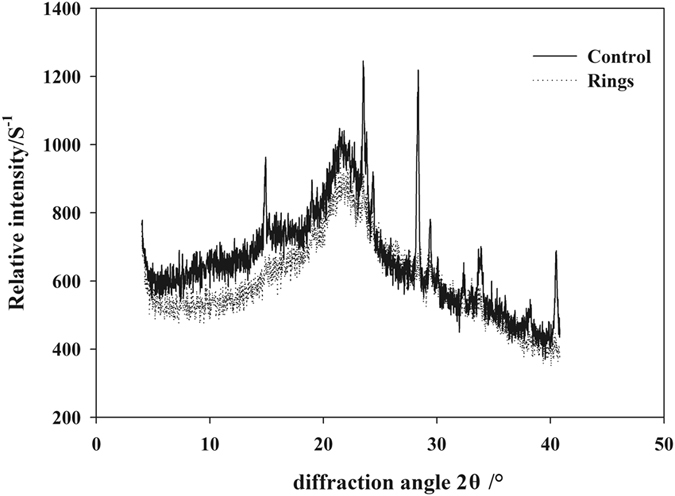
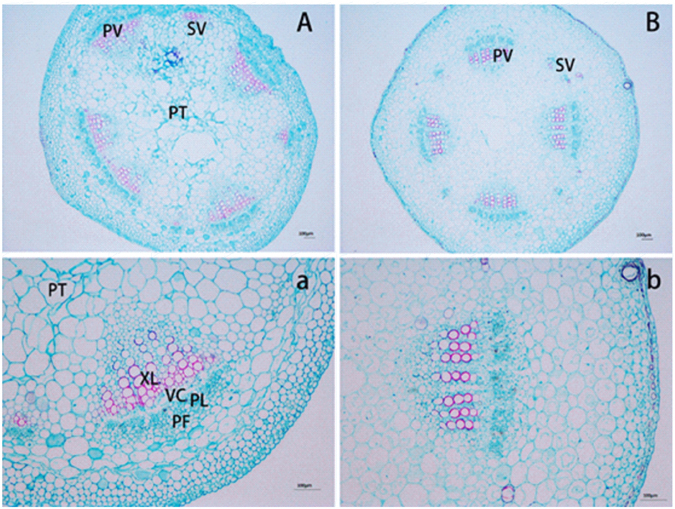
The main symptom of boron (B) deficiency in cotton is the formation of brown rings on leaf petioles. The objective of the present study was to determine the changes in the anatomical structure and chemical composition of petioles and photosynthesis of leaves in cotton under B deficiency. Compared to the control, B deficiency treatment resulted in large increases in the number of petioles with brown rings per plant (160.0%) and the number of rings on the petiole per functional leaf (711.1%) in cotton seedlings. The relative absorbance intensity in the fingerprint region of polysaccharide structure was decreased in petiole rings under B deficiency, while lignin contents were increased. Cotton plants mitigated the impairment of transport function in cotton petioles by increasing the areas of vascular bundles, phloem, xylem, and phloem fiber. Moreover, the stomatal conductance, photosynthetic rate, and transpiration rate in leaves were significantly decreased under B deficiency, thus impeding photosynthesis in cotton plants. Therefore, B deficiency reduces transport function in petioles and photosynthesis in leaves, and leads to the formation of noticeable brown rings on petioles of cotton seedlings.
硼(B)缺乏症在棉花中的主要症状是叶柄上形成棕色环。本研究的目的是确定 B 缺乏下棉花叶柄的解剖结构和化学成分变化以及叶片的光合作用。与对照相比,B 缺乏处理导致植株上具有棕色环的叶柄数量(增加 160.0%)和每个功能叶上的叶柄环数量(增加 711.1%)大量增加。在 B 缺乏下,叶柄环中的多糖结构指纹区的相对吸收强度降低,而木质素含量增加。棉花植株通过增加维管束、韧皮部、木质部和韧皮纤维的面积来减轻棉花叶柄中运输功能的损害。此外,B 缺乏显著降低叶片中的气孔导度、光合速率和蒸腾速率,从而阻碍棉花植物的光合作用。因此,B 缺乏会降低叶柄的运输功能和叶片的光合作用,并导致棉花幼苗叶柄上形成明显的棕色环。