Wemheuer Wiebke M, Wrede Arne, Schulz-Schaeffer Walter J
Institute of Neuropathology, Saarland University Medical CenterHomburg, Germany.
Luxembourg Centre of Systems Biology, University of LuxembourgEsch-sur-Alzette, Luxembourg.
Front Aging Neurosci. 2017 Jun 16;9:187. doi: 10.3389/fnagi.2017.00187. eCollection 2017.
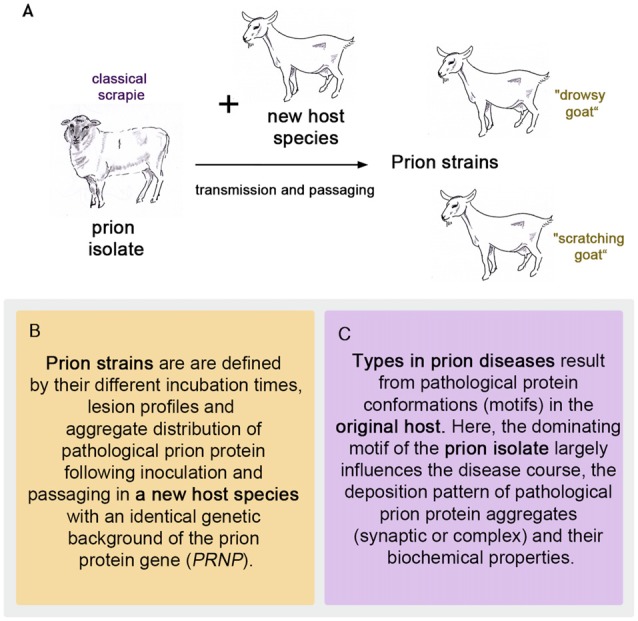
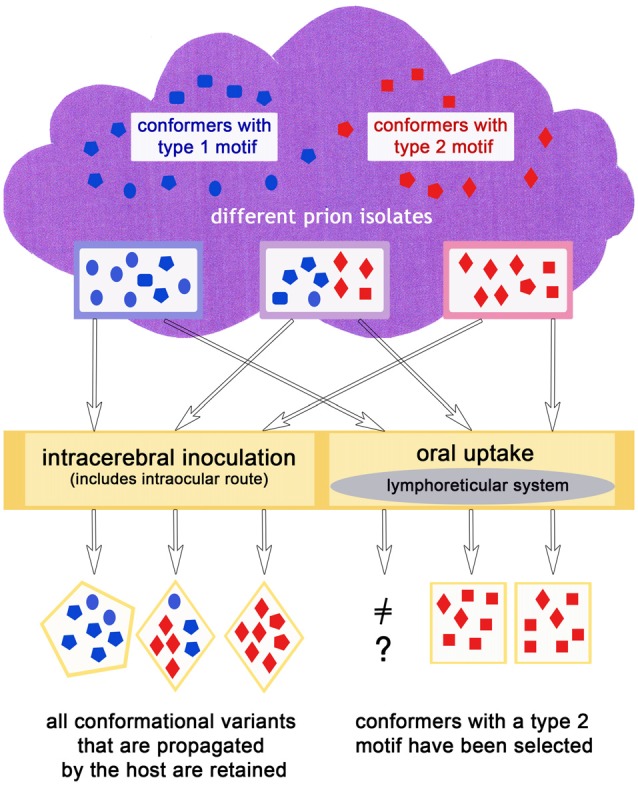
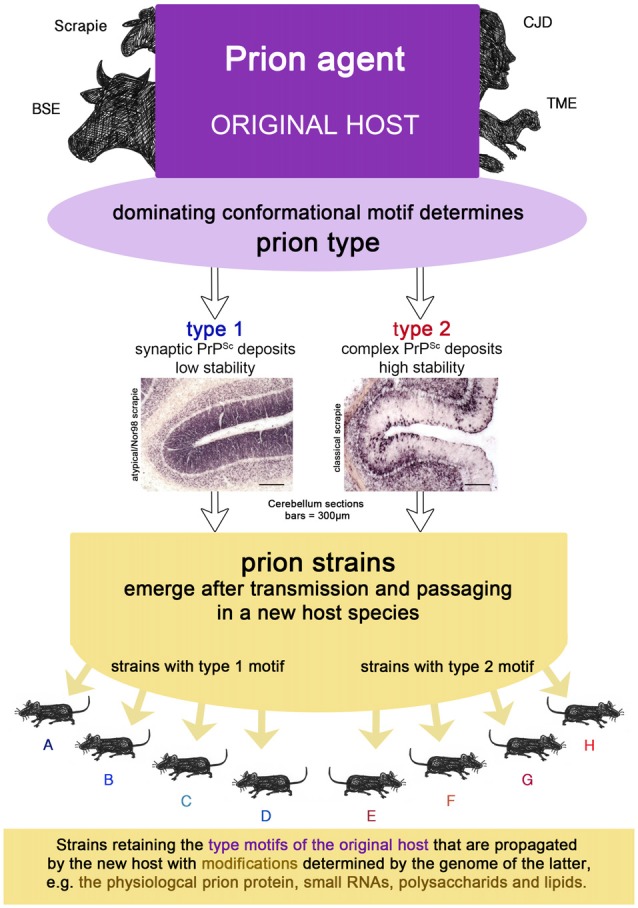
Protein misfolding and aggregation is a key event in diseases like Alzheimer's disease (AD) or Parkinson's disease (PD) and is associated with neurodegeneration. Factors that initiate protein misfolding and the role of protein aggregation in the pathophysiology of disease pose major challenges to the neuroscientific community. Interestingly, although the accumulation of the same misfolded protein, e.g., α-synuclein is detectable in all idiopathic PD patients, the disease spectrum covers a variety of different clinical presentations and disease courses. In a more recent attempt this clinical variance is being explained in analogy to prion diseases by different protein aggregate conformations. In prion diseases a relationship between protein aggregate conformation properties and the clinical disease course was shown by relating different prion types to a dementia and an ataxic disease course in Creutzfeldt-Jakob patients. This principle is currently transferred to AD, PD and other neurodegenerative diseases with protein aggregation. However, differences in protein aggregate conformation are frequently addressed as disease strains. The term "strain" also derives from prion research and evolved by adopting the virus terminology at a time when transmissible spongiform encephalopathies (TSEs; later called prion diseases) were assumed to be caused by a virus. The problem is that in virus taxonomy the term "type" refers to properties of the disease agent itself and the term "strain" refers to host associated factors that interact with the disease agent and may moderately modify the clinical disease presentation. Strain factors can be discovered only after transmission and passaging of the agent in a host of a different species. The incorrect use of the terminology confuses disease agent and host factors and hampers the understanding of the pathophysiology of protein aggregate-associated neurodegenerative diseases. In this review article the discoveries are reviewed that explain how the terms "type" and "strain" emerged for unconventional disease agents. This may help to avoid confusion in the terminology of protein aggregation diseases and to reflect correctly the impact of protein aggregate conformation as well as host factor contribution on different clinical variations of AD, PD and other neurodegenerative diseases.
蛋白质错误折叠和聚集是阿尔茨海默病(AD)或帕金森病(PD)等疾病中的关键事件,与神经退行性变相关。引发蛋白质错误折叠的因素以及蛋白质聚集在疾病病理生理学中的作用给神经科学界带来了重大挑战。有趣的是,尽管在所有特发性PD患者中都可检测到相同错误折叠蛋白(如α-突触核蛋白)的积累,但疾病谱涵盖了各种不同的临床表现和病程。最近有人尝试通过不同的蛋白质聚集体构象,类似于朊病毒疾病来解释这种临床差异。在朊病毒疾病中,通过将不同的朊病毒类型与克雅氏病患者的痴呆和共济失调病程相关联,显示了蛋白质聚集体构象特性与临床病程之间的关系。这一原理目前已应用于AD、PD和其他伴有蛋白质聚集的神经退行性疾病。然而,蛋白质聚集体构象的差异常被称为疾病毒株。“毒株”一词也源于朊病毒研究,在可传播性海绵状脑病(TSEs;后来称为朊病毒疾病)被认为由病毒引起时,通过采用病毒术语演变而来。问题在于,在病毒分类学中,“型”一词指的是病原体本身的特性,而“毒株”一词指的是与病原体相互作用并可能适度改变临床疾病表现的宿主相关因素。只有在病原体在不同物种的宿主中传播和传代后,才能发现毒株因素。术语的错误使用混淆了病原体和宿主因素,阻碍了对蛋白质聚集相关神经退行性疾病病理生理学的理解。在这篇综述文章中,回顾了一些发现,这些发现解释了“型”和“毒株”这两个术语是如何用于非常规病原体的。这可能有助于避免蛋白质聚集疾病术语中的混淆,并正确反映蛋白质聚集体构象以及宿主因素对AD、PD和其他神经退行性疾病不同临床变异的影响。