Taniguchi-Watanabe Sayuri, Arai Tetsuaki, Kametani Fuyuki, Nonaka Takashi, Masuda-Suzukake Masami, Tarutani Airi, Murayama Shigeo, Saito Yuko, Arima Kunimasa, Yoshida Mari, Akiyama Haruhiko, Robinson Andrew, Mann David M A, Iwatsubo Takeshi, Hasegawa Masato
Department of Dementia and Higher Brain Function, Tokyo Metropolitan Institute of Medical Science, 2-1-6 Kamikitazawa, Setagaya-ku, Tokyo, 156-8506, Japan.
Department of Neuropathology, The University of Tokyo, 7-3-1 Hongo, Bunkyo-ku, Tokyo, 113-8654, Japan.
Acta Neuropathol. 2016 Feb;131(2):267-280. doi: 10.1007/s00401-015-1503-3. Epub 2015 Nov 4.
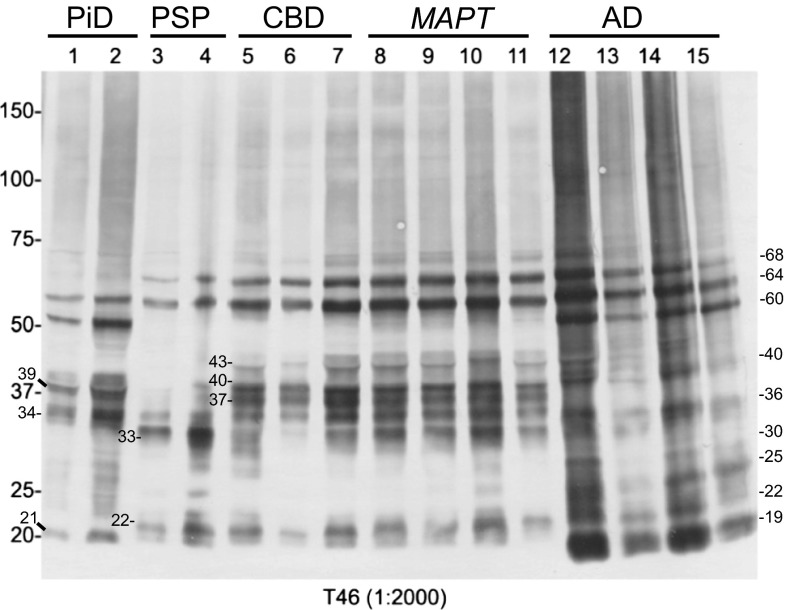
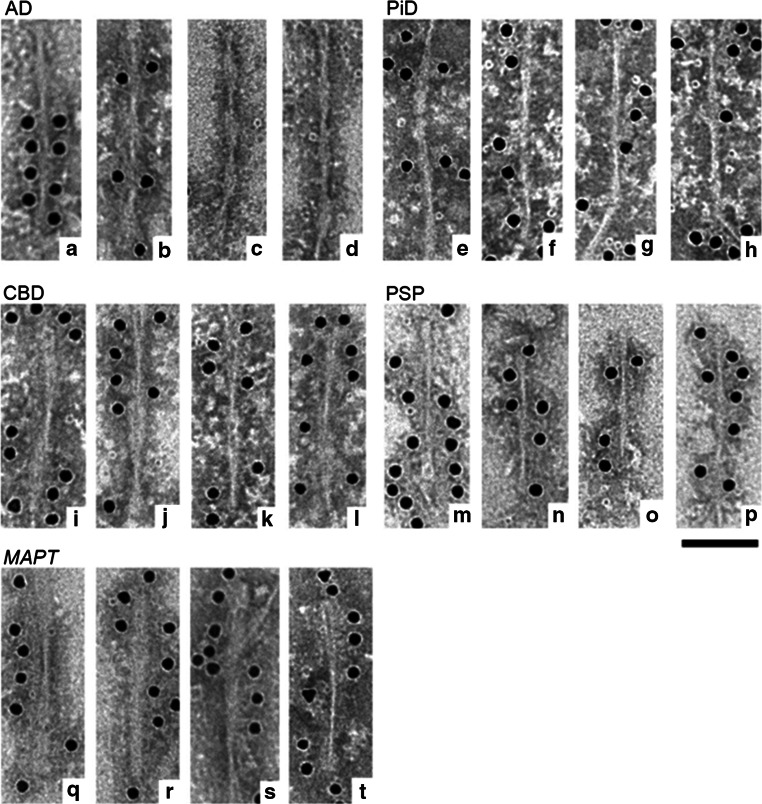
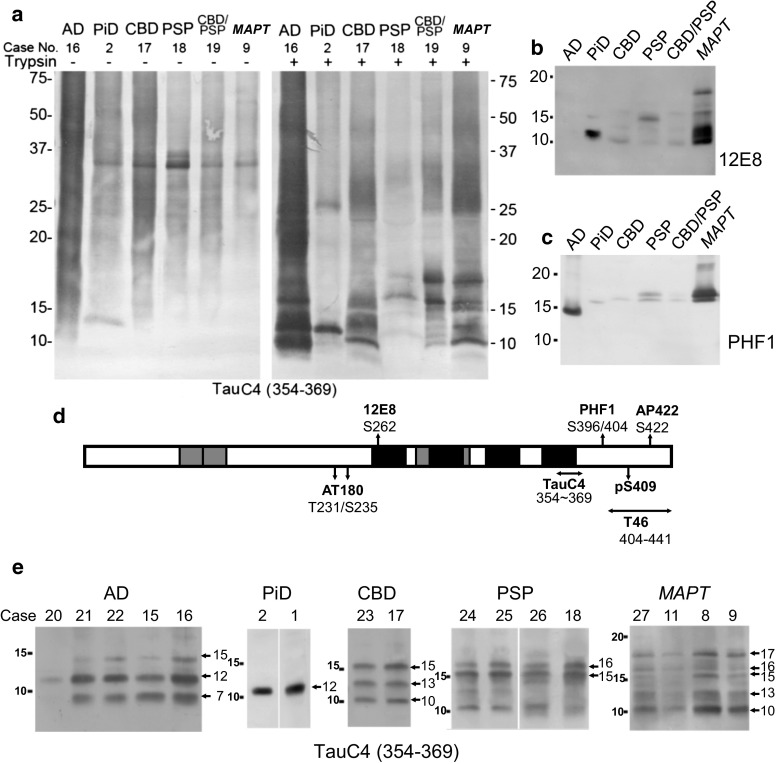
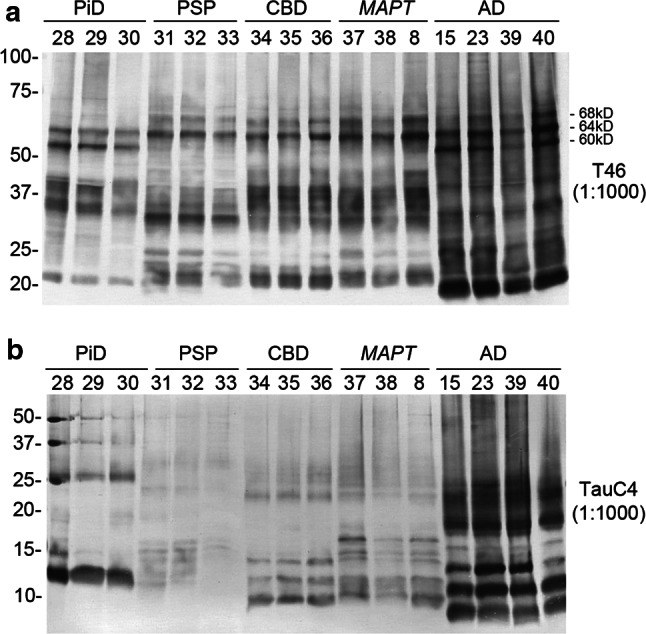
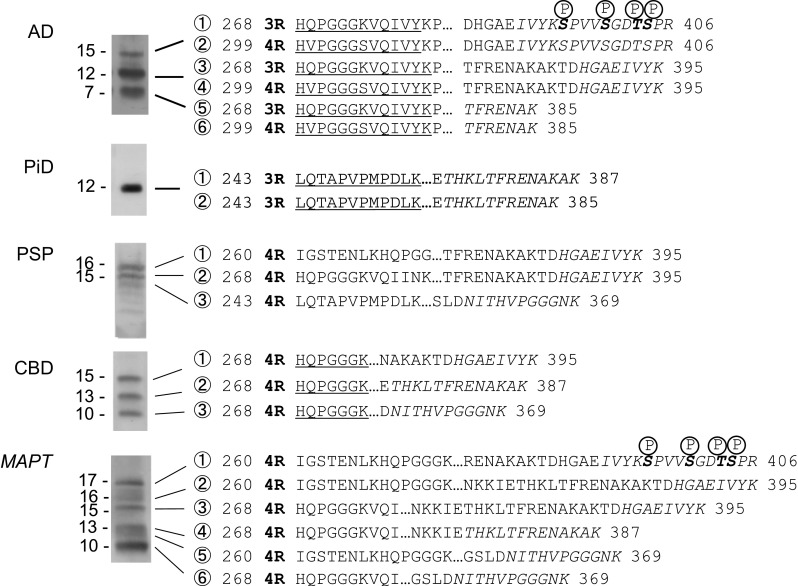
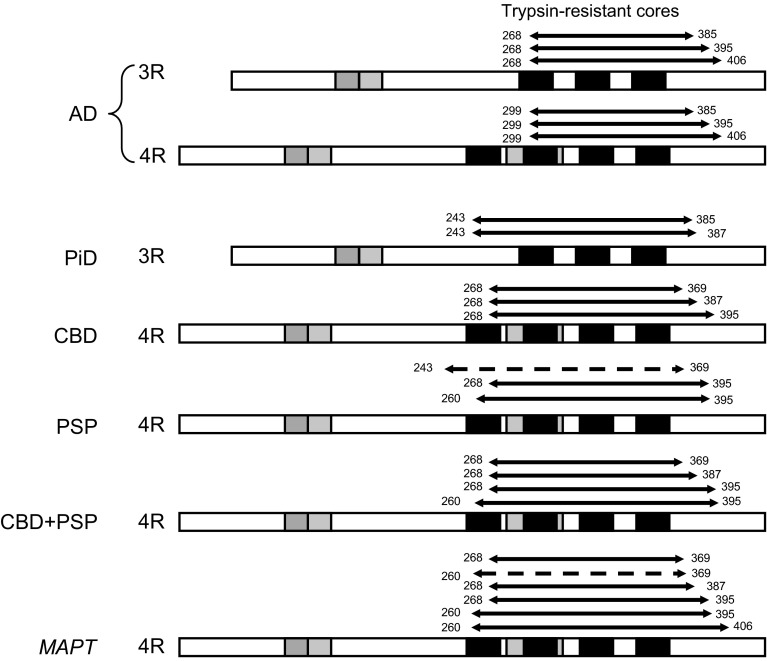
Intracellular filamentous tau pathology is the defining feature of tauopathies, which form a subset of neurodegenerative diseases. We have analyzed pathological tau in Alzheimer's disease, and in frontotemporal lobar degeneration associated with tauopathy to include cases with Pick bodies, corticobasal degeneration, progressive supranuclear palsy, and ones due to intronic mutations in MAPT. We found that the C-terminal band pattern of the pathological tau species is distinct for each disease. Immunoblot analysis of trypsin-resistant tau indicated that the different band patterns of the 7-18 kDa fragments in these diseases likely reflect different conformations of tau molecular species. Protein sequence and mass spectrometric analyses revealed the carboxyl-terminal region (residues 243-406) of tau comprises the protease-resistant core units of the tau aggregates, and the sequence lengths and precise regions involved are different among the diseases. These unique assembled tau cores may be used to classify and diagnose disease strains. Based on these results, we propose a new clinicopathological classification of tauopathies based on the biochemical properties of tau.
细胞内丝状tau蛋白病理学是tau蛋白病的决定性特征,tau蛋白病是神经退行性疾病的一个子集。我们分析了阿尔茨海默病以及与tau蛋白病相关的额颞叶痴呆中的病理性tau蛋白,其中包括有Pick小体、皮质基底节变性、进行性核上性麻痹的病例,以及由微管相关蛋白tau(MAPT)内含子突变导致的病例。我们发现,病理性tau蛋白种类的C末端条带模式在每种疾病中都是不同的。对胰蛋白酶抗性tau蛋白的免疫印迹分析表明,这些疾病中7 - 18 kDa片段的不同条带模式可能反映了tau分子种类的不同构象。蛋白质序列和质谱分析显示,tau蛋白的羧基末端区域(第243 - 406位氨基酸残基)构成了tau蛋白聚集体的蛋白酶抗性核心单元,且所涉及的序列长度和精确区域在不同疾病中有所不同。这些独特组装的tau蛋白核心可用于对疾病毒株进行分类和诊断。基于这些结果,我们提出了一种基于tau蛋白生化特性的tau蛋白病新临床病理分类方法。