Nilforoushzadeh Mohammadali, Rahimi Jameh Elham, Jaffary Fariba, Abolhasani Ehsan, Keshtmand Gelavizh, Zarkob Hajar, Mohammadi Parvaneh, Aghdami Nasser
Skin and Stem Cell Research Center, Tehran University of Medical Science, Tehran, Iran.
Skin Diseases and Leishmaniasis Research Center, Isfahan University of Medical Sciences, Isfahan, Iran.
Cell J. 2017 Jul-Sep;19(2):259-268. doi: 10.22074/cellj.2016.3916. Epub 2017 Feb 22.
Dermal papilla and hair epithelial stem cells regulate hair formation and the growth cycle. Damage to or loss of these cells can cause hair loss. Although several studies claim to reconstitute hairs using rodent cells in an animal model, additional research is needed to develop a stable human hair follicle reconstitution protocol. In this study, we have evaluated hair induction by injecting adult cultured human dermal papilla cells and a mixture of hair epithelial and dermal papilla cells in a mouse model.
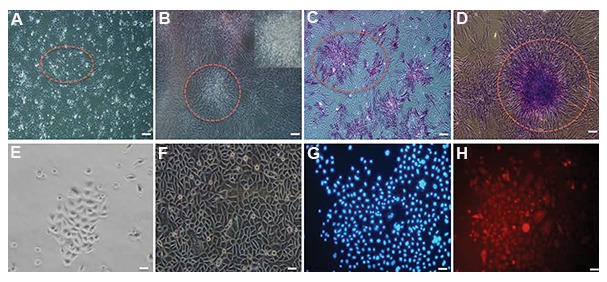
In this experimental study, discarded human scalp skins were used to obtain dermal papilla and hair epithelial cells. After separation, cells were cultured and assessed for their characteristics. We randomly allocated 15 C57BL/6 nude mice into three groups that received injections in their dorsal skin. The first group received cultured dermal papilla cells, the second group received a mixture of cultured epithelial and dermal papilla cells, and the third group (control) received a placebo [phosphate-buffered saline (PBS-)].
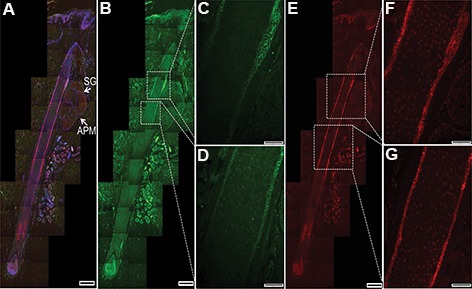
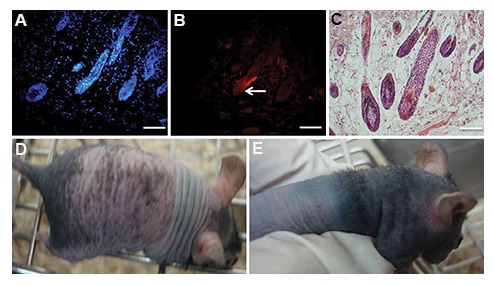
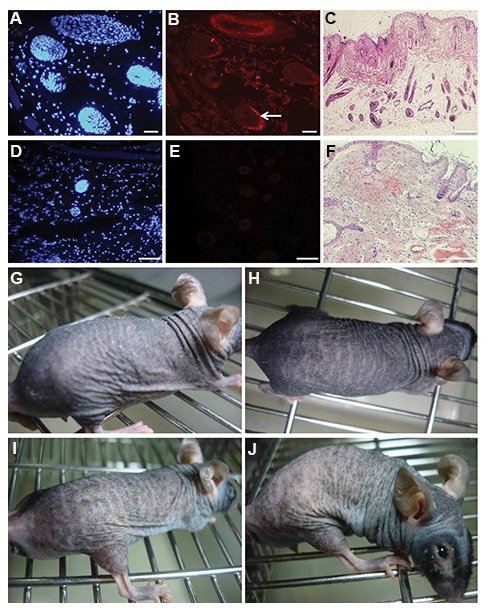
Histopathologic examination of the injection sites showed evidence of hair growth in samples that received cells compared with the control group. However, the group that received epithelial and dermal papilla cells had visible evidence of hair growth. PKH tracing confirmed the presence of transplanted cells in the new hair.
Our data showed that injection of a combination of adult human cultured dermal papilla and epithelial cells could induce hair growth in nude mice. This study emphasized that the combination of human adult cultured dermal papilla and epithelial cells could induce new hair in nude mice.
真皮乳头和毛囊上皮干细胞调节毛发形成和生长周期。这些细胞的损伤或缺失会导致脱发。尽管有几项研究声称在动物模型中使用啮齿动物细胞重建了毛发,但仍需要进一步研究来制定稳定的人类毛囊重建方案。在本研究中,我们通过在小鼠模型中注射成人培养的人真皮乳头细胞以及毛囊上皮和真皮乳头细胞的混合物来评估毛发诱导情况。
在这项实验研究中,使用废弃的人类头皮皮肤获取真皮乳头和毛囊上皮细胞。分离后,对细胞进行培养并评估其特性。我们将15只C57BL/6裸鼠随机分为三组,在其背部皮肤进行注射。第一组接受培养的真皮乳头细胞,第二组接受培养的上皮和真皮乳头细胞的混合物,第三组(对照组)接受安慰剂[磷酸盐缓冲盐水(PBS)]。
与对照组相比,注射部位的组织病理学检查显示接受细胞的样本中有毛发生长的迹象。然而,接受上皮和真皮乳头细胞的组有明显的毛发生长迹象。PKH示踪证实新毛发中存在移植细胞。
我们的数据表明,注射成人培养的人真皮乳头和上皮细胞的组合可诱导裸鼠毛发生长。本研究强调,成人培养的人真皮乳头和上皮细胞的组合可在裸鼠中诱导新毛发。