Nilforoushzadeh Mohammad Ali, Aghdami Nasser, Taghiabadi Ehsan
Skin and Stem Cell Research Center, Tehran University of Medical Sciences, Tehran, Iran.
Department of Regenerative Biomedicine, Cell Science Research Center, Royan Institute for Stem Cell Biology and Technology, ACECR, Tehran, Iran.
Cell J. 2021 Oct;23(5):576-583. doi: 10.22074/cellj.2021.7352. Epub 2021 Oct 30.
Hair loss is a prevalent medical problem in both men and women. Maintaining the hair inductivity potential of human dermal papilla cells (hDPCs) during cell culture is the main issue in hair follicle morphogenesis and regeneration. The present study was conducted to compare the effects of different concentrations of exosomes derived from human adipose stem cells (hASCs) and platelet-rich plasma (PRP) on the proliferation, migration and expression of alkaline pholphatase (ALP), versican, and smooth muscle alpha-actin (α-SMA) in human DPCs.
In this experimental study, hDPCs, human hair DPCs and outer root sheet cells (ORSCs) were separated from healthy hair samples. The protocol of exosome isolation from PRP and hASCs comprises serial low speed centrifugation and ultracentrifugation. The effects of different concentrations of exosomes (25, 50, 100 μg/ ml) derived from hASCs and PRP on proliferation (MTS assay), migration (scratch test) and expression of ALP, versican and α-SMA (real time-polymerase chain reaction) in human DPCs were evaluated.
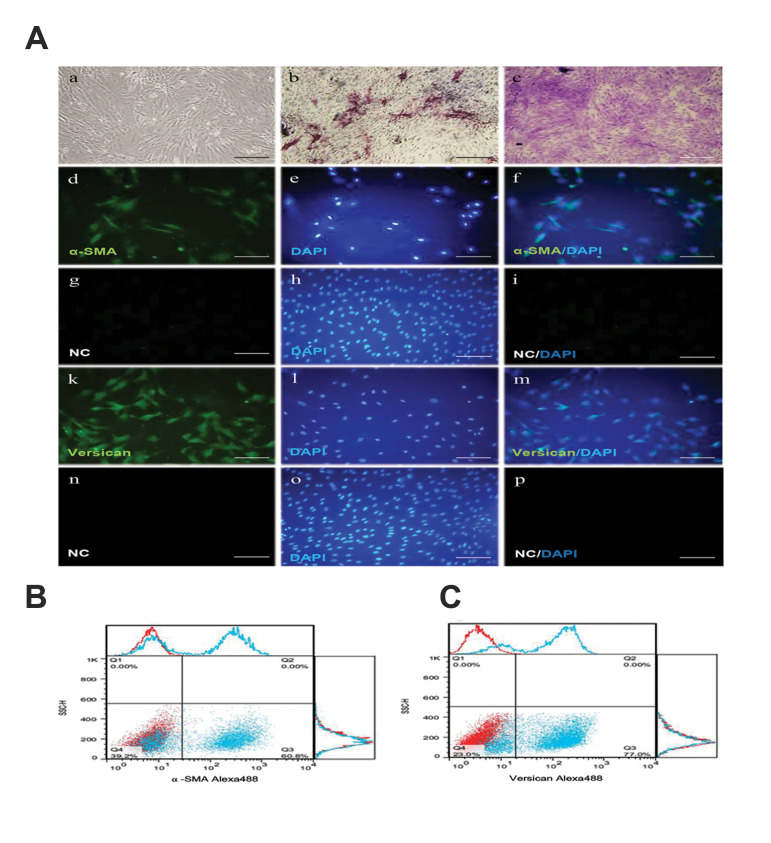
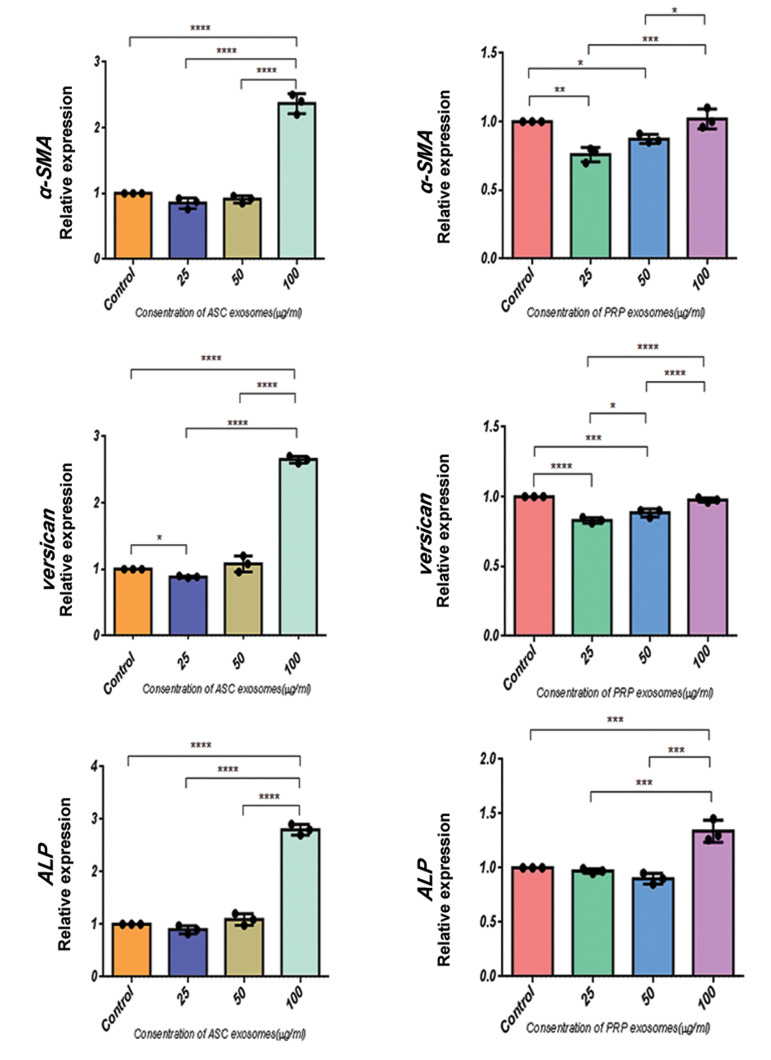
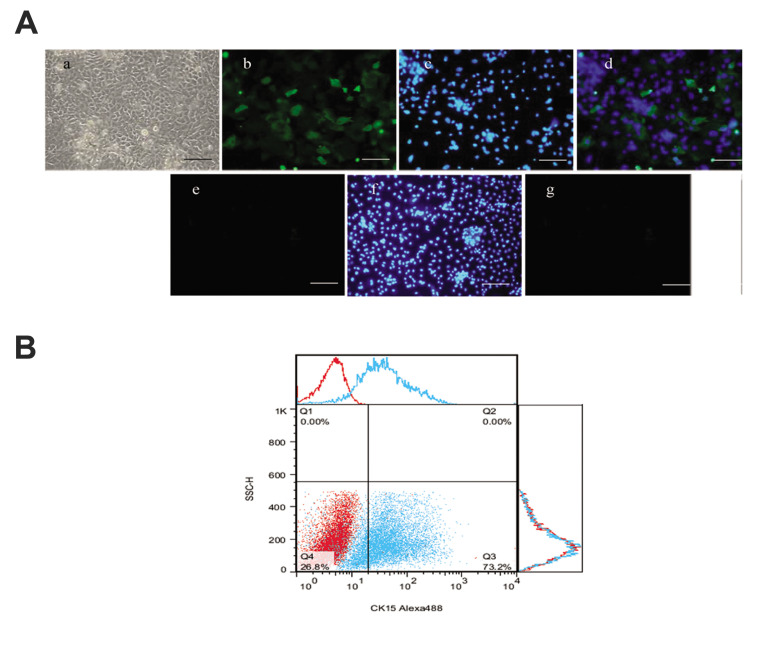
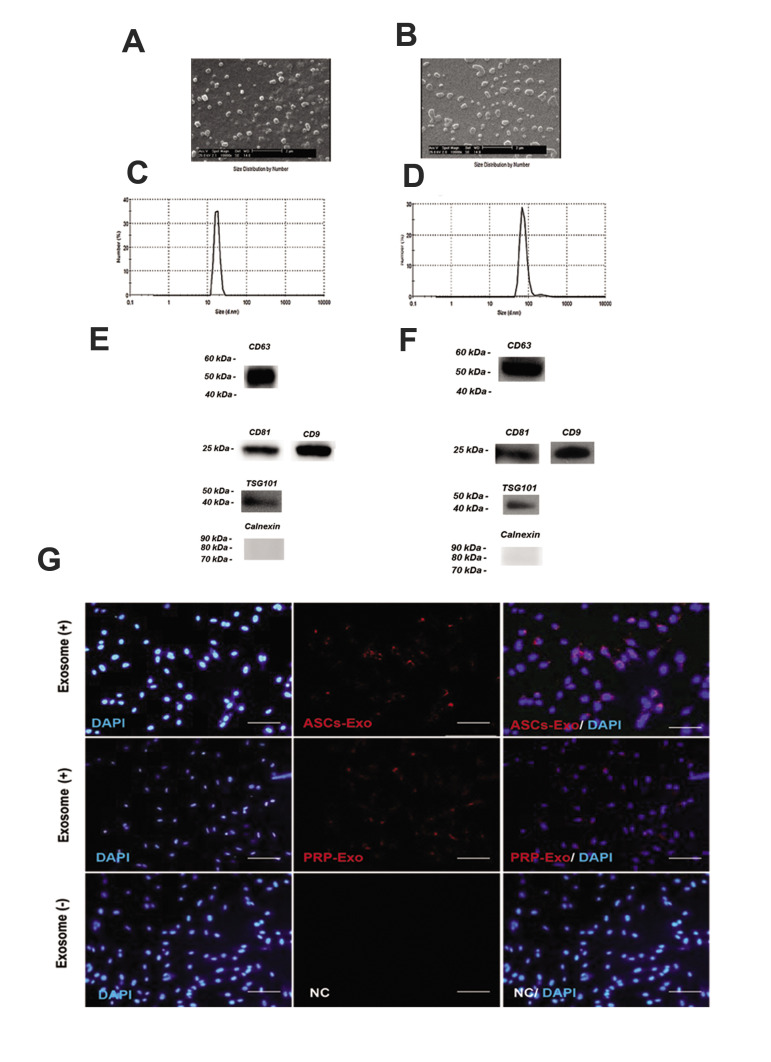
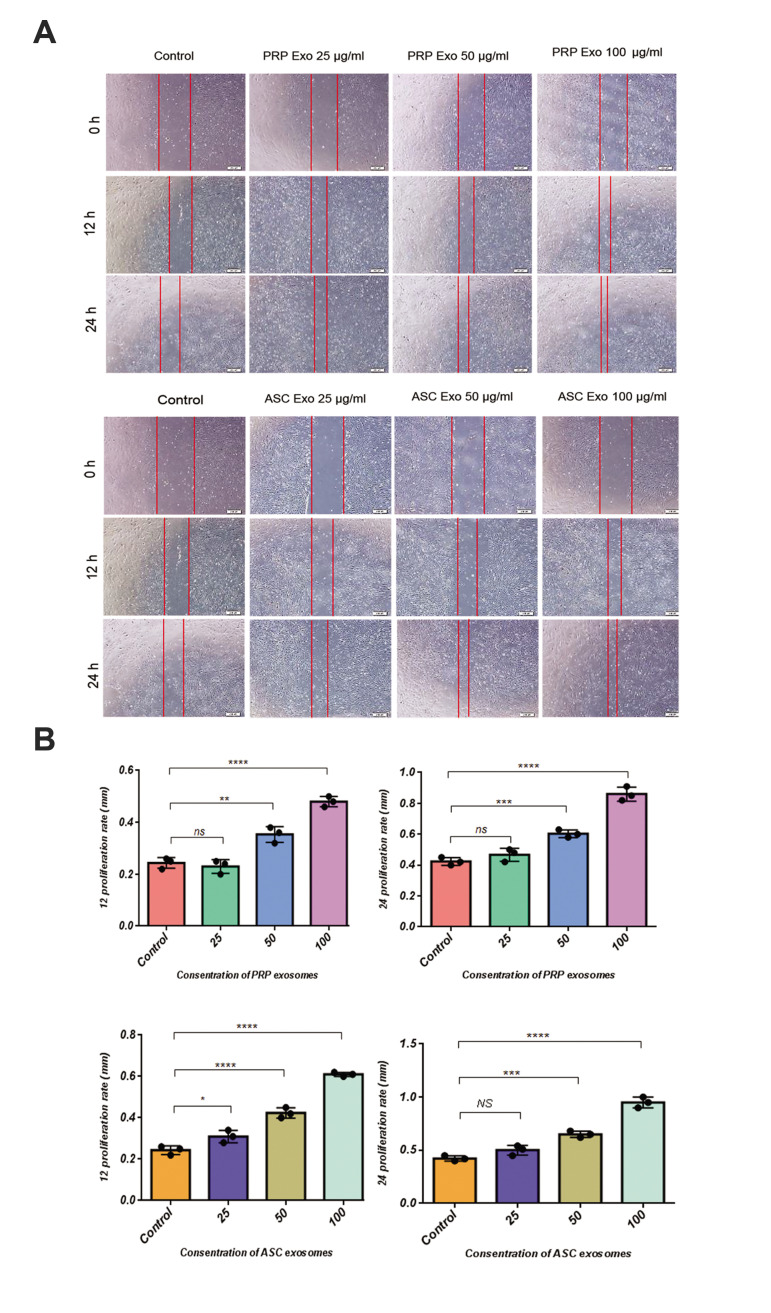
The flow cytometry analysis of specific cytoplasmic markers showed expression of versican (77%) and α-SMA (60.8%) in DPCs and K15 (73.2%) in ORSCs. According to NanoSight Dynamic Light Scattering, we found the majority of ASCs and PRP-exosomes (ASC-Exo and PRP-Exo) to be 30-150 nm in size. For 100 μg/ml of ASCs-Exo, the expressions of ALP, versican and α-SMA proteins increased by a factor of 1.2, 2 and 3, respectively, compared to the control group. The findings of our experiments illustrated that 100 μg/ml of ASCs-Exo compared to the same concentration of PRP-Exo significantly promote DPC proliferation and migration in culture.
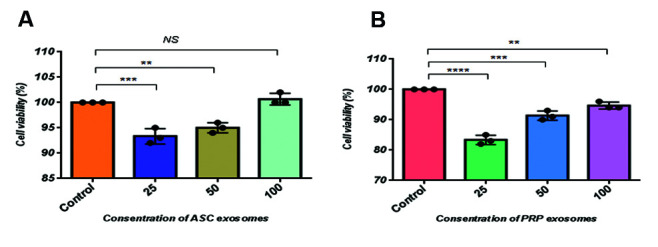
This study introduced the potential positive effect of ASC-Exo in increasing the proliferation and survival of DPCs, while maintaining their hair inductivity. Thus, ASCs-Exo possibly provide a new effective procedure for treatment of hair loss.
脱发是男性和女性中普遍存在的医学问题。在细胞培养过程中维持人真皮乳头细胞(hDPCs)的毛发诱导潜能是毛囊形态发生和再生的主要问题。本研究旨在比较不同浓度的人脂肪干细胞(hASCs)来源的外泌体和富血小板血浆(PRP)对人DPCs增殖、迁移以及碱性磷酸酶(ALP)、多功能蛋白聚糖和平滑肌α-肌动蛋白(α-SMA)表达的影响。
在本实验研究中,从健康毛发样本中分离出hDPCs、人毛发DPCs和外根鞘细胞(ORSCs)。从PRP和hASCs中分离外泌体的方案包括连续低速离心和超速离心。评估了不同浓度(25、50、100μg/ml)的hASCs和PRP来源的外泌体对人DPCs增殖(MTS法)、迁移(划痕试验)以及ALP、多功能蛋白聚糖和α-SMA表达(实时聚合酶链反应)的影响。
特异性细胞质标志物的流式细胞术分析显示,DPCs中多功能蛋白聚糖表达率为77%,α-SMA表达率为60.8%,ORSCs中K15表达率为73.2%。根据纳米可视动态光散射法,我们发现大多数ASCs和PRP外泌体(ASC-Exo和PRP-Exo)的大小为30 - 150nm。与对照组相比,对于100μg/ml的ASCs-Exo,ALP、多功能蛋白聚糖和α-SMA蛋白的表达分别增加了1.2倍、2倍和3倍。我们的实验结果表明,与相同浓度的PRP-Exo相比,100μg/ml的ASCs-Exo能显著促进培养中的DPCs增殖和迁移。
本研究介绍了ASC-Exo在增加DPCs增殖和存活同时维持其毛发诱导能力方面的潜在积极作用。因此,ASC-Exo可能为脱发治疗提供一种新的有效方法。