Department of Basic Neurosciences, Geneva University, 1 rue Michel Servet, 1211 Geneva, Switzerland.
Clinic of Neurology, Geneva University Hospital, 1 rue Michel Servet, 1211 Geneva, Switzerland.
Nat Commun. 2017 Jul 3;8:16042. doi: 10.1038/ncomms16042.
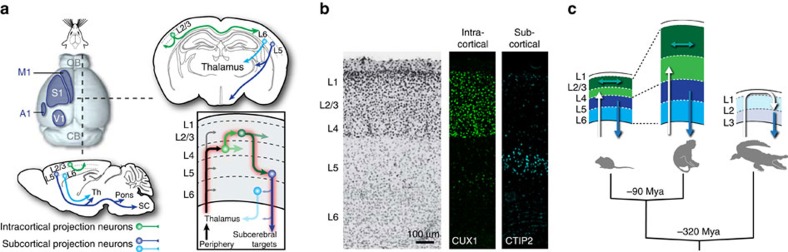
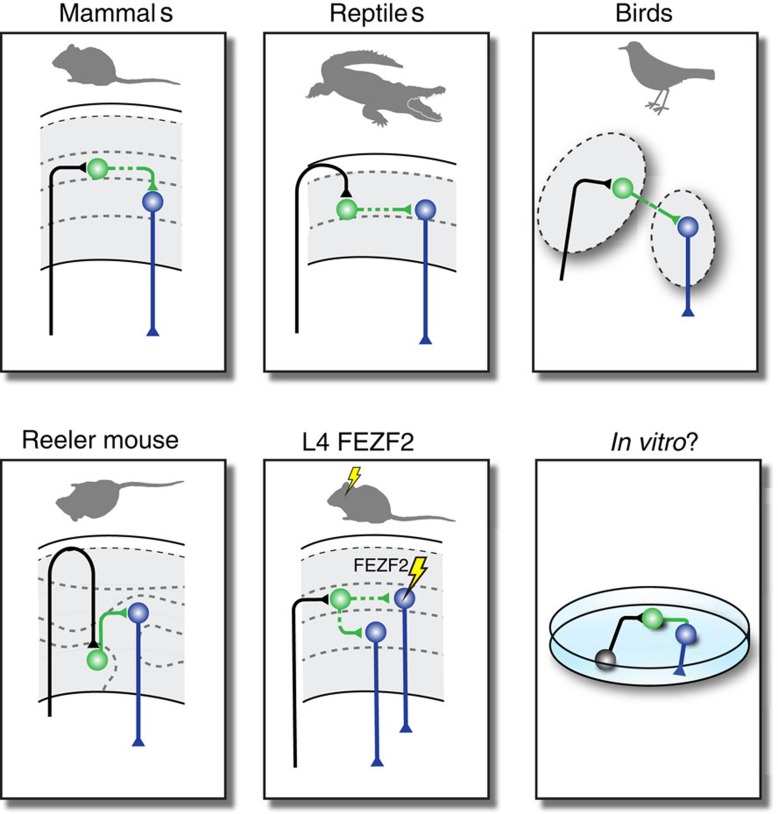
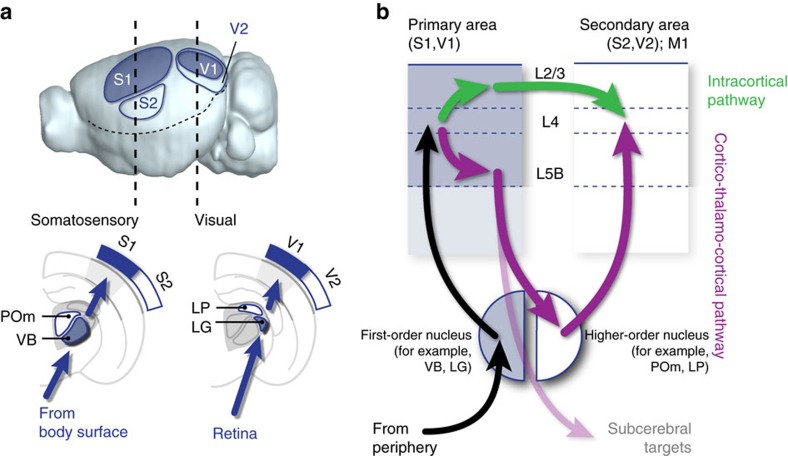
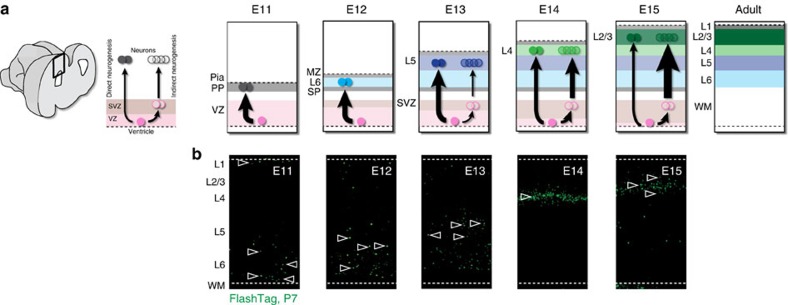
The activity of neuronal circuits of the neocortex underlies our ability to perceive the world and interact with our environment. During development, these circuits emerge from dynamic interactions between cell-intrinsic, genetically determined programs and input/activity-dependent signals, which together shape these circuits into adulthood. Building on a large body of experimental work, several recent technological developments now allow us to interrogate these nature–nurture interactions with single gene/single input/single-cell resolution. Focusing on excitatory glutamatergic neurons, this review discusses the genetic and input-dependent mechanisms controlling how individual cortical neurons differentiate into specialized cells to assemble into stereotypical local circuits within global, large-scale networks.
大脑皮层神经元回路的活动是我们感知世界和与环境互动的能力的基础。在发育过程中,这些回路是由细胞内固有、基因决定的程序和输入/活动依赖性信号之间的动态相互作用产生的,这些信号共同将这些回路塑造成成年期。基于大量的实验工作,最近的一些技术发展现在使我们能够以单个基因/单个输入/单细胞分辨率来探究这些先天与后天的相互作用。本文聚焦于兴奋性谷氨酸能神经元,讨论了控制单个皮质神经元如何分化为特化细胞的遗传和输入依赖性机制,这些细胞组装成在全局、大规模网络中的典型局部回路。