Talib Wamidh H
Department of Clinical Pharmacy and Therapeutics, Applied Science Private University, Amman 11931-166, Jordan.
Sci Pharm. 2017 Jul 3;85(3):27. doi: 10.3390/scipharm85030027.
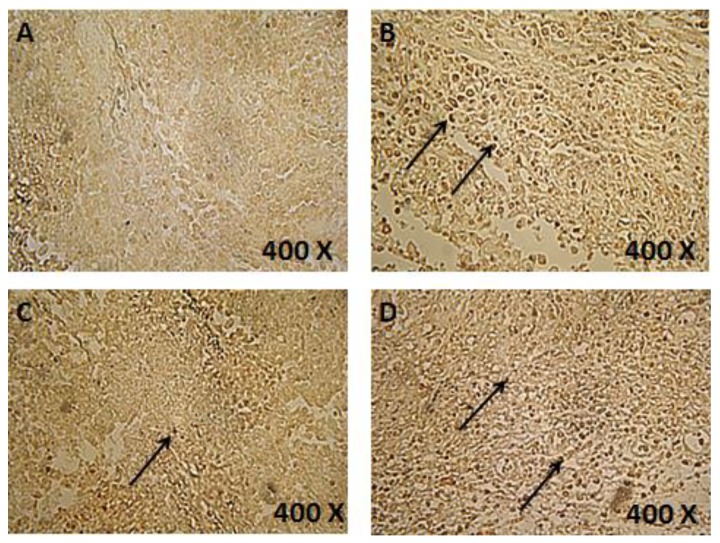
Thymoquinone (TQ) and piperine, the active ingredients in cumin () and black pepper (), respectively, exhibit various bioactivities including anticancer effects. The aim of the present study is to investigate the antineoplastic activity of a combination of TQ and piperine against breast cancer implanted in mice. The antiproliferative effects of TQ, piperine, and a combination of both agents were tested against mouse epithelial breast cancer cell line (EMT6/P) using MTT assay. The isobolographic method was used to calculate the combination index (CI). Degree of angiogenesis inhibition was detected by measuring vascular endothelial growth factor (VEGF) levels in tissue culture for all treatments. EMT6/P cells were inoculated in Balb/C mice and the antitumor effect of TQ, piperine, and their combination was assessed. Changes in tumor size were calculated for all treatments. Tumor histology was examined using the hematoxylin/eosin staining protocol. Terminal deoxynucleotidyl transferase (TdT) dUTP Nick-End Labeling (TUNEL) colorimetric assay and caspase-3 activity assays were used to detect apoptosis. Serum levels of interferon (INF)-γ, interleukin (IL)-4, IL-2, and IL-10 were measured using ELISA and treatment toxicity was evaluated by measuring serum levels of aspartate transaminase (AST), alanine transaminase (ALT), and creatinine. A clear synergistic antiproliferative interaction between TQ and piperine was observed with CI value of 0.788. The combination therapy resulted in significant reduction in tumor size with percentage cure of 60% and percentage death of 0%. High degrees of apoptosis and geographical necrosis were induced in tumors treated with the combination therapy. Combination therapy caused significant decrease in VEGF expression and increased serum INF-γ levels. Normal serum levels of AST, ALT, and creatinine were observed in tumor-bearing mice treated with the combination therapy. The combination of TQ and piperine acts synergistically to target breast cancer in vitro and in vivo. This novel combination exerts its effect by angiogenesis inhibition, apoptosis induction, and shifting the immune response toward T helper1 response. This combination therapy deserves further investigation (including measurement of hypoxia-inducible factor (HIF)1α to be used in clinical studies.
百里醌(TQ)和胡椒碱分别是小茴香和黑胡椒中的活性成分,具有多种生物活性,包括抗癌作用。本研究的目的是探讨TQ和胡椒碱联合应用对小鼠移植性乳腺癌的抗肿瘤活性。采用MTT法检测TQ、胡椒碱及其联合用药对小鼠上皮性乳腺癌细胞系(EMT6/P)的抗增殖作用。采用等效线图法计算联合指数(CI)。通过测量所有处理的组织培养中血管内皮生长因子(VEGF)水平来检测血管生成抑制程度。将EMT6/P细胞接种于Balb/C小鼠体内,评估TQ、胡椒碱及其联合用药的抗肿瘤效果。计算所有处理的肿瘤大小变化。采用苏木精/伊红染色法检查肿瘤组织学。采用末端脱氧核苷酸转移酶(TdT)介导的dUTP缺口末端标记(TUNEL)比色法和caspase-3活性测定法检测细胞凋亡。采用酶联免疫吸附测定法(ELISA)检测血清干扰素(INF)-γ、白细胞介素(IL)-4、IL-2和IL-10水平,并通过测量血清天冬氨酸转氨酶(AST)、丙氨酸转氨酶(ALT)和肌酐水平评估治疗毒性。观察到TQ和胡椒碱之间存在明显的协同抗增殖相互作用,CI值为0.788。联合治疗导致肿瘤大小显著减小,治愈率为60%,死亡率为0%。联合治疗的肿瘤诱导了高度的细胞凋亡和地图状坏死。联合治疗导致VEGF表达显著降低,血清INF-γ水平升高。联合治疗的荷瘤小鼠血清AST、ALT和肌酐水平正常。TQ和胡椒碱联合应用在体外和体内对乳腺癌具有协同作用。这种新型联合用药通过抑制血管生成、诱导细胞凋亡以及将免疫反应转向Th1反应发挥作用。这种联合治疗值得进一步研究(包括测量缺氧诱导因子(HIF)1α,以便用于临床研究)。