School of Medicine, China Medical University, Taichung, Taiwan.
Department of Orthopedic Surgery, China Medical University Hospital, Taichung, Taiwan.
Mol Oncol. 2017 Oct;11(10):1380-1398. doi: 10.1002/1878-0261.12106. Epub 2017 Aug 8.
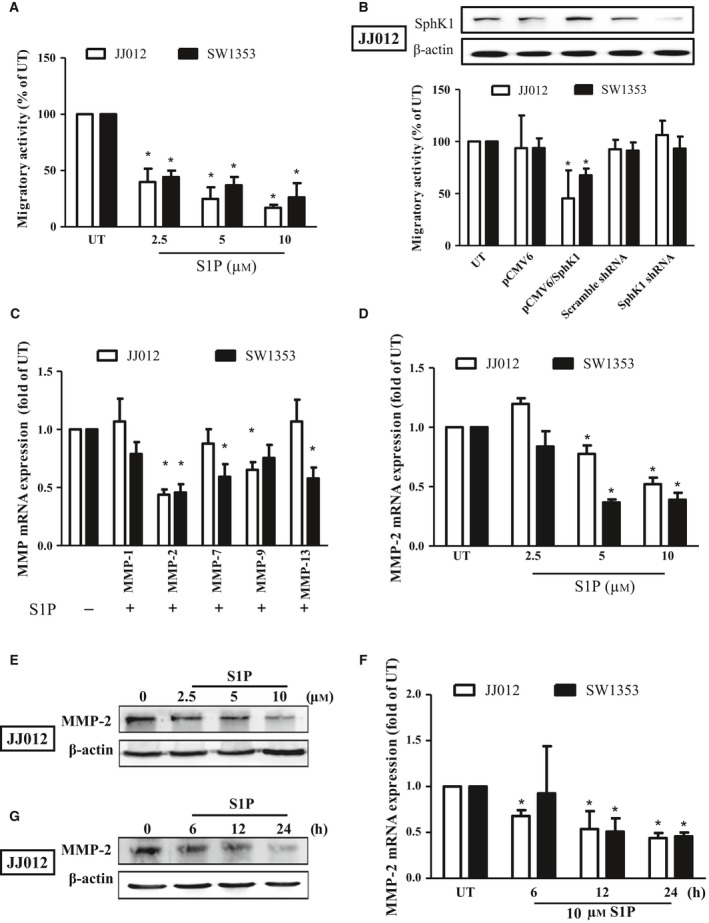
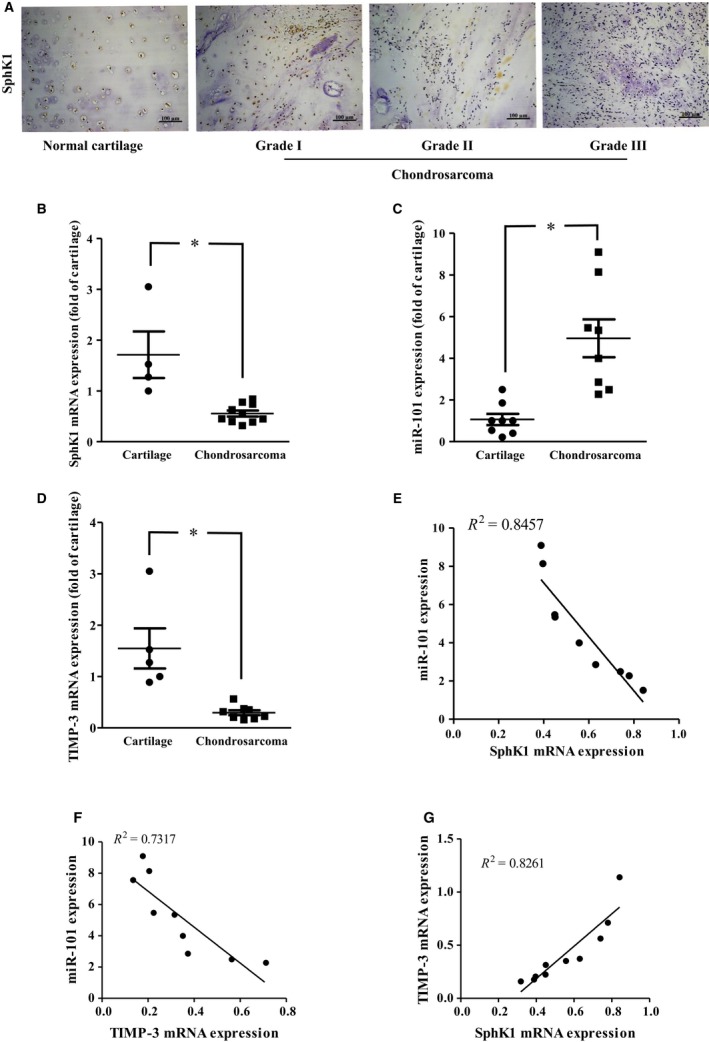
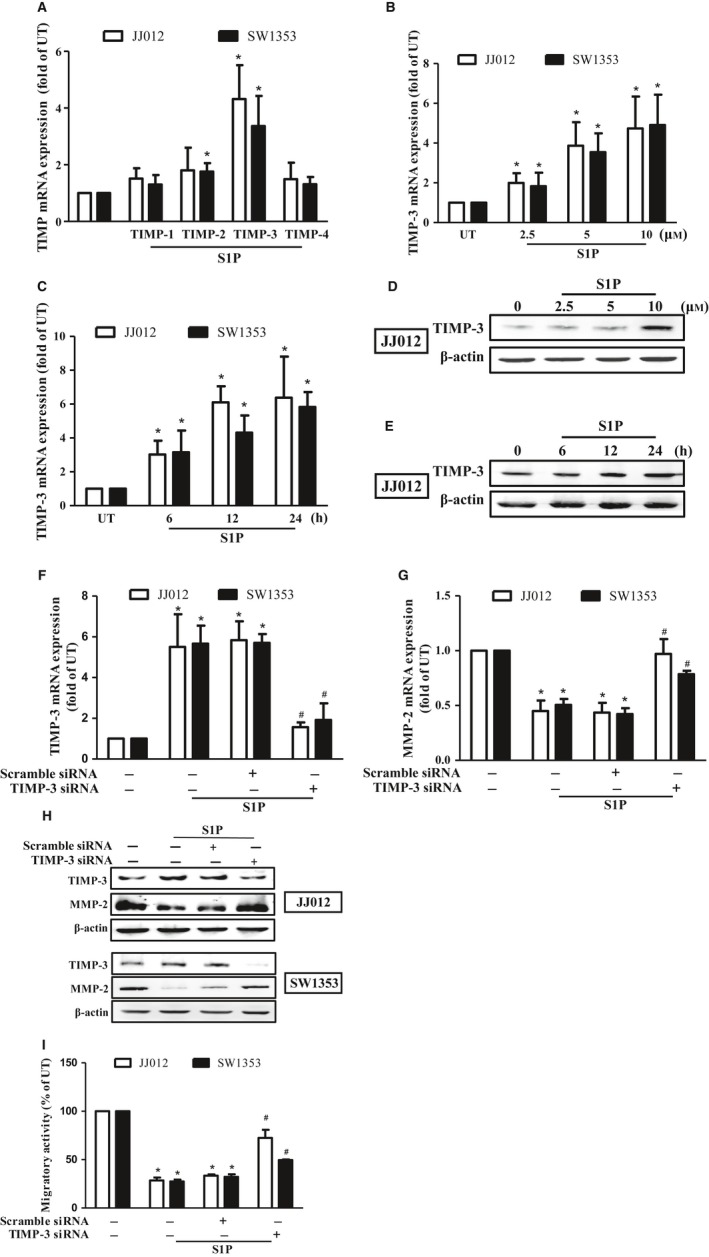
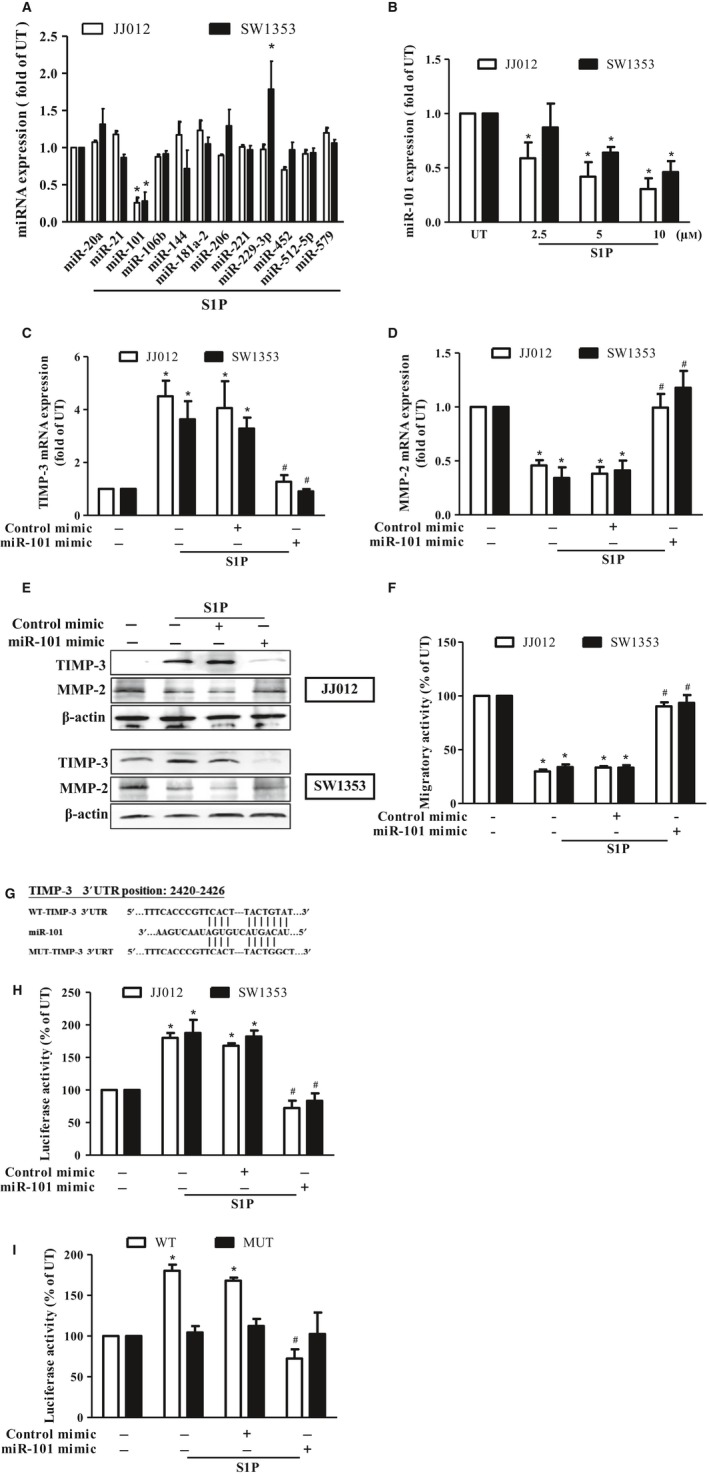
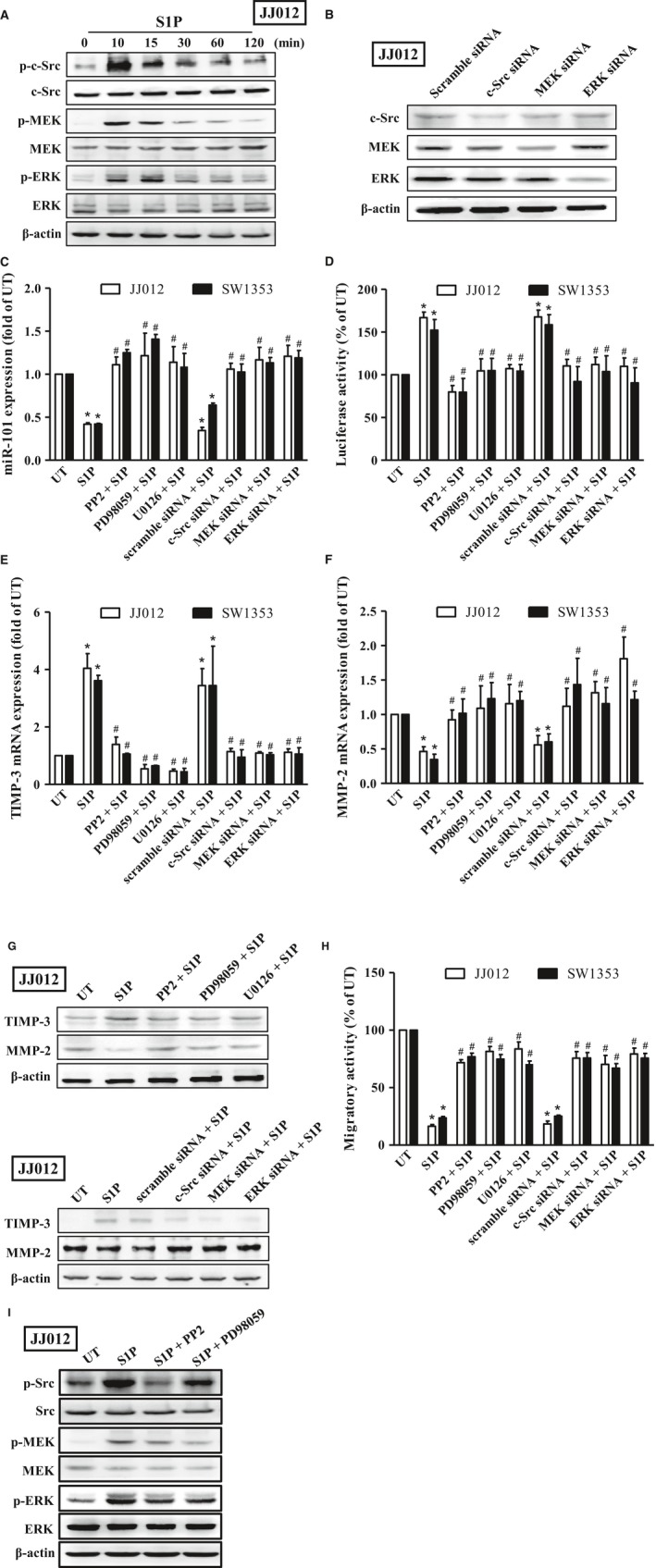
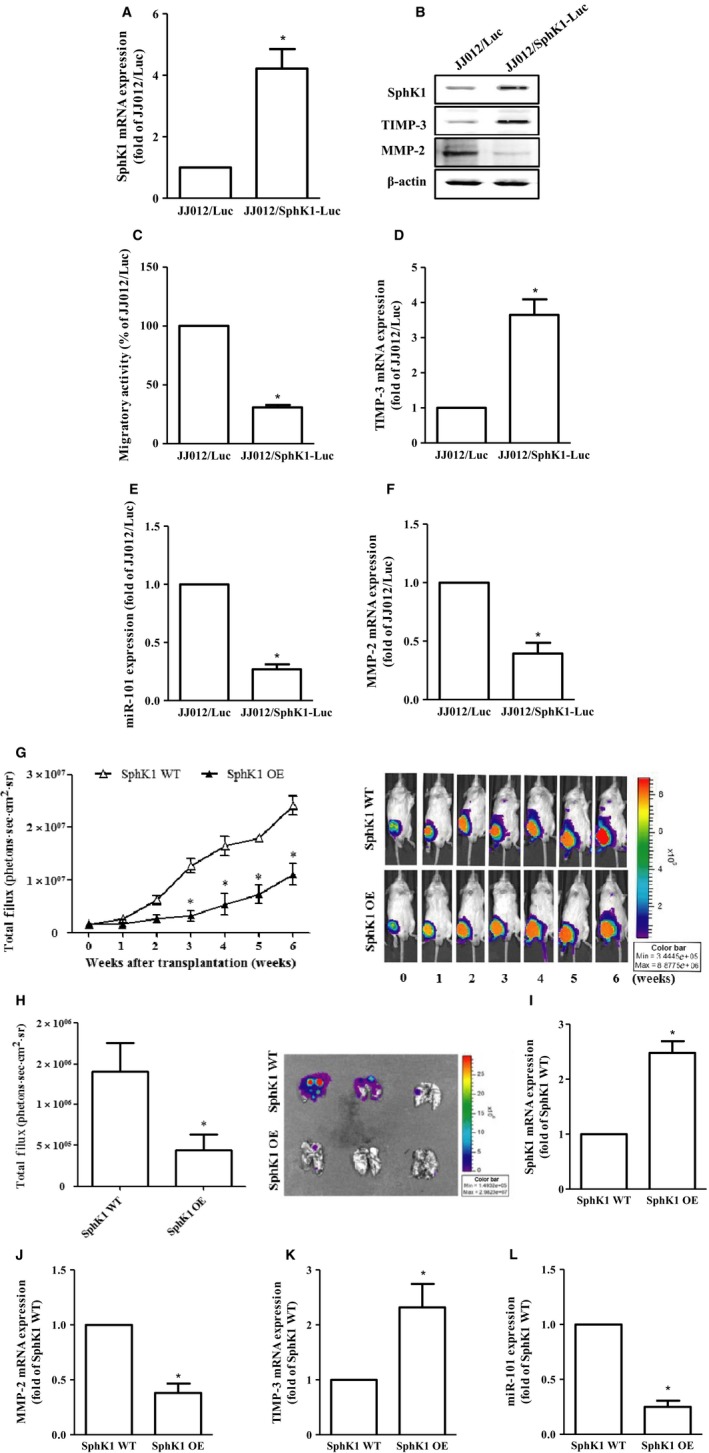
Chondrosarcoma is the second most common primary malignancy form of bone cancer, exhibiting resistance to chemotherapy and radiation therapy as well as developing high metastasis ability in late-stage tumors. Thus, understanding the metastatic processes of chondrosarcoma is considered a strategy for the treatment of this disease. Sphingosine 1-phosphate (S1P), a bioactive sphingolipid, is produced intracellularly by sphingosine kinase (SphK) and is regarded as a second signaling molecule that regulates inflammation, proliferation, angiogenesis, and metastasis. However, the effect of S1P on chondrosarcoma remains uncertain. As demonstrated by the transwell, immunoblotting, and real-time PCR analyses, we found that S1P inhibited cell migration and MMP-2 expression through the upregulation of the tissue inhibitor of metalloproteinase-3 (TIMP-3) expression in human chondrosarcoma cells. Additionally, we also showed that microRNA (miRNA)-101, which targets the 3' untranslated region (3'UTR) of TIMP-3, decreased significantly following S1P treatment. After transfection with miR-101 mimics, the S1P-regulated cell migration and TIMP-3 expression were both reversed. Furthermore, we also showed that the S1P-inhibited cell migration is mediated through the c-Src/MEK/ERK signaling axis. Meanwhile, the in vivo study indicated that overexpression of SphK1 decreases chondrosarcoma metastasis to the lungs. Our results illustrate the clinical significance between SphK1, TIMP-3, and miR-101 in human chondrosarcoma patients. Taken together, our results suggest that S1P and miR-101 may prove to be potential therapeutic targets for future chondrosarcoma treatment.
软骨肉瘤是第二常见的原发性骨癌恶性肿瘤,表现出对化疗和放疗的耐药性,并且在晚期肿瘤中具有高转移能力。因此,了解软骨肉瘤的转移过程被认为是治疗这种疾病的一种策略。鞘氨醇 1-磷酸(S1P)是一种具有生物活性的鞘脂,由鞘氨醇激酶(SphK)在细胞内产生,被认为是调节炎症、增殖、血管生成和转移的第二信使分子。然而,S1P 对软骨肉瘤的影响尚不确定。通过 Transwell、免疫印迹和实时 PCR 分析,我们发现 S1P 通过上调组织金属蛋白酶抑制剂-3(TIMP-3)的表达抑制人软骨肉瘤细胞的迁移和 MMP-2 的表达。此外,我们还表明,微小 RNA(miRNA)-101 通过靶向 TIMP-3 的 3'非翻译区(3'UTR),在 S1P 处理后显著减少。转染 miR-101 模拟物后,S1P 调节的细胞迁移和 TIMP-3 表达均被逆转。此外,我们还表明,S1P 抑制细胞迁移是通过 c-Src/MEK/ERK 信号轴介导的。同时,体内研究表明 SphK1 的过表达可降低软骨肉瘤向肺部的转移。我们的结果说明了 SphK1、TIMP-3 和 miR-101 在人类软骨肉瘤患者中的临床意义。总之,我们的结果表明,S1P 和 miR-101 可能成为未来软骨肉瘤治疗的潜在治疗靶点。