Grundeis Felicitas, Brand Cristin, Kumar Saurabh, Rullmann Michael, Mehnert Jan, Pleger Burkhard
Department of Neurology, Max Planck Institute for Human Cognitive and Brain SciencesLeipzig, Germany.
Collaborative Research Centre 1052 "Obesity Mechanisms", University Hospital LeipzigLeipzig, Germany.
Front Neurosci. 2017 Jun 20;11:334. doi: 10.3389/fnins.2017.00334. eCollection 2017.
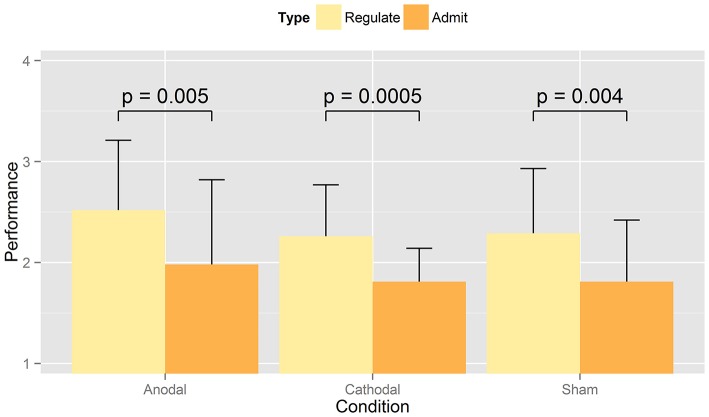
Previous studies suggest that non-invasive transcranial direct current stimulation (tDCS) applied to the prefrontal cortex modulates food choices and calorie intake in obese humans. In the present fully randomized, placebo-controlled, within-subject and double-blinded study, we applied single sessions of anodal, cathodal, and sham tDCS to the left dorsolateral prefrontal cortex (DLPFC) and contralateral frontal operculum in 25 hungry obese women and investigated possible influences on food reappraisal abilities as well as calorie intake. We hypothesized that tDCS, (i) improves the ability to regulate the desire for visually presented foods and, (ii) reduces their consumption. We could not confirm an effect of anodal or cathodal tDCS, neither on the ability to modulate the desire for visually presented foods, nor on calorie consumption. The present findings do not support the notion of prefrontal/frontal tDCS as a promising treatment option for obesity.
先前的研究表明,应用于前额叶皮层的无创经颅直流电刺激(tDCS)可调节肥胖人群的食物选择和卡路里摄入量。在本项完全随机、安慰剂对照、受试者内双盲研究中,我们对25名饥饿的肥胖女性左侧背外侧前额叶皮层(DLPFC)和对侧额下回应用单次阳极、阴极和假tDCS,并研究其对食物重新评估能力以及卡路里摄入量的可能影响。我们假设tDCS,(i)提高调节对视觉呈现食物欲望的能力,以及(ii)减少对这些食物的消费。我们无法证实阳极或阴极tDCS对调节对视觉呈现食物欲望的能力或卡路里消耗有影响。目前的研究结果不支持前额叶/额叶tDCS作为肥胖有前景治疗选择的观点。