Mohideen-Abdul Kareem, Tazibt Karima, Bourguet Maxime, Hazemann Isabelle, Lebars Isabelle, Takacs Maria, Cianférani Sarah, Klaholz Bruno P, Moras Dino, Billas Isabelle M L
Centre for Integrative Biology (CBI), Department of Integrated Structural Biology, Institute of Genetics and of Molecular and Cellular Biology (IGBMC), Illkirch, France.
Centre National de la Recherche Scientifique (CNRS) UMR 7104, Illkirch, France.
Front Endocrinol (Lausanne). 2017 Jun 20;8:140. doi: 10.3389/fendo.2017.00140. eCollection 2017.
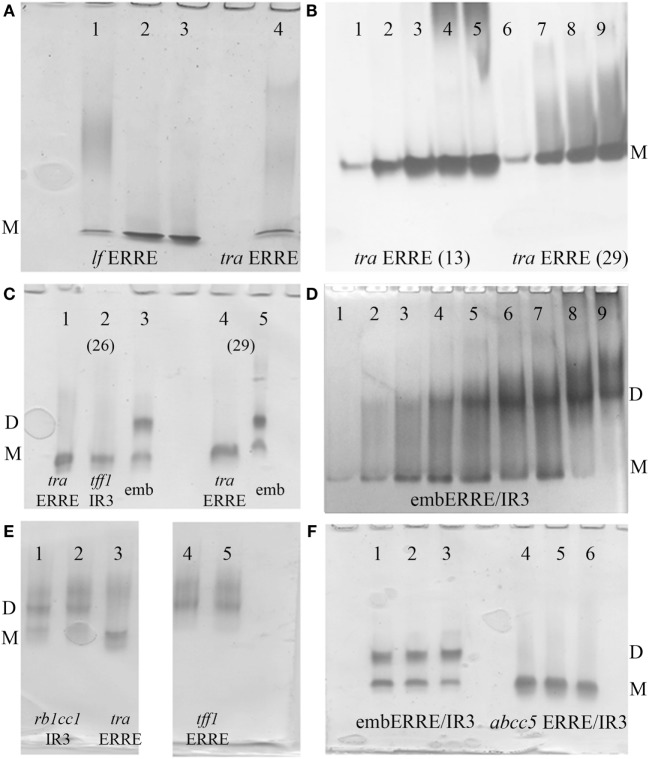
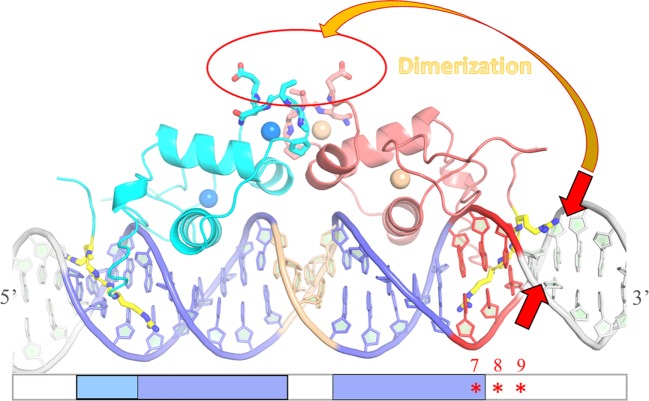
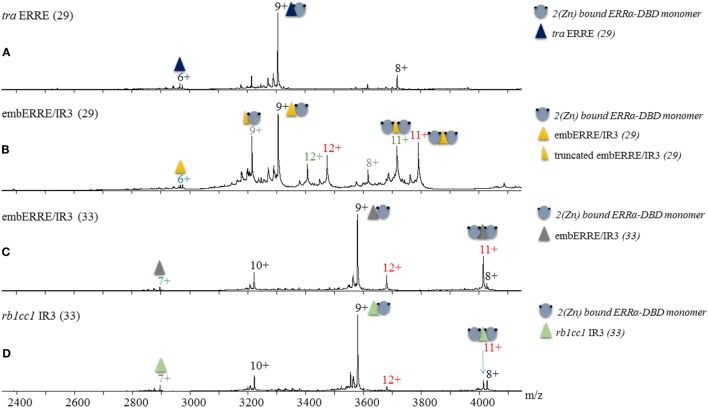
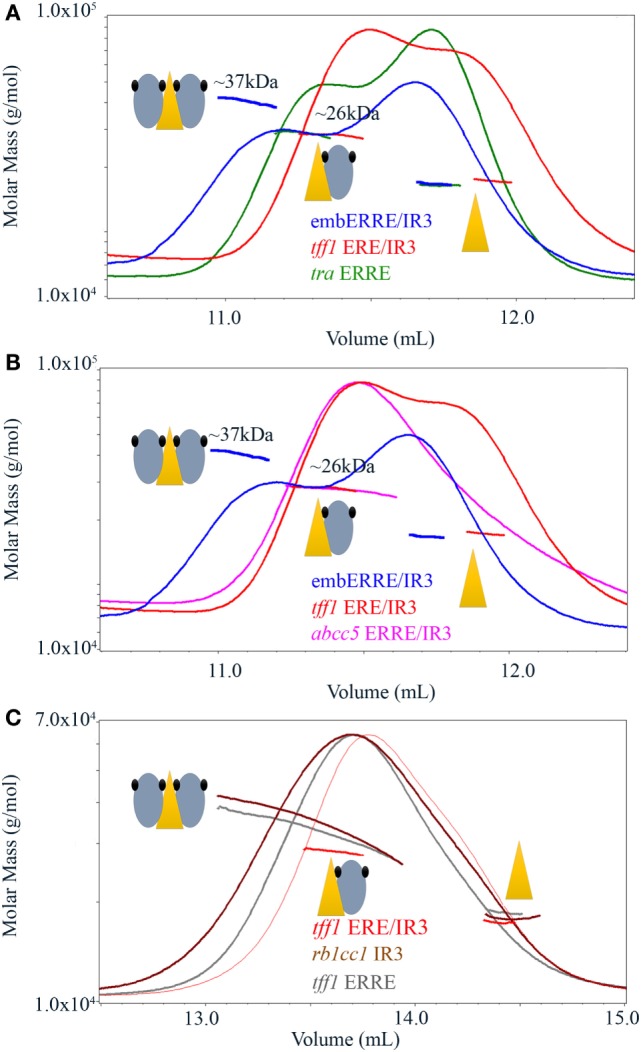
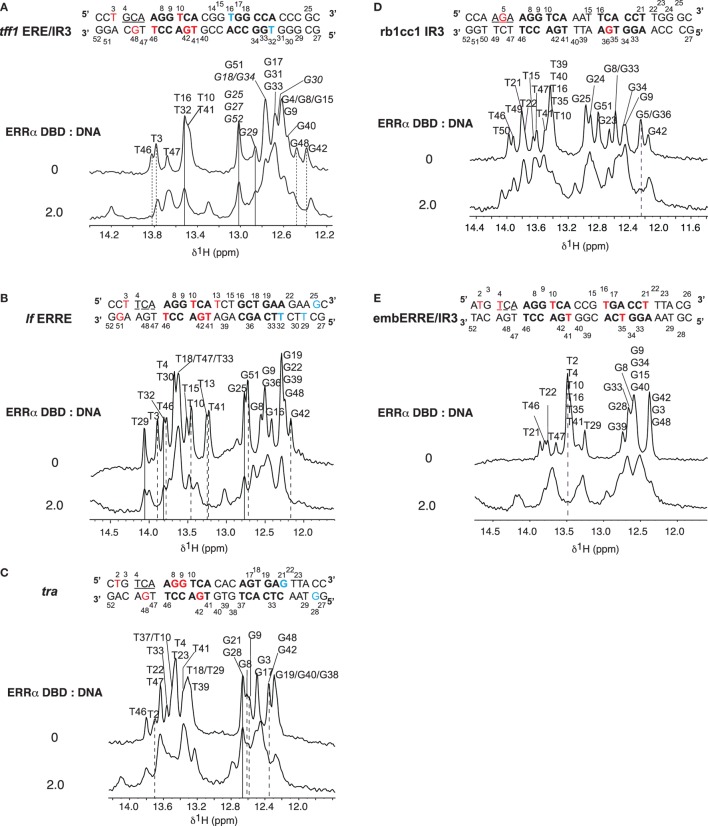
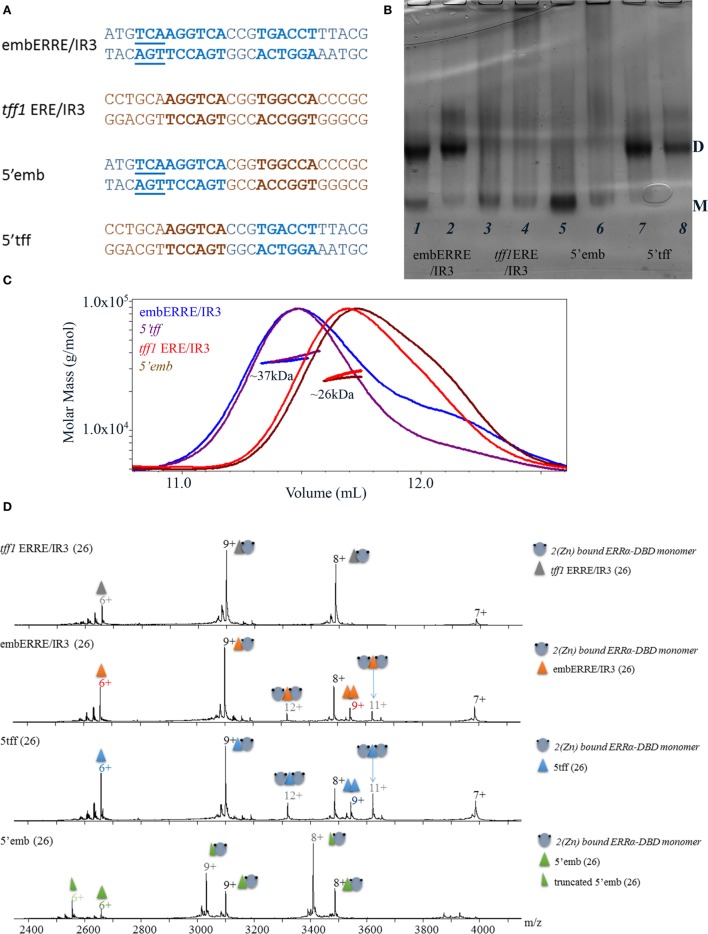
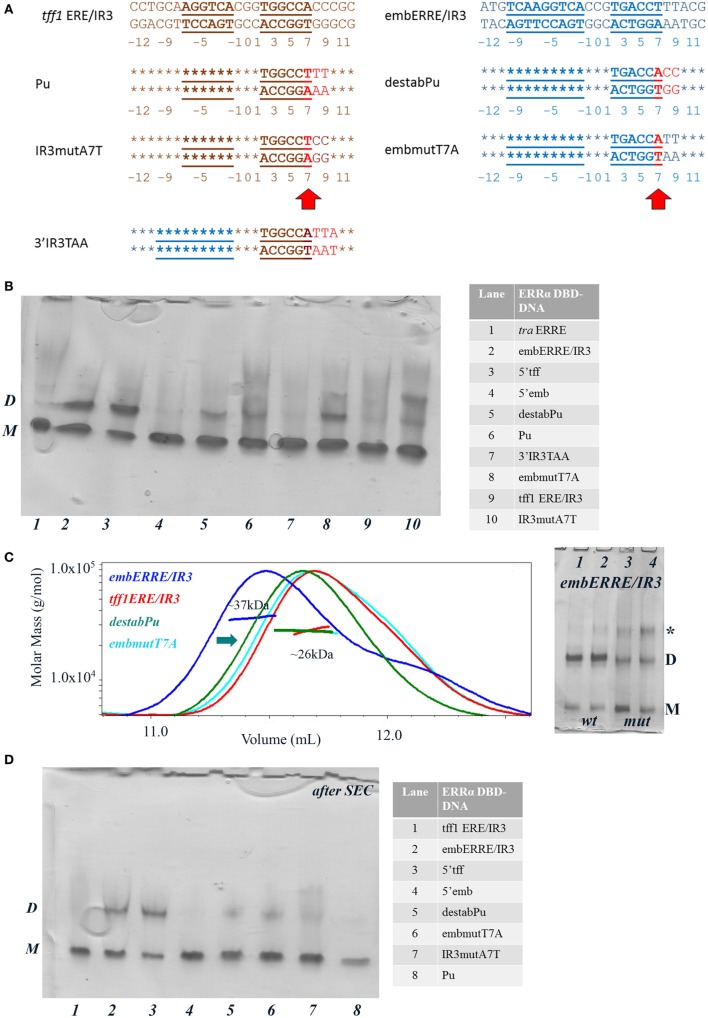
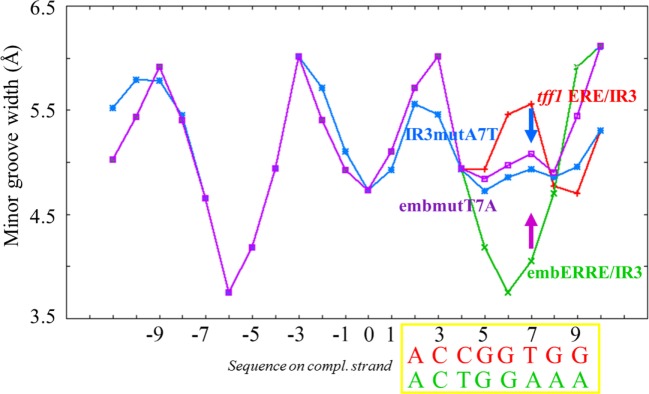
Most nuclear receptors (NRs) bind DNA as dimers, either as hetero- or as homodimers on DNA sequences organized as two half-sites with specific orientation and spacing. The dimerization of NRs on their cognate response elements (REs) involves specific protein-DNA and protein-protein interactions. The estrogen-related receptor (ERR) belongs to the steroid hormone nuclear receptor (SHR) family and shares strong similarity in its DNA-binding domain (DBD) with that of the estrogen receptor (ER). , ERR binds with high affinity inverted repeat REs with a 3-bps spacing (IR3), but , it preferentially binds to single half-site REs extended at the 5'-end by 3 bp [estrogen-related response element (ERREs)], thus explaining why ERR was often inferred as a purely monomeric receptor. Since its C-terminal ligand-binding domain is known to homodimerize with a strong dimer interface, we investigated the binding behavior of the isolated DBDs to different REs using electrophoretic migration, multi-angle static laser light scattering (MALLS), non-denaturing mass spectrometry, and nuclear magnetic resonance. In contrast to ER DBD, ERR DBD binds as a monomer to EREs (IR3), such as the ERE-IR3, but we identified a DNA sequence composed of an extended half-site embedded within an IR3 element (embedded ERRE/IR3), where stable dimer binding is observed. Using a series of chimera and mutant DNA sequences of ERREs and IR3 REs, we have found the key determinants for the binding of ERR DBD as a dimer. Our results suggest that the sequence-directed DNA shape is more important than the exact nucleotide sequence for the binding of ERR DBD to DNA as a dimer. Our work underlines the importance of the shape-driven DNA readout mechanisms based on minor groove recognition and electrostatic potential. These conclusions may apply not only to ERR but also to other members of the SHR family, such as androgen or glucocorticoid, for which a strong well-conserved half-site is followed by a weaker one with degenerated sequence.
大多数核受体(NRs)以二聚体形式结合DNA,作为异二聚体或同二聚体结合在由两个具有特定方向和间距的半位点组成的DNA序列上。NRs在其同源反应元件(REs)上的二聚化涉及特定的蛋白质-DNA和蛋白质-蛋白质相互作用。雌激素相关受体(ERR)属于类固醇激素核受体(SHR)家族,其DNA结合结构域(DBD)与雌激素受体(ER)的DNA结合结构域具有很强的相似性。ERR以高亲和力结合间距为3个碱基对的反向重复REs(IR3),但是,它优先结合在5'端延伸3个碱基对的单一半位点REs[雌激素相关反应元件(ERREs)],这就解释了为什么ERR常常被推断为一种纯粹的单体受体。由于已知其C端配体结合结构域通过一个强大的二聚体界面形成同二聚体,我们使用电泳迁移、多角度静态激光光散射(MALLS)、非变性质谱和核磁共振研究了分离的DBD与不同REs的结合行为。与ER DBD不同,ERR DBD以单体形式结合到ERE(IR3),如ERE-IR3,但我们鉴定出了一个由嵌入IR3元件内的延伸半位点组成的DNA序列(嵌入ERRE/IR3),在该序列处观察到稳定的二聚体结合。通过一系列ERREs和IR3 REs的嵌合体和突变DNA序列,我们发现了ERR DBD作为二聚体结合的关键决定因素。我们的结果表明,对于ERR DBD作为二聚体与DNA的结合,序列导向的DNA形状比确切的核苷酸序列更重要。我们的工作强调了基于小沟识别和静电势的形状驱动DNA读出机制的重要性。这些结论可能不仅适用于ERR,也适用于SHR家族的其他成员,如雄激素或糖皮质激素,对于它们来说,一个高度保守的强半位点后面跟着一个序列退化的较弱半位点。