Kratsios Paschalis, Kerk Sze Yen, Catela Catarina, Liang Joseph, Vidal Berta, Bayer Emily A, Feng Weidong, De La Cruz Estanisla Daniel, Croci Laura, Consalez G Giacomo, Mizumoto Kota, Hobert Oliver
Department of Neurobiology, University of Chicago, Chicago, United States.
Department of Biological Sciences, Howard Hughes Medical Institute, Columbia University, New York, United States.
Elife. 2017 Jul 5;6:e25751. doi: 10.7554/eLife.25751.
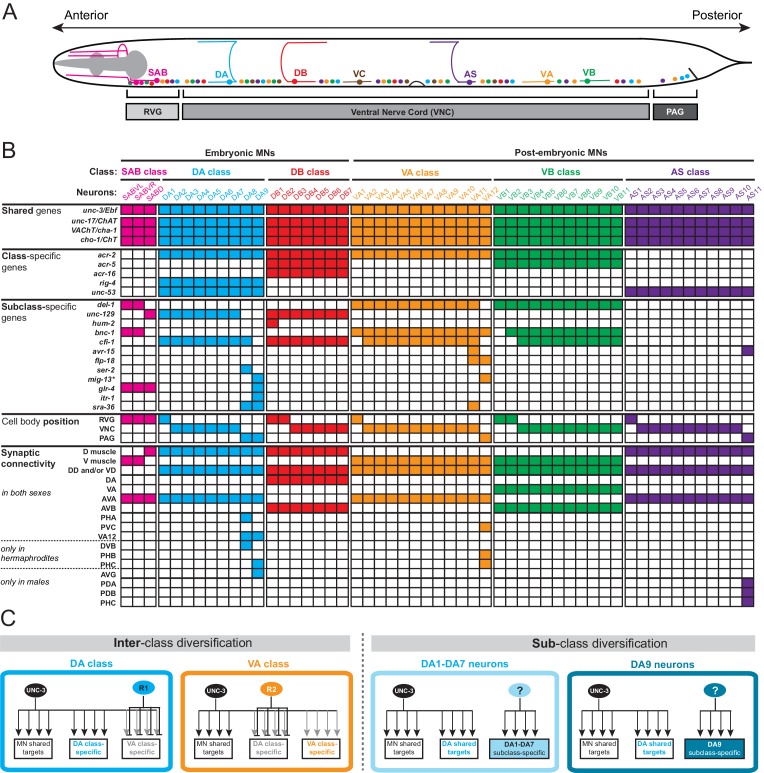
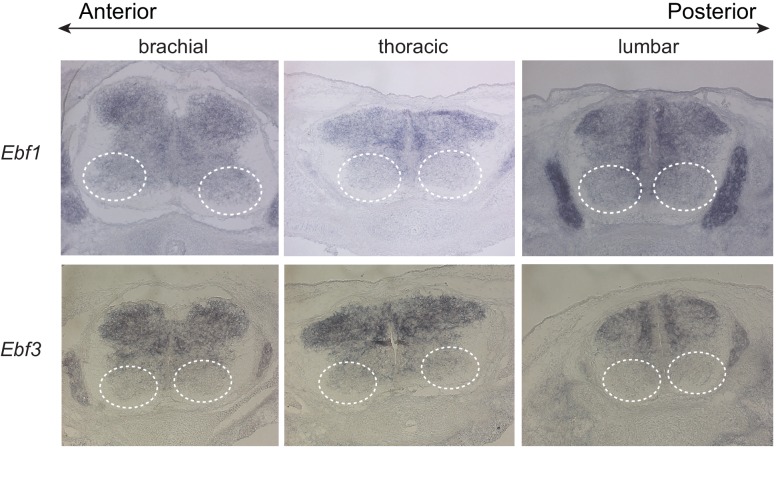
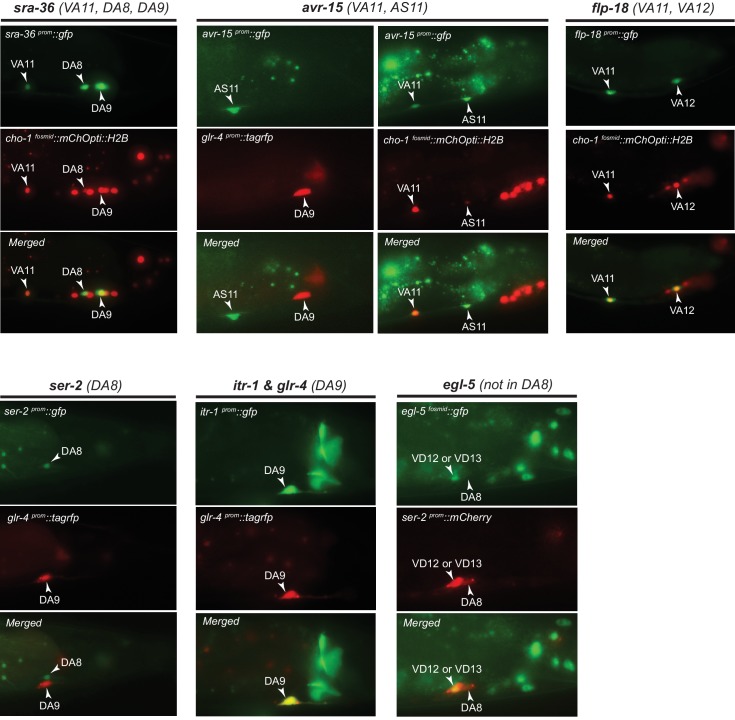
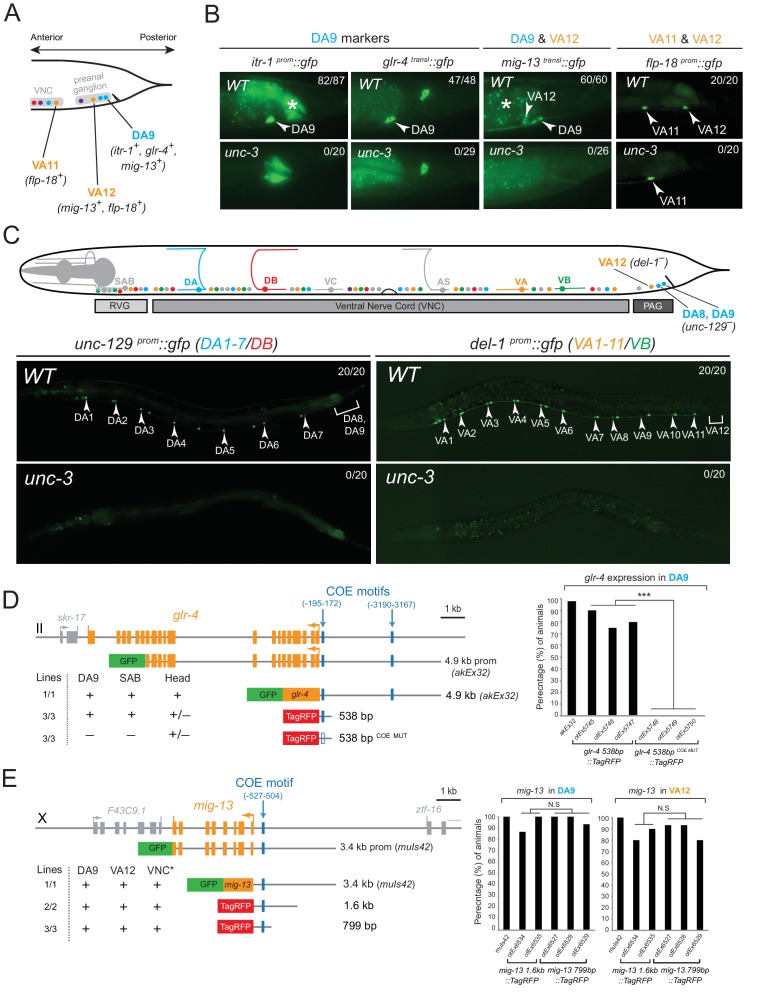
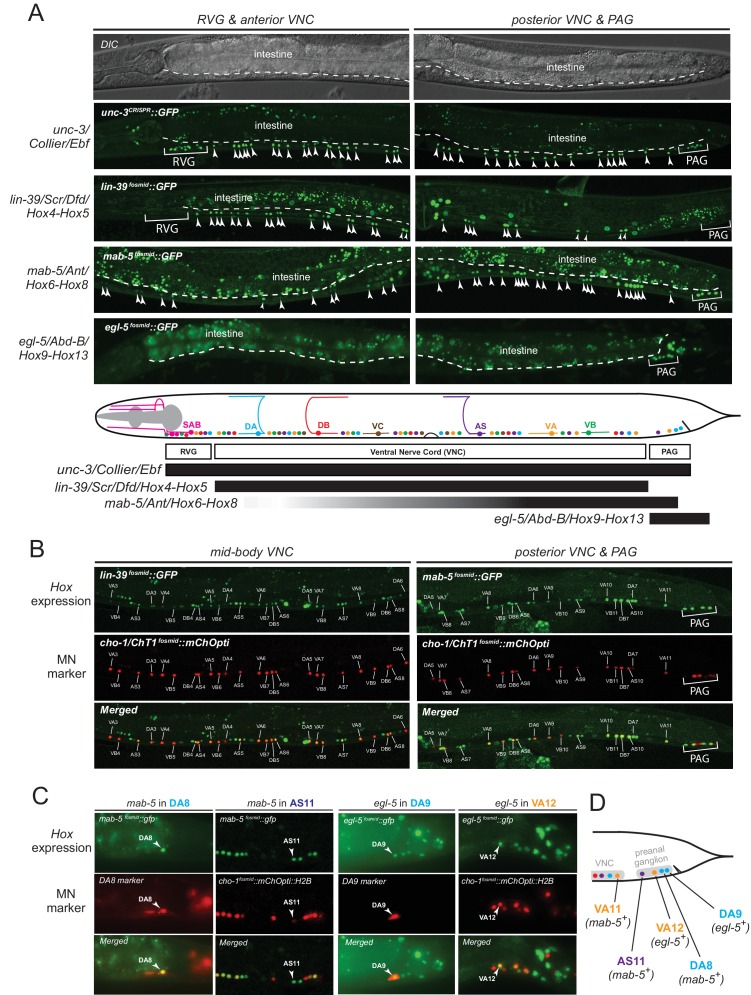
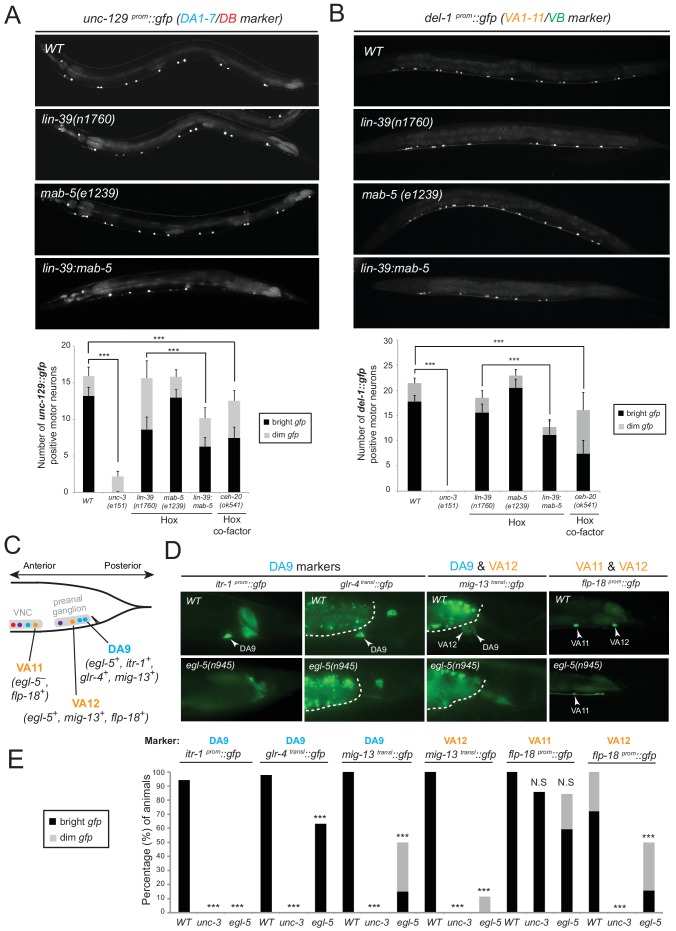
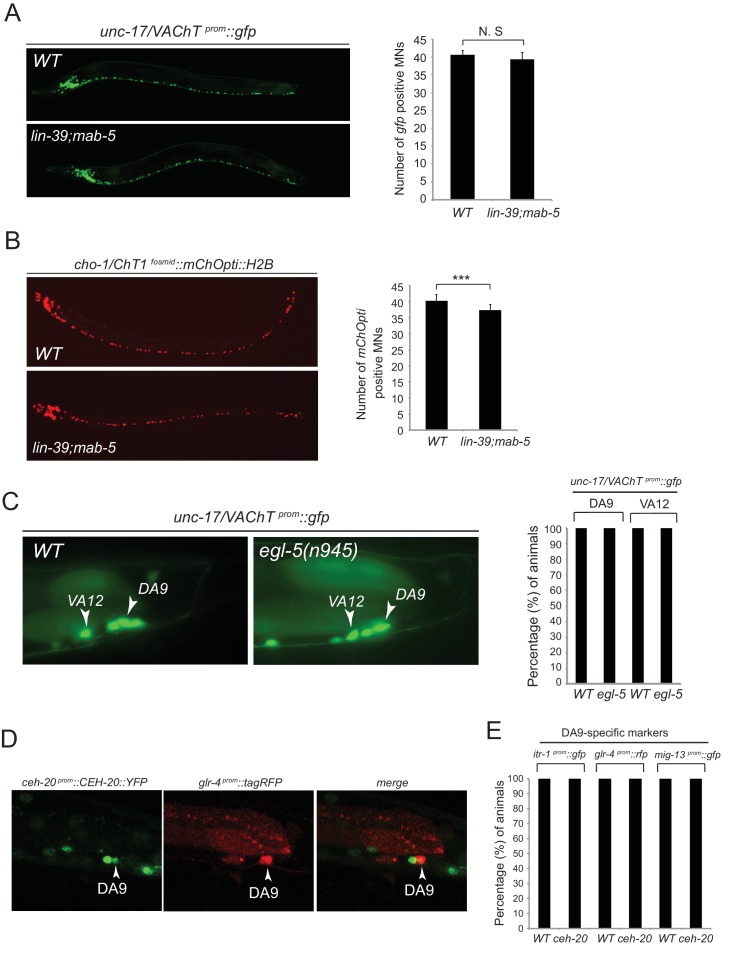
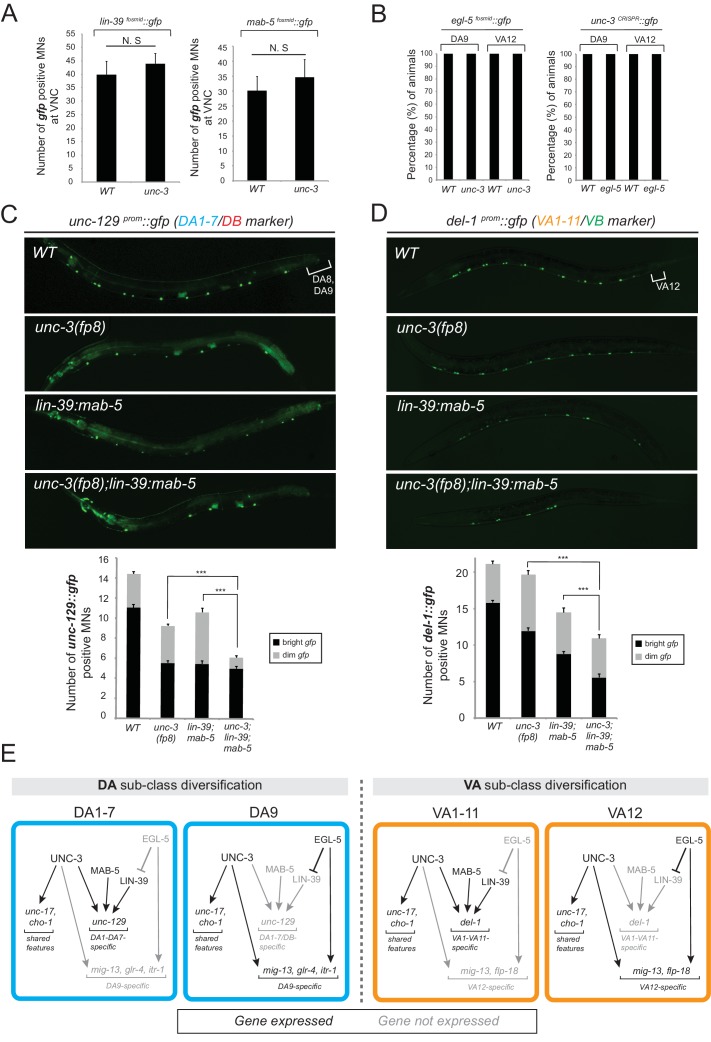
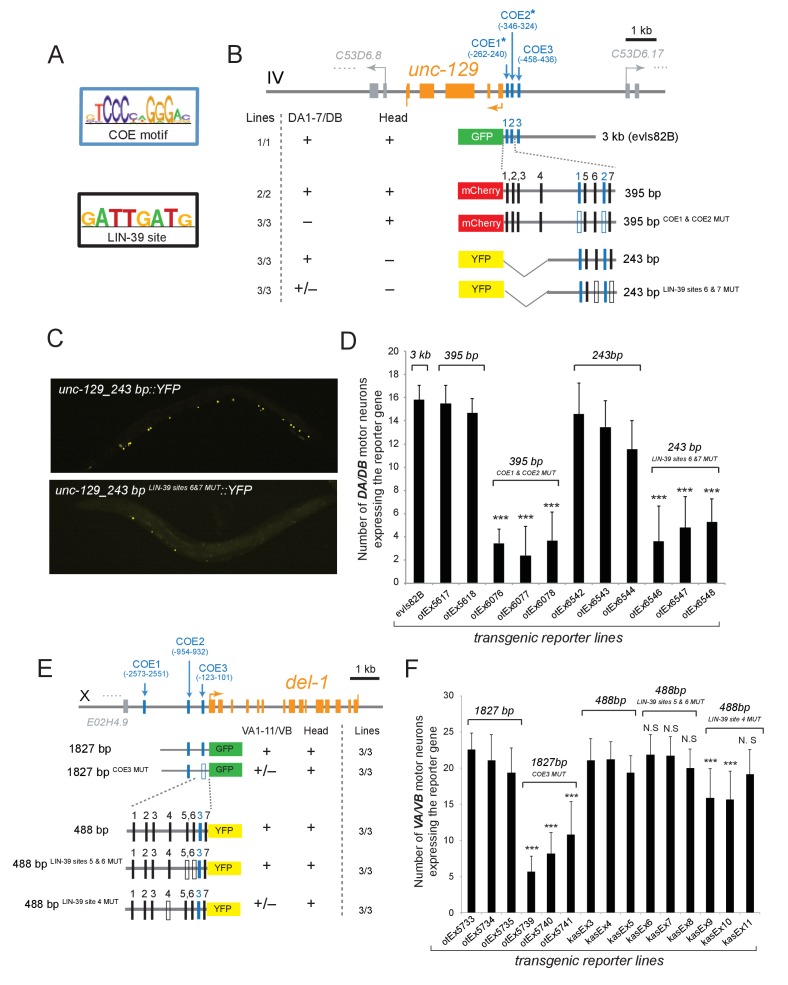
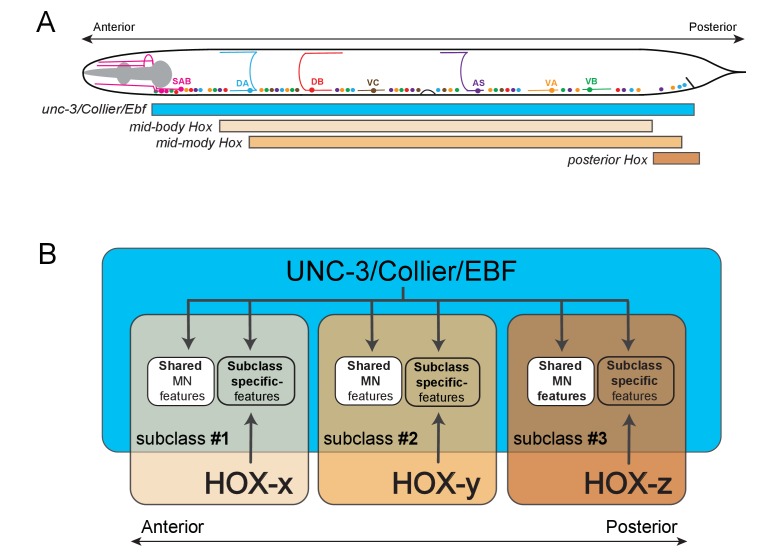
A core principle of nervous system organization is the diversification of neuron classes into subclasses that share large sets of features but differ in select traits. We describe here a molecular mechanism necessary for motor neurons to acquire subclass-specific traits in the nematode . Cholinergic motor neuron classes of the ventral nerve cord can be subdivided into subclasses along the anterior-posterior (A-P) axis based on synaptic connectivity patterns and molecular features. The conserved COE-type terminal selector UNC-3 not only controls the expression of traits shared by all members of a neuron class, but is also required for subclass-specific traits expressed along the A-P axis. UNC-3, which is not regionally restricted, requires region-specific cofactors in the form of Hox proteins to co-activate subclass-specific effector genes in post-mitotic motor neurons. This intersectional gene regulatory principle for neuronal subclass diversification may be conserved from nematodes to mice.
神经系统组织的一个核心原则是将神经元类别细分为亚类,这些亚类具有大量共同特征,但在某些特定性状上存在差异。我们在此描述了线虫中运动神经元获得亚类特异性性状所必需的分子机制。腹神经索的胆碱能运动神经元类别可根据突触连接模式和分子特征沿前后(A-P)轴细分为亚类。保守的COE型终末选择因子UNC-3不仅控制神经元类别所有成员共有的性状表达,也是沿A-P轴表达的亚类特异性性状所必需的。不受区域限制的UNC-3需要以Hox蛋白形式存在的区域特异性辅助因子,以在有丝分裂后运动神经元中共同激活亚类特异性效应基因。这种神经元亚类多样化的交叉基因调控原则可能从线虫到小鼠都是保守的。