Luo Yuanzheng, Xiao Qi, Li Buyin
School of Optical and Electronic Information, Huazhong University of Science and Technology, Wuhan 430074, China.
Sensors (Basel). 2017 Jul 5;17(7):1571. doi: 10.3390/s17071571.
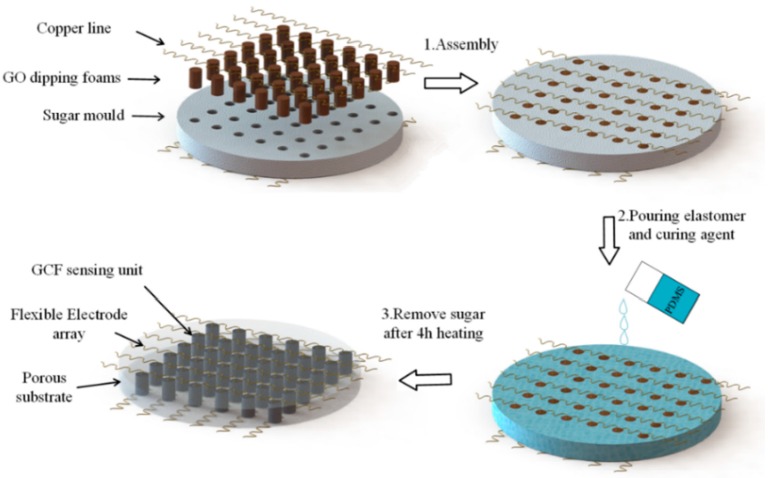
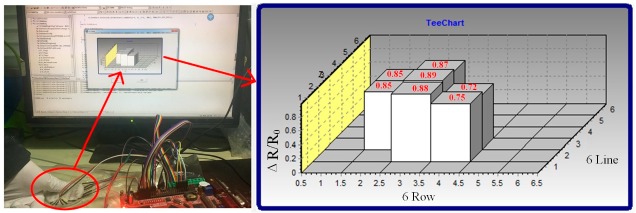
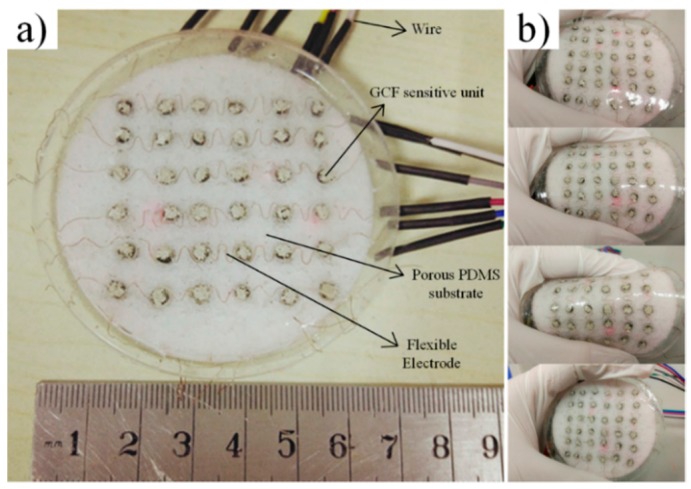
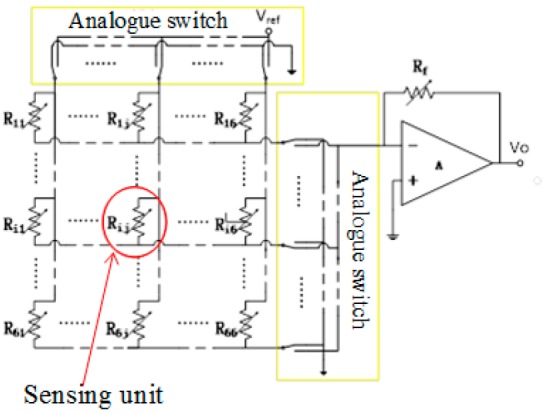
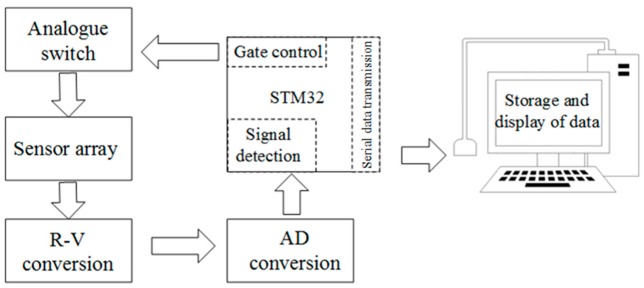
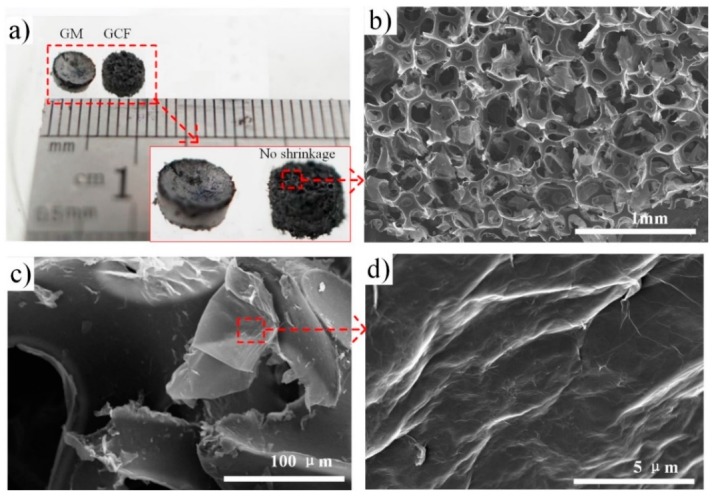
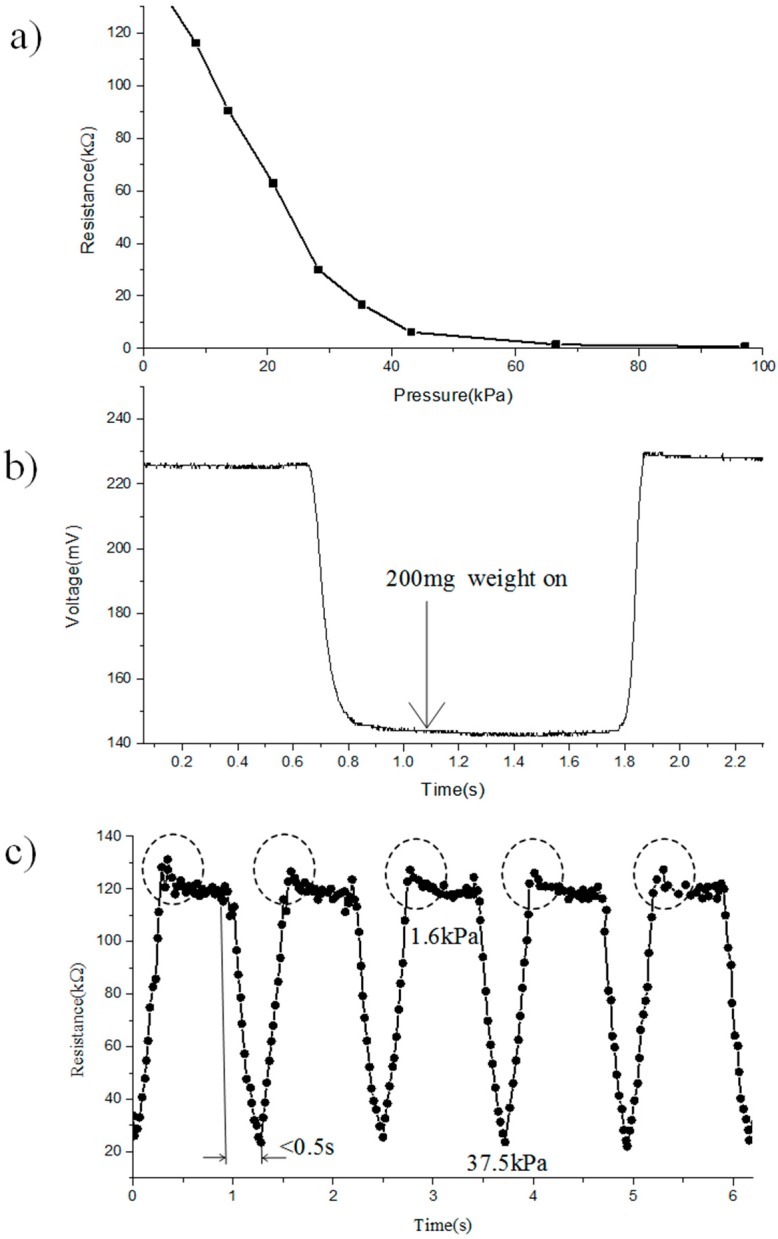
Herein, a flexible 6 × 6 pressure-sensitive array (based on the PDMS (Polydimethylsiloxane) porous substrate) was designed. We have developed a facile method to fabricate the porous substrate, by a single-step operation using the sugar-template method. This strategy effectively diminishes the complexity of the preparation process, as well as the device structure. The electrical resistivity of the stretchable array demonstrates the negative piezo resistive coefficient (NPRC) under 0-100 kpa. Moreover, the pressure-sensitive array reveals a high sensitivity and low delay time (<0.5 s) to the applied forces. Therefore, the pressure distribution could be easily recognized by testing its conductivity changes. Besides, these signal data can be collected into the upper computer, with the purpose of tracking and analyzing the azimuth of the applied loading. This cost-effective micro array has a broad application prospect for fabricating the tactile sensor, artificial skin, and human-computer interfaces.
在此,设计了一种柔性6×6压敏阵列(基于聚二甲基硅氧烷(PDMS)多孔基板)。我们开发了一种简便的方法来制造多孔基板,即使用糖模板法通过一步操作来实现。这种策略有效地降低了制备过程以及器件结构的复杂性。可拉伸阵列的电阻率在0至100千帕斯卡下显示出负压阻系数(NPRC)。此外,压敏阵列对施加的力表现出高灵敏度和低延迟时间(<0.5秒)。因此,通过测试其电导率变化可以很容易地识别压力分布。此外,这些信号数据可以收集到上位机中,以便跟踪和分析施加负载的方位。这种具有成本效益的微阵列在制造触觉传感器、人造皮肤和人机界面方面具有广阔的应用前景。