Li Shugang, Cao Yiping, Geng Fang
Key Laboratory of Fermentation Engineering, Ministry of Education; Hubei Key Laboratory of Industrial Microbiology; Hubei Collaborative Innovation Center for Industrial Fermentation; Hubei University of Technology, Wuhan, P.R. China.
College of Pharmacy and Biological Engineering, Chengdu University, Chengdu, P.R. China.
Evol Bioinform Online. 2017 Jun 19;13:1176934317716089. doi: 10.1177/1176934317716089. eCollection 2017.
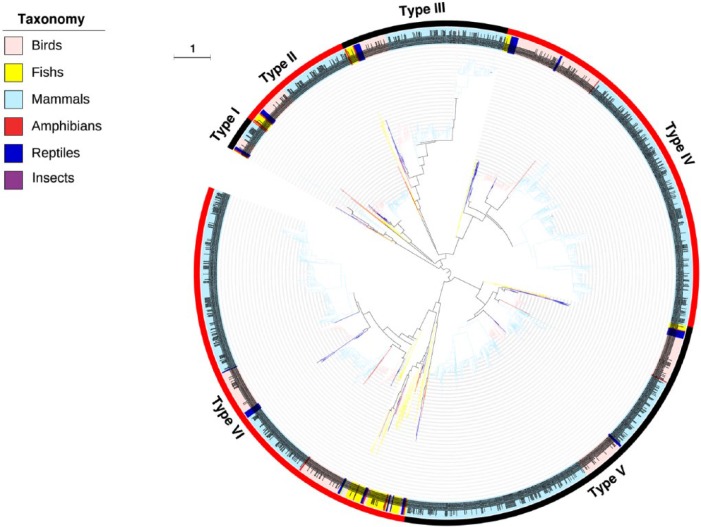
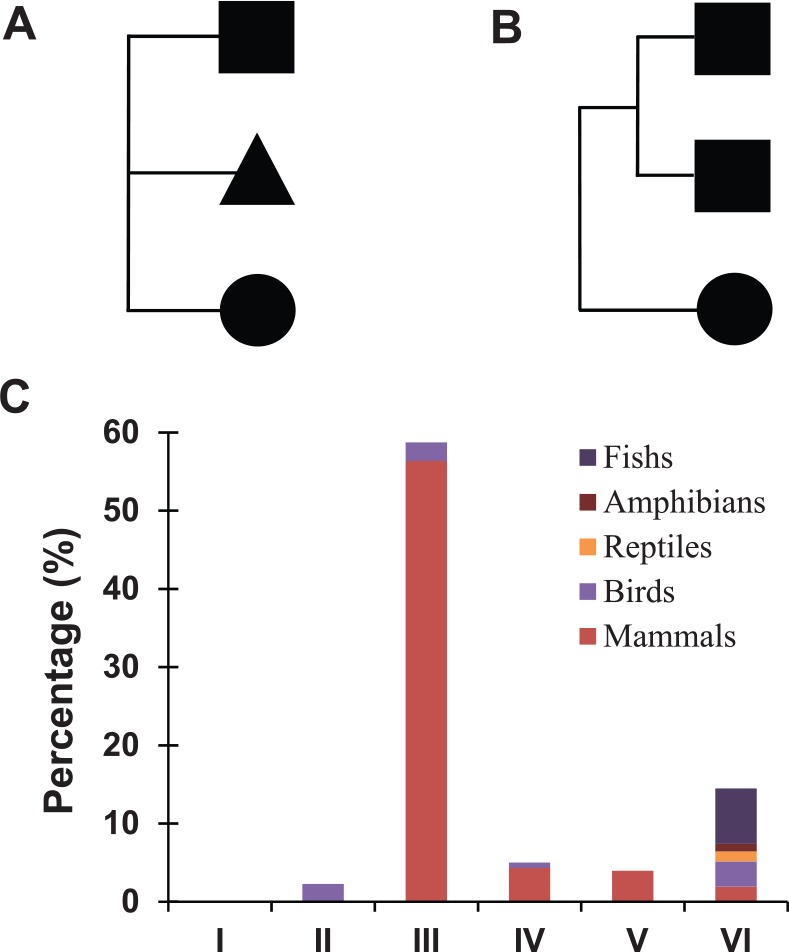
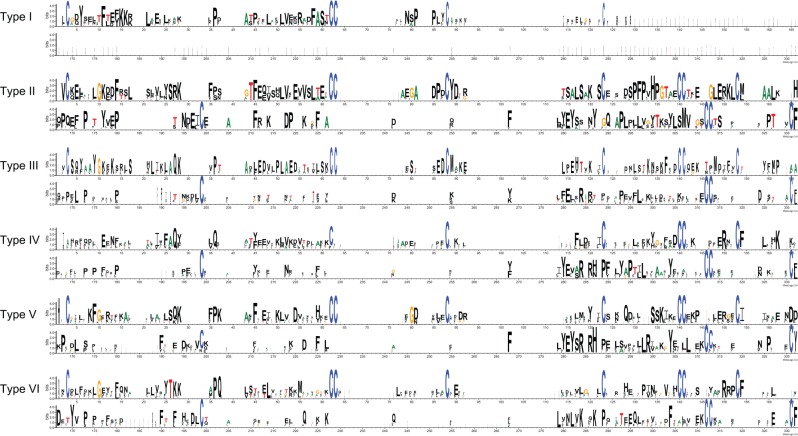
Albumins are the most well-known globular proteins, and the most typical representatives are the serum albumins. However, less attention was paid to the albumin family, except for the human and bovine serum albumin. To characterize the features of albumin family, we have mined all the putative albumin proteins from the available genome sequences. The results showed that albumin is widely distributed in vertebrates, but not present in the bacteria and archaea. The phylogenetic analysis of vertebrate albumin family implied an evolutionary relationship between members of serum albumin, α-fetoprotein, vitamin D-binding protein, and afamin. Meanwhile, a new member from the albumin family was found, namely, extracellular matrix protein 1. The structural analysis revealed that the motifs for forming the internal disulfide bonds are highly conserved in the albumin family, despite the low overall sequence identity across the family. The domain arrangement of albumin proteins indicated that most of vertebrate albumins contain 3 characteristic domains, arising from 2 evolutionary patterns. And a significant trend has been observed that the albumin proteins in higher vertebrate species tend to possess more characteristic domains. This study has provided the fundamental information required for achieving a better understanding of the albumin distribution, phylogenetic relationship, characteristic motif, structure, and new insights into the evolutionary pattern.
白蛋白是最为人熟知的球状蛋白,最典型的代表是血清白蛋白。然而,除了人和牛血清白蛋白外,白蛋白家族较少受到关注。为了表征白蛋白家族的特征,我们从现有的基因组序列中挖掘了所有推定的白蛋白蛋白。结果表明,白蛋白广泛分布于脊椎动物中,但在细菌和古细菌中不存在。脊椎动物白蛋白家族的系统发育分析表明血清白蛋白、甲胎蛋白、维生素D结合蛋白和afamin成员之间存在进化关系。同时,发现了白蛋白家族的一个新成员,即细胞外基质蛋白1。结构分析表明,尽管整个家族的序列一致性较低,但形成内部二硫键的基序在白蛋白家族中高度保守。白蛋白蛋白的结构域排列表明,大多数脊椎动物白蛋白含有3个特征结构域,源于2种进化模式。并且观察到一个显著趋势,即高等脊椎动物物种中的白蛋白蛋白倾向于拥有更多的特征结构域。这项研究提供了更好地理解白蛋白分布、系统发育关系、特征基序、结构以及进化模式新见解所需的基础信息。