Kytidou Kassiani, Beenakker Thomas J M, Westerhof Lotte B, Hokke Cornelis H, Moolenaar Geri F, Goosen Nora, Mirzaian Mina, Ferraz Maria J, de Geus Mark, Kallemeijn Wouter W, Overkleeft Herman S, Boot Rolf G, Schots Arjen, Bosch Dirk, Aerts Johannes M F G
Department of Medical Biochemistry, Leiden Institute of ChemistryLeiden, Netherlands.
Department of Bio-organic Synthesis, Leiden Institute of ChemistryLeiden, Netherlands.
Front Plant Sci. 2017 Jun 21;8:1026. doi: 10.3389/fpls.2017.01026. eCollection 2017.
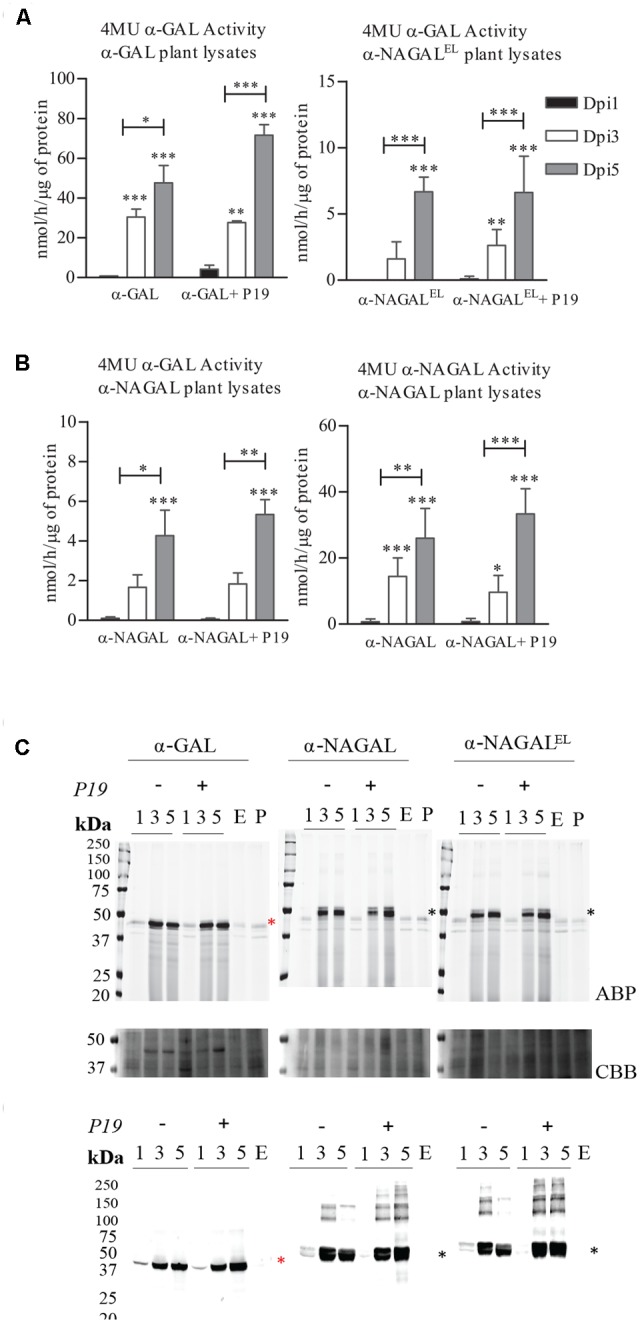
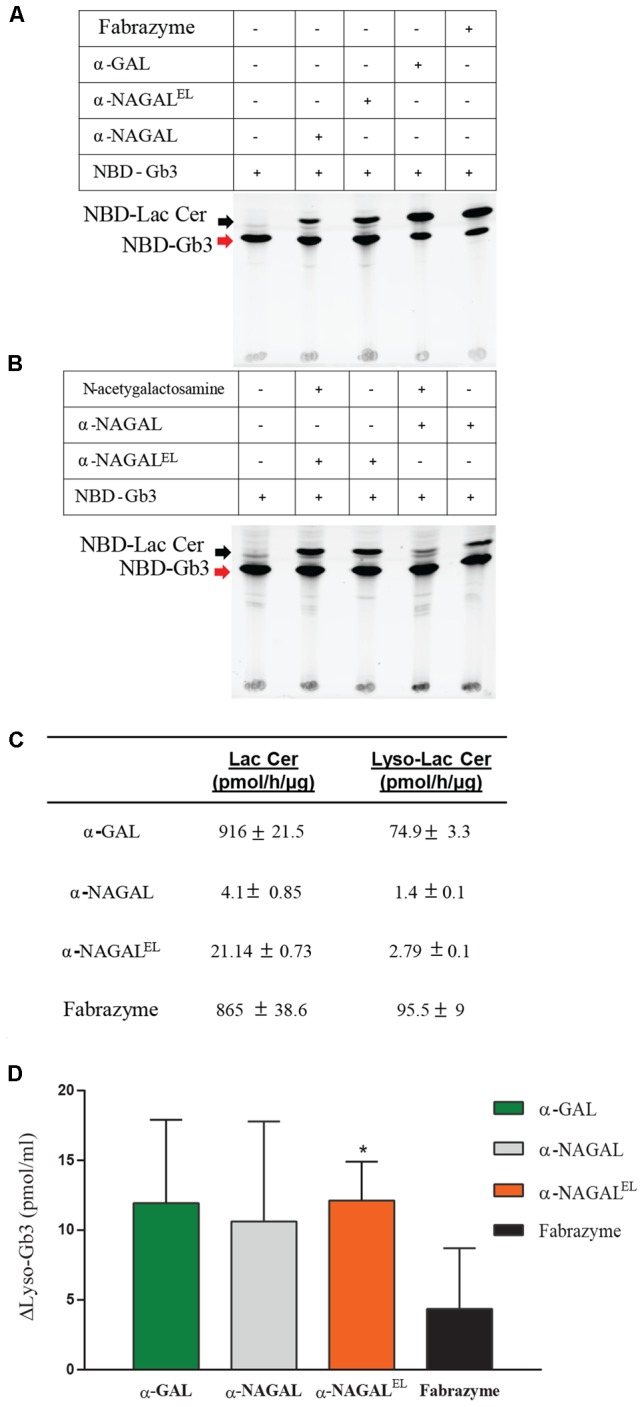
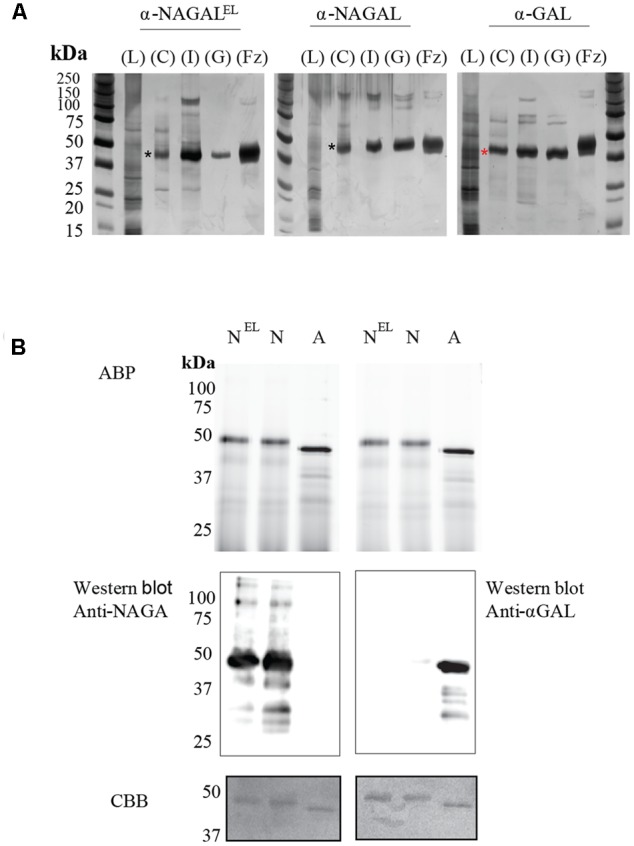
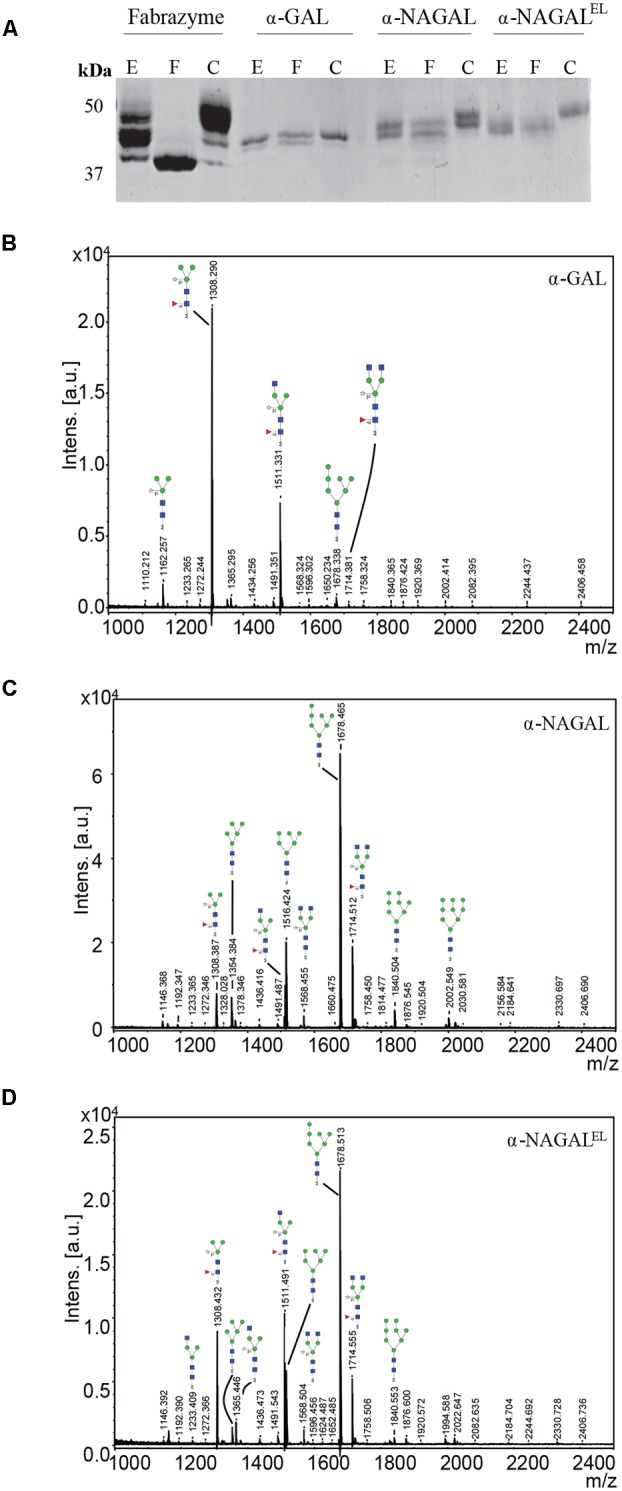
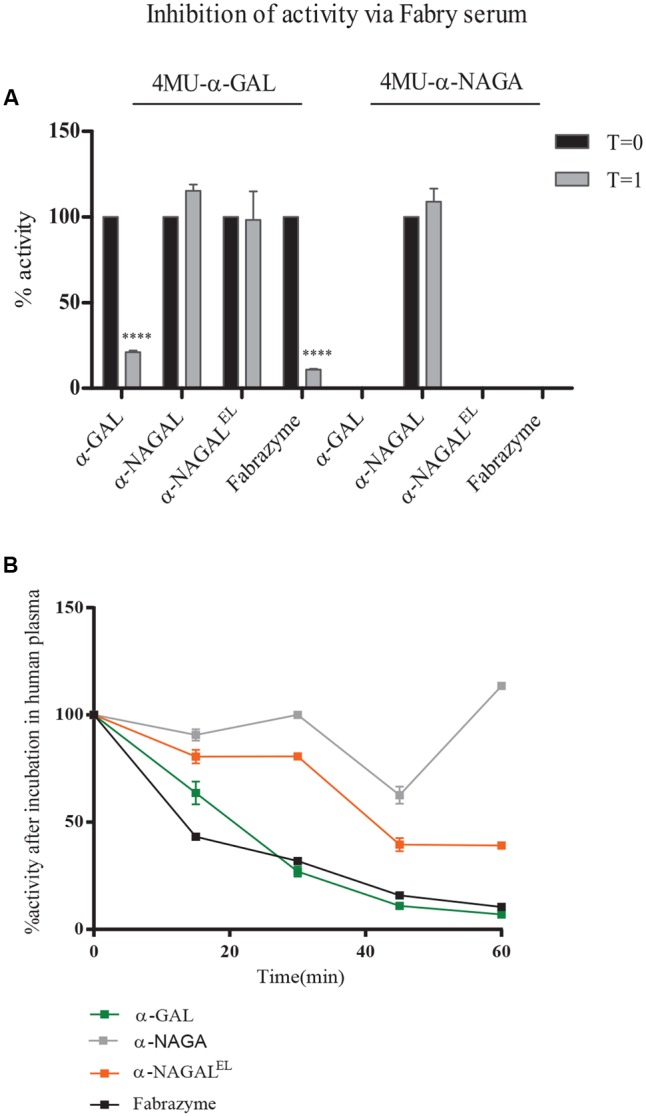
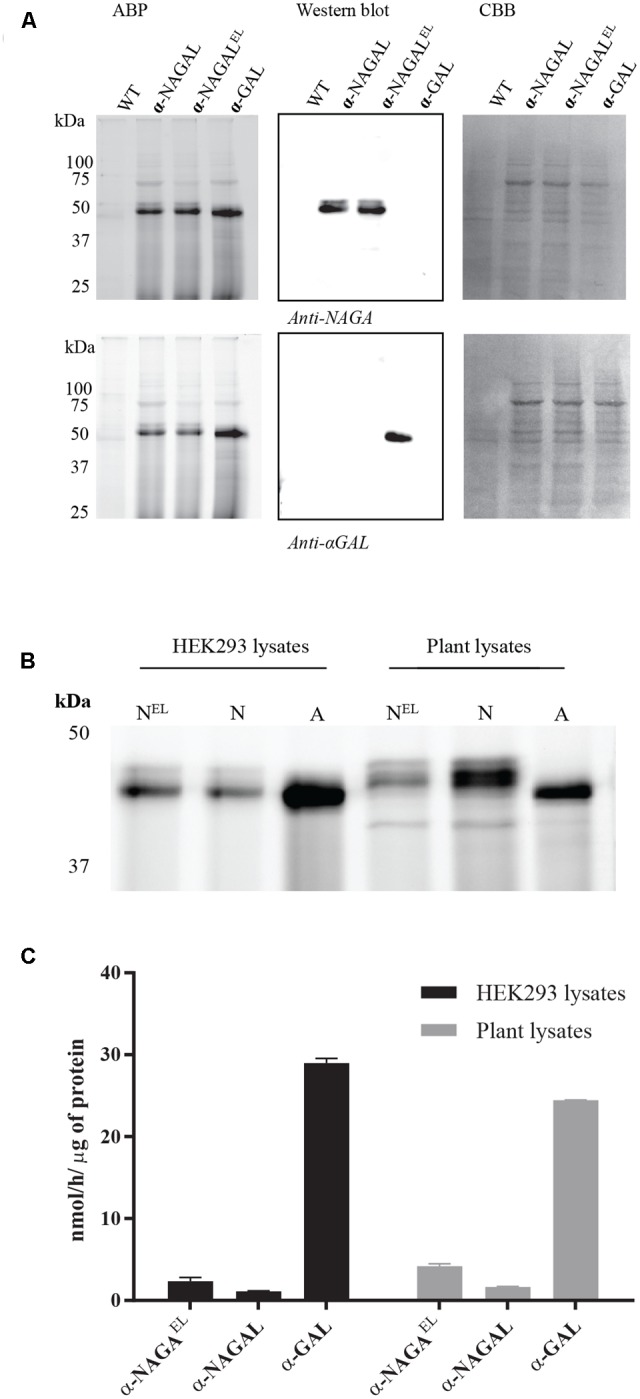
Deficiency of α-galactosidase A (α-GAL) causes Fabry disease (FD), an X-linked storage disease of the glycosphingolipid globtriaosylcerammide (Gb3) in lysosomes of various cells and elevated plasma globotriaosylsphingosine (Lyso-Gb3) toxic for podocytes and nociceptive neurons. Enzyme replacement therapy is used to treat the disease, but clinical efficacy is limited in many male FD patients due to development of neutralizing antibodies (Ab). Therapeutic use of modified lysosomal α--acetyl-galactosaminidase (α-NAGAL) with increased α-galactosidase activity (α-NAGAL) has therefore been suggested. We transiently produced in leaves functional α-GAL, α-NAGAL, and α-NAGAL enzymes for research purposes. All enzymes could be visualized with activity-based probes covalently binding in their catalytic pocket. Characterization of purified proteins indicated that α-NAGAL is improved in activity toward artificial 4MU-α-galactopyranoside. Recombinant α-NAGAL and α-NAGAL are not neutralized by Ab-positive FD serum tested and are more stable in human plasma than α-GAL. Both enzymes hydrolyze the lipid substrates Gb3 and Lyso-Gb3 accumulating in Fabry patients. The addition to FD sera of α-NAGAL, and to a lesser extent that of α-NAGAL, results in a reduction of the toxic Lyso-Gb3. In conclusion, our study suggests that modified α-NAGAL might reduce excessive Lyso-Gb3 in FD serum. This neo-enzyme can be produced in and might be further developed for the treatment of FD aiming at reduction of circulating Lyso-Gb3.
α-半乳糖苷酶A(α-GAL)缺乏会导致法布里病(FD),这是一种X连锁的糖鞘脂globtriaosylcerammide(Gb3)在各种细胞溶酶体中的储存疾病,并且血浆中对足细胞和伤害性神经元有毒的globotriaosylsphingosine(Lyso-Gb3)会升高。酶替代疗法用于治疗该疾病,但由于中和抗体(Ab)的产生,许多男性FD患者的临床疗效有限。因此,有人建议使用具有增加的α-半乳糖苷酶活性的修饰溶酶体α-乙酰半乳糖胺酶(α-NAGAL)进行治疗。我们为了研究目的在叶片中瞬时产生了功能性α-GAL、α-NAGAL和α-NAGAL酶。所有酶都可以用共价结合在其催化口袋中的基于活性的探针进行可视化。纯化蛋白质的表征表明,α-NAGAL对人工4MU-α-吡喃半乳糖苷的活性有所提高。重组α-NAGAL和α-NAGAL不会被测试的Ab阳性FD血清中和,并且在人血浆中比α-GAL更稳定。两种酶都能水解法布里病患者体内积累的脂质底物Gb3和Lyso-Gb3。向FD血清中添加α-NAGAL,以及在较小程度上添加α-NAGAL,会导致有毒的Lyso-Gb3减少。总之,我们的研究表明,修饰的α-NAGAL可能会降低FD血清中过量的Lyso-Gb3。这种新酶可以在叶片中产生,并可能进一步开发用于治疗FD,旨在减少循环中的Lyso-Gb3。