de Wijs-Meijler Daphne P, Duncker Dirk J, Tibboel Dick, Schermuly Ralph T, Weissmann Norbert, Merkus Daphne, Reiss Irwin K M
Division of Experimental Cardiology, Department of Cardiology, Erasmus MC, University Medical Center Rotterdam, Rotterdam, The Netherlands.
Division of Neonatology, Department of Pediatrics, Sophia Children's Hospital, Erasmus MC, University Medical Center Rotterdam, Rotterdam, The Netherlands.
Pulm Circ. 2017 Jan 1;7(1):55-66. doi: 10.1086/689748. eCollection 2017 Mar.
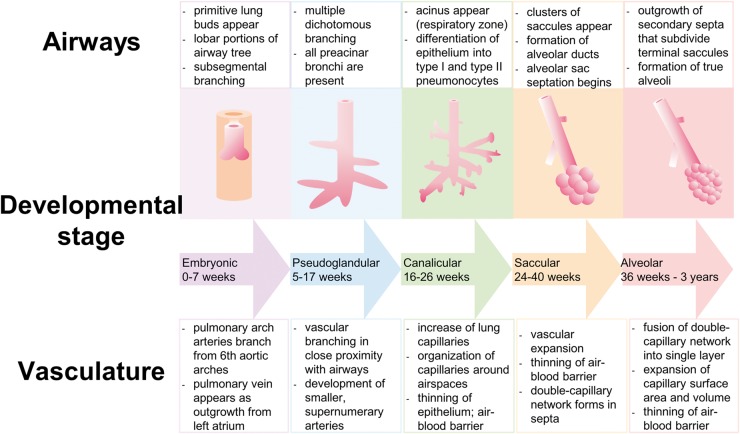
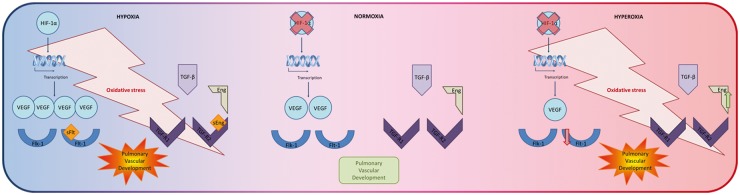
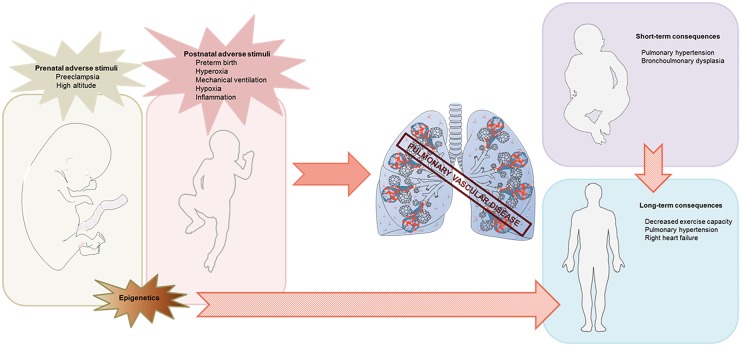
Development of the pulmonary circulation is a complex process with a spatial pattern that is tightly controlled. This process is vulnerable for disruption by various events in the prenatal and early postnatal periods. Disruption of normal pulmonary vascular development leads to abnormal structure and function of the lung vasculature, causing neonatal pulmonary vascular diseases. Premature babies are especially at risk of the development of these diseases, including persistent pulmonary hypertension and bronchopulmonary dysplasia. Reactive oxygen species play a key role in the pathogenesis of neonatal pulmonary vascular diseases and can be caused by hyperoxia, mechanical ventilation, hypoxia, and inflammation. Besides the well-established short-term consequences, exposure of the developing lung to injurious stimuli in the perinatal period, including oxidative stress, may also contribute to the development of pulmonary vascular diseases later in life, through so-called "fetal or perinatal programming." Because of these long-term consequences, it is important to develop a follow-up program tailored to adolescent survivors of neonatal pulmonary vascular diseases, aimed at early detection of adult pulmonary vascular diseases, and thereby opening the possibility of early intervention and interfering with disease progression. This review focuses on pathophysiologic events in the perinatal period that have been shown to disrupt human normal pulmonary vascular development, leading to neonatal pulmonary vascular diseases that can extend even into adulthood. This knowledge may be particularly important for ex-premature adults who are at risk of the long-term consequences of pulmonary vascular diseases, thereby contributing disproportionately to the burden of adult cardiovascular disease in the future.
肺循环的发育是一个复杂的过程,其空间模式受到严格控制。这一过程在产前和产后早期容易受到各种事件的干扰。正常肺血管发育的中断会导致肺血管结构和功能异常,引发新生儿肺血管疾病。早产儿尤其容易患上这些疾病,包括持续性肺动脉高压和支气管肺发育不良。活性氧在新生儿肺血管疾病的发病机制中起关键作用,可由高氧、机械通气、缺氧和炎症引起。除了已明确的短期后果外,发育中的肺在围产期暴露于有害刺激,包括氧化应激,也可能通过所谓的“胎儿或围产期编程”,导致日后发生肺血管疾病。由于这些长期后果,制定一个针对新生儿肺血管疾病青少年幸存者的随访计划很重要,旨在早期发现成人肺血管疾病,从而为早期干预和阻止疾病进展提供可能性。本综述重点关注围产期已被证明会破坏人类正常肺血管发育的病理生理事件,这些事件会导致新生儿肺血管疾病,甚至可能延续至成年期。这一知识对于有肺血管疾病长期后果风险的早产成年人群可能尤为重要,从而在未来对成人心血管疾病负担产生不成比例的影响。