Ozsurekci Yasemin, Aykac Kubra
Department of Pediatric Infectious Diseases, Hacettepe University, Faculty of Medicine, 06100 Ankara, Turkey.
Oxid Med Cell Longev. 2016;2016:2768365. doi: 10.1155/2016/2768365. Epub 2016 Jun 15.
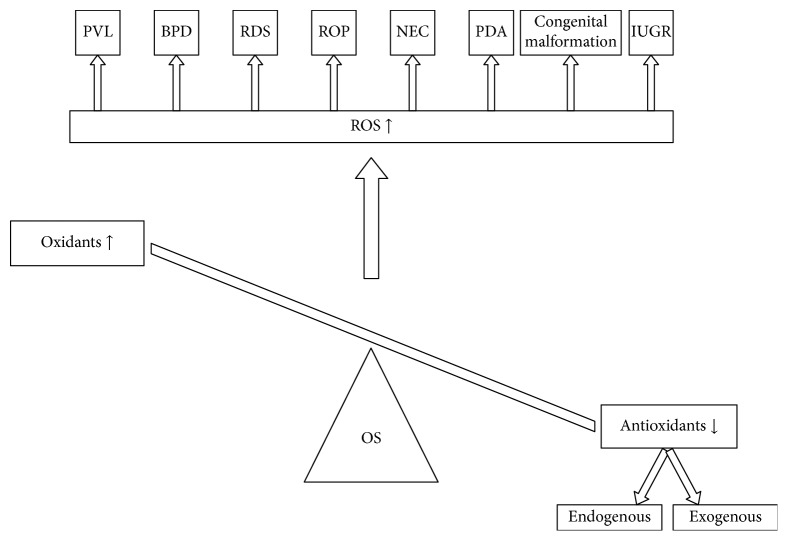
We review oxidative stress-related newborn disease and the mechanism of oxidative damage. In addition, we outline diagnostic and therapeutic strategies and future directions. Many reports have defined oxidative stress as an imbalance between an enhanced reactive oxygen/nitrogen species and the lack of protective ability of antioxidants. From that point of view, free radical-induced damage caused by oxidative stress seems to be a probable contributing factor to the pathogenesis of many newborn diseases, such as respiratory distress syndrome, bronchopulmonary dysplasia, periventricular leukomalacia, necrotizing enterocolitis, patent ductus arteriosus, and retinopathy of prematurity. We share the hope that the new understanding of the concept of oxidative stress and its relation to newborn diseases that has been made possible by new diagnostic techniques will throw light on the treatment of those diseases.
我们回顾了与氧化应激相关的新生儿疾病及其氧化损伤机制。此外,我们概述了诊断和治疗策略以及未来方向。许多报告将氧化应激定义为活性氧/氮物种增加与抗氧化剂保护能力不足之间的失衡。从这一观点来看,氧化应激引起的自由基诱导损伤似乎是许多新生儿疾病发病机制的一个可能促成因素,如呼吸窘迫综合征、支气管肺发育不良、脑室周围白质软化、坏死性小肠结肠炎、动脉导管未闭和早产儿视网膜病变。我们希望,新诊断技术使我们对氧化应激概念及其与新生儿疾病关系的新认识能够为这些疾病的治疗提供线索。