Hegazi Nabil A, Sarhan Mohamed S, Fayez Mohamed, Patz Sascha, Murphy Brian R, Ruppel Silke
Environmental Studies and Research Unit (ESRU), Department of Microbiology, Faculty of Agriculture, Cairo University, Giza, Egypt.
Leibniz Institute of Vegetable and Ornamental Crops Großbeeren/ Erfurt e.V. (IGZ), Großbeeren, Germany.
PLoS One. 2017 Jul 7;12(7):e0180424. doi: 10.1371/journal.pone.0180424. eCollection 2017.
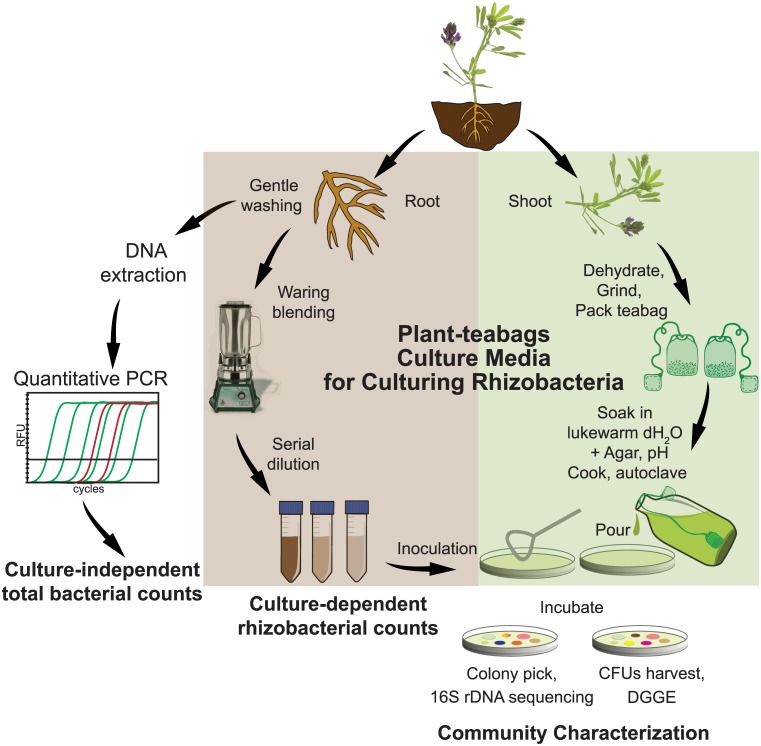
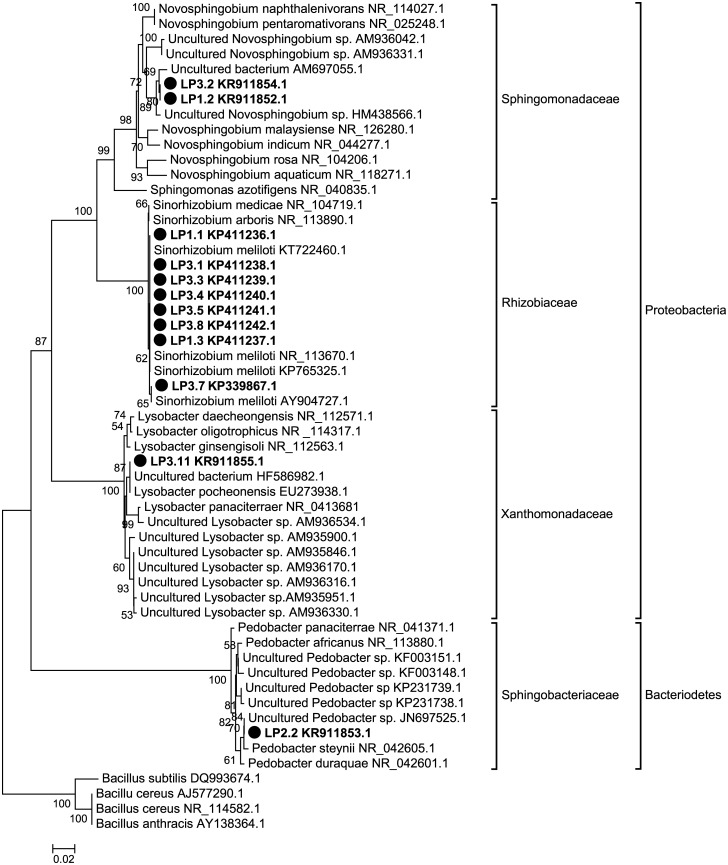
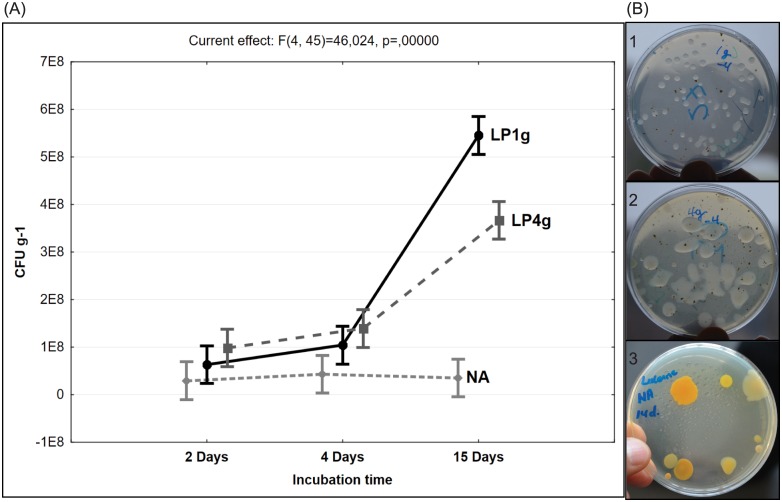
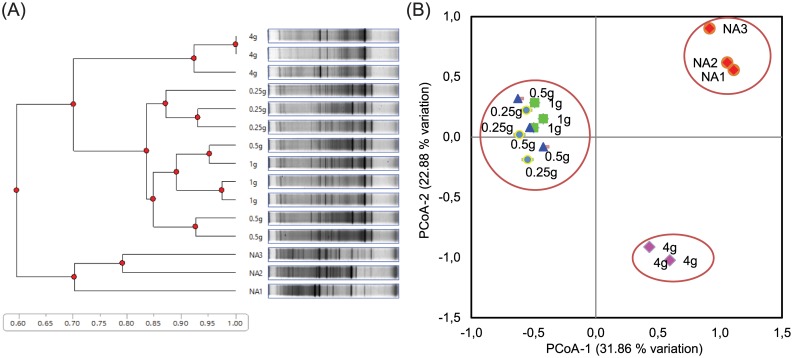
In an effort to axenically culture the previously uncultivable populations of the rhizobacteria of Lucerne (Medicago sativa L.), we propose plant-only teabags culture media to mimic the nutritional matrix available in the rhizosphere. Here, we show that culture media prepared from Lucerne powder teabags substantially increased the cultivability of Lucerne rhizobacteria compared with a standard nutrient agar, where we found that the cultivable populations significantly increased by up to 60% of the total bacterial numbers as estimated by Quantitative Real-time Polymerase Chain Reaction (qRT-PCR). Cluster analysis of 16S rDNA Polymerase Chain Reaction-Denaturing Gradient Gel Electrophoresis (PCR-DGGE) of cultivable Colony-Forming Units (CFUs) revealed a more distinct composition and separation of bacterial populations recovered on the plant-only teabags culture media than those developed on a standard nutrient agar. Further, the new plant medium gave preference to the micro-symbiont Sinorhizobium meliloti, and succeeded in isolating a number of not-yet-cultured bacteria, most closely matched to Novosphingobium sp., Lysobacter sp. and Pedobacter sp. The present study may encourage other researchers to consider moving from the well-established standard culture media to the challenging new plant-only culture media. Such a move may reveal previously hidden members of rhizobacteria, and help to further explore their potential environmental impacts.
为了无菌培养紫花苜蓿(Medicago sativa L.)根际细菌中以前无法培养的菌群,我们提出了仅用植物茶包的培养基来模拟根际中可用的营养基质。在此,我们表明,与标准营养琼脂相比,由紫花苜蓿粉末茶包制备的培养基显著提高了紫花苜蓿根际细菌的可培养性,通过定量实时聚合酶链反应(qRT-PCR)估计,我们发现可培养菌群数量显著增加,达到细菌总数的60%。对可培养菌落形成单位(CFU)进行16S rDNA聚合酶链反应-变性梯度凝胶电泳(PCR-DGGE)的聚类分析表明,与在标准营养琼脂上培养的细菌种群相比,仅用植物茶包培养基培养的细菌种群组成更独特,分离度更高。此外,这种新的植物培养基更有利于微共生体苜蓿中华根瘤菌,并成功分离出一些尚未培养的细菌,它们与新鞘氨醇菌属、溶杆菌属和 Pedobacter 菌属最为匹配。本研究可能会鼓励其他研究人员考虑从成熟的标准培养基转向具有挑战性的新型仅用植物的培养基。这样的转变可能会揭示以前隐藏的根际细菌成员,并有助于进一步探索它们潜在的环境影响。