Department of Pediatrics, Emory University, Atlanta, Ga.
Section on Pulmonary, Critical Care, Allergy and Immunologic Diseases, Department of Internal Medicine, Wake Forest School of Medicine, Winston-Salem, NC.
J Allergy Clin Immunol Pract. 2017 Jul-Aug;5(4):901-908. doi: 10.1016/j.jaip.2017.05.015.
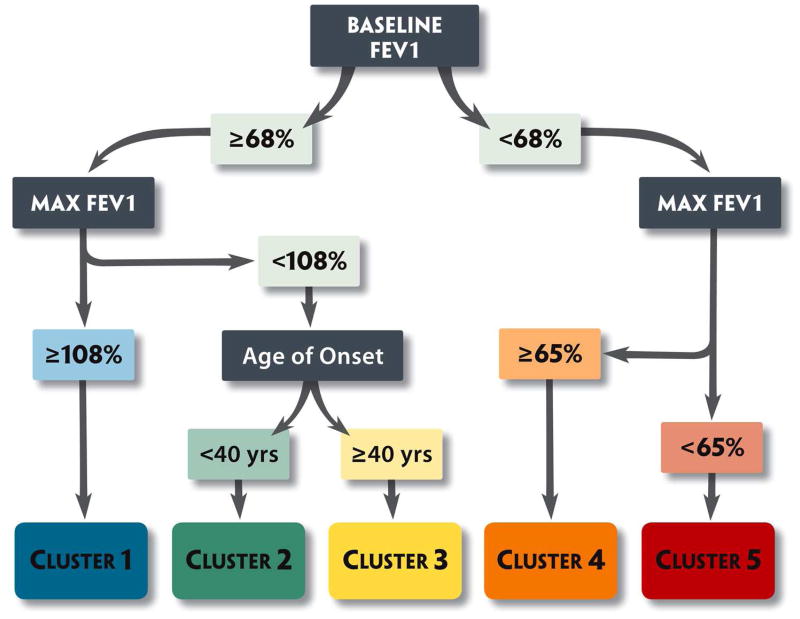
Although patients with "severe" asthma tend to be characterized by ongoing symptoms and airway inflammation despite treatment with high doses of inhaled and systemic corticosteroids, there is increasing recognition of marked phenotypic heterogeneity within affected patients. Although "precision medicine" approaches for patients with severe asthma are needed, there are many hurdles that must be overcome in daily practice. The National Heart, Lung and Blood Institute's Severe Asthma Research Program (SARP) has been at the forefront of phenotype discovery in severe asthma for the past decade. SARP, along with other international groups, has described clinical severe asthma phenotypes in both adults and children that can be evaluated in the clinical setting. Although these clinical phenotypes provide a good "starting point" for addressing disease heterogeneity in severe asthma in everyday practice, more efforts are needed to understand how these phenotypes relate to underlying disease mechanisms and pharmacological treatment responses. This review highlights the clinical asthma phenotypes identified to date, their associations with underlying endotypes and potential biomarkers, and remaining knowledge gaps that must be addressed before precision medicine can become a reality for patients with severe asthma.
虽然“严重”哮喘患者尽管接受了高剂量吸入和全身皮质类固醇治疗,但仍存在持续症状和气道炎症,但人们越来越认识到受影响患者中有明显的表型异质性。尽管需要针对严重哮喘患者的“精准医学”方法,但在日常实践中仍有许多障碍需要克服。美国国立心肺血液研究所的严重哮喘研究计划(SARP)在过去十年中一直处于严重哮喘表型发现的前沿。SARP 与其他国际组织一起,已经描述了成人和儿童中可以在临床环境中评估的临床严重哮喘表型。尽管这些临床表型为解决日常实践中严重哮喘的疾病异质性提供了一个很好的“起点”,但仍需要更多的努力来了解这些表型与潜在疾病机制和药物治疗反应的关系。这篇综述强调了迄今为止确定的临床哮喘表型,它们与潜在的内型和潜在的生物标志物的关联,以及在精准医学成为严重哮喘患者的现实之前必须解决的遗留知识差距。